Army JROTC frames drone racing as STEM pipeline, championship growth
Army JROTC is turning drone racing into a national feeder system, with spring 2026 qualifiers, cadet-first rules, and a Columbus championship.
The pipeline is the point
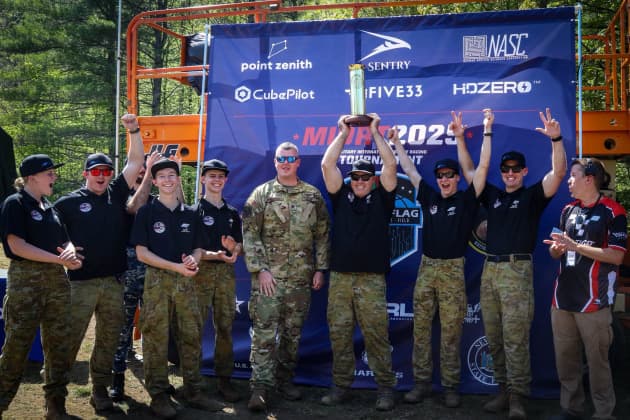
Colquitt County MCJROTC already has May 22-23, 2026 circled for Columbus, Georgia, and that is the telling detail. Army JROTC is not presenting drone racing as a side project or a flashy add-on to school life. It is building a championship ladder that treats flight skill, coding, and discipline as the same athletic package.
That matters because the Army JROTC drone page puts the sport inside the same national-events universe as Raider Nationals, JLAB, drill championships, VEX robotics, air rifle, cyber, and archery. In other words, drones are being folded into the established competitive fabric of U.S. Army JROTC, not parked off to the side as a novelty. The result is a sport that looks less like a club hobby and more like a development system.
What Army JROTC is really selling
The Army JROTC page describes drone competition as both a sporting challenge and a STEM pipeline. That is not just branding language. It says JROTC units across the country are using drone technology to build leadership, academics, fitness, and citizenship, which gives the event a very different purpose than a one-off exhibition race.
The pitch is blunt: students get hands-on experience in flight principles, engineering, programming, documentation, and professional communication while competing in aerial challenges. They also get a window into careers in aerospace, robotics, and technology. For drone racing, that is the kind of framing that can change who shows up, who stays, and who improves.
How the 2026 season is structured
This is a season, not a scattered collection of dates. The Mission 2026 Aerial Drone Competition calendar opened for team registration in June 2025, rules were released in September 2025, and local qualifying events ran from November 2025 through March 2026. The team-registration deadline landed on December 19, 2025, and regional championships run from April 2026 through June 2026.
That timeline explains why the Army JROTC page can already map out spring 2026 events with real precision. It also explains why drone racing is becoming easier to cover like any other sport: there are deadlines, qualifying rounds, and advancement opportunities. When a competition has a registration window, rules release, local qualifiers, regionals, and a national final, it stops being a demo and starts being a ladder.
The spring map is clear:
- JROTC National Drone Championship, May 22-23, 2026, Columbus, Georgia
- Army JROTC Drone Championship, listed as TBD
- Southeast Drone Championship, May 26, 2026, location to be determined
- North Central Drone Championship, May 26, 2026, location to be determined
- Northeast Drone Championship, May 26, 2026, location to be determined
- West Drone Championship, May 26, 2026, location to be determined
That spread tells you how quickly the event has scaled. Even when some sites are still marked TBD, the ladder itself is already institutionalized.
The rules make it feel like a real sport
The Robotics Education & Competition Foundation, which runs the broader Aerial Drone Competition ecosystem, says JROTC programs compete in the same game and under the same qualifying criteria as standard teams. They also get access to JROTC invitationals, which is important because it creates a separate entry lane without lowering the bar.
The Army-specific rule is just as revealing: Army JROTC teams should be at least 50% cadets, and cadets should be on the drive team. That means the competitive core has to belong to the cadets themselves. The drones for the 2025-2026 season are also standardized, with CoDrone EDU and the CoDrone EDU JROTC edition listed as the legal platforms, which keeps the field consistent and the comparisons fair.
This is where military-backed competition may be doing something the hobby route often does not. It is not just attracting kids who already tinker with drones at home. It is asking them to operate inside a structure, meet a deadline, learn the rules, and perform under the same standards as every other team in the system.
What teams are actually learning on the floor
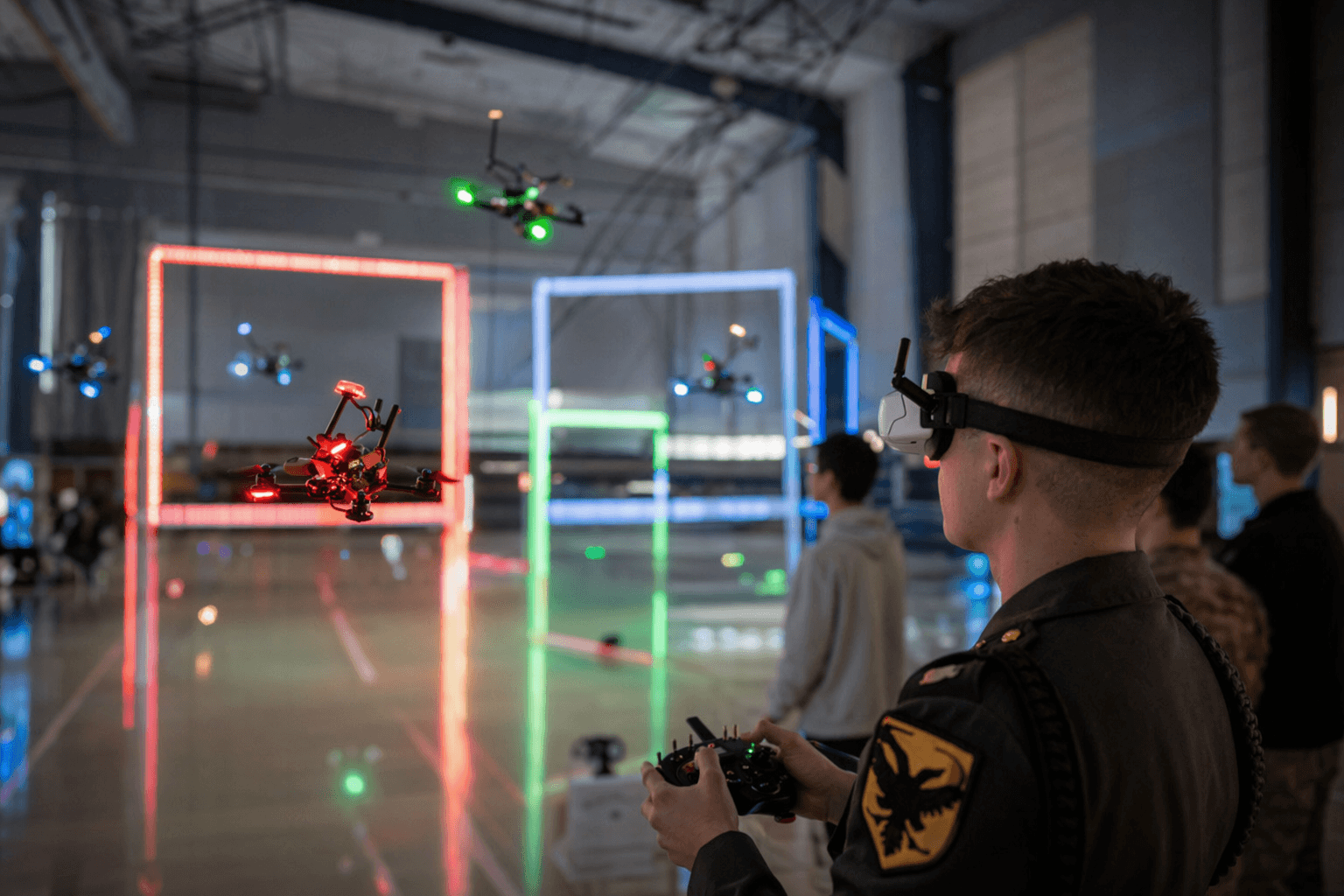
The drone page’s format section is what makes the whole thing feel serious. Students are not only flying. They are learning flight physics, propulsion, and mission planning, then collaborating on autonomous flight routines, obstacle navigation, precision landings, and documentation reviews judged by industry professionals.
That blend matters because drone racing at this level is not just about reflexes. It rewards the cadet who can code, the cadet who can explain the mission, and the cadet who can hold up when the pressure shifts from a practice run to a judged round. The event is building a skill stack that looks a lot more like the real aerospace and robotics world than a casual weekend pastime.
The Army JROTC page also emphasizes confidence, communication, and teamwork alongside technical growth. That combination is the whole story. A fast drone matters, but so does a team that can document what it built, explain why it flies the way it does, and fix problems without falling apart.
Why the broader JROTC system gives this weight
The national-events system around Army JROTC shows that drone competition is being treated with real institutional seriousness. The Army National Drill Team Championships, held every spring at the Ocean Center in Daytona Beach, Florida, drew 108 Army teams in the 2026 listing. That scale gives drone racing a useful benchmark.
When drones sit inside the same events ecosystem as a championship that can pull in more than a hundred Army teams, the message is clear: this is no experiment. It is part of a larger competitive culture built by U.S. Army Cadet Command and Army JROTC. The fact that drones now belong in that same framework makes the sport look less like a side innovation and more like a formal recruiting ground for future technical talent.
Why this could become one of the sport’s most important feeders
The best drone programs do not just produce quick pilots. They produce disciplined ones. Army JROTC’s model forces teams to work inside a season, under shared rules, with defined advancement and a heavy emphasis on communication and documentation. That is a more reliable talent filter than the purely informal route, where interest can be high but structure is often missing.
That is why the championship ladder matters so much. Local qualifying events from November through March, regionals from April through June, and a national final in Columbus create a repeatable pathway. The sport does not just get more organized; it gets more teachable.
If drone racing keeps growing inside school-based military programs, the next wave of elite pilots may come up with something the hobby world cannot always provide: rhythm, accountability, and a season that feels real from the first qualifier to the last landing.
This article was produced by Prism’s automated news system from verified source data, official records, and press releases, then run through automated quality and moderation checks before publishing. The system is built and supervised by the people who set the standards it runs under. Read our full AI policy.
Did this article answer your question?