Arrive AI Gains Edge as Indiana Named First Federal UAS Test Site
Arrive AI gained a strategic edge when Indiana was named the first federal UAS test site in over a decade, accelerating delivery scale-up and opening new testing lanes for drone racing tech.
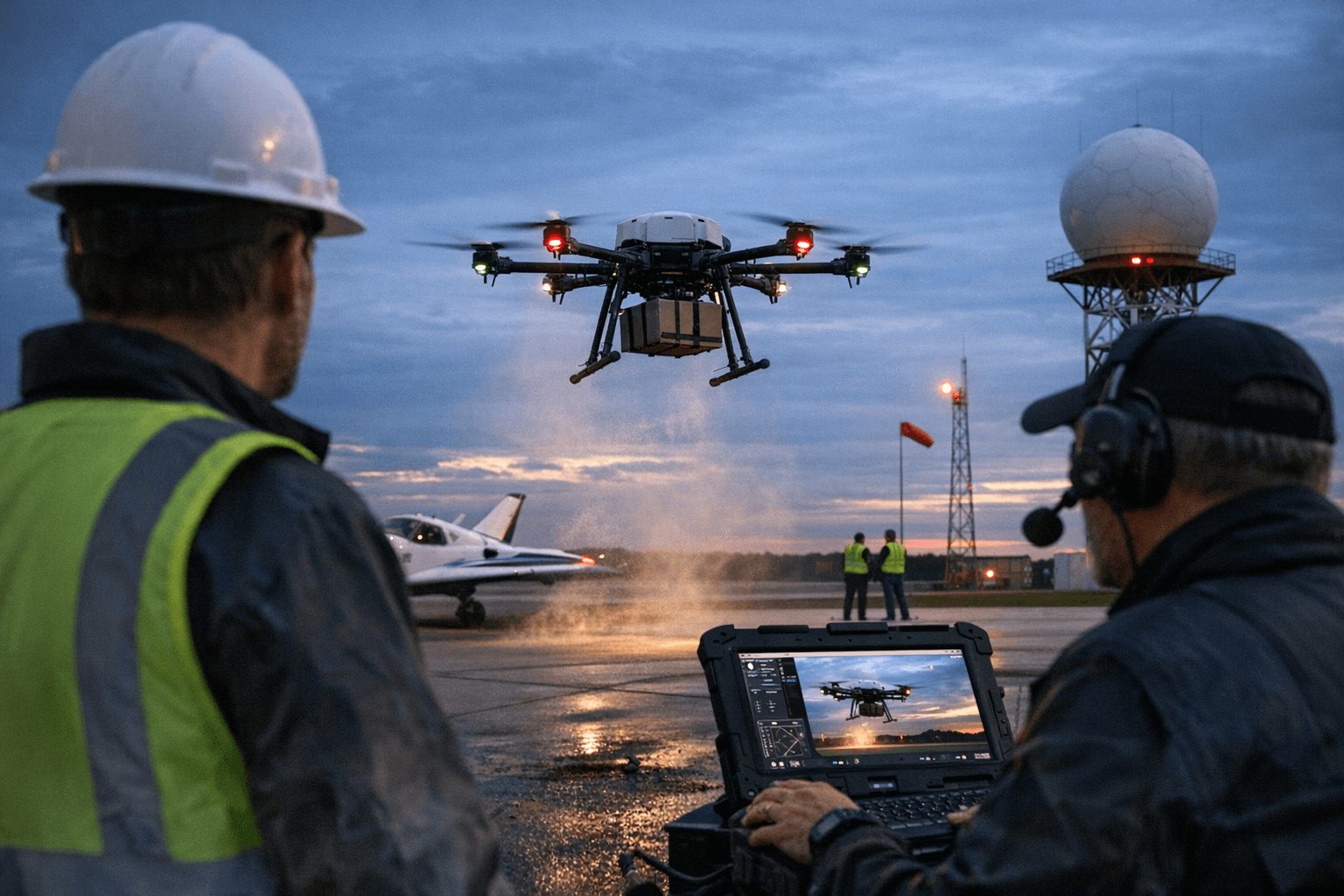
Arrive AI announced that the U.S. Department of Transportation and FAA designated Indiana as a federally designated UAS testing site, a first in more than a decade. The Jan. 15, 2026, designation gives Arrive AI early operational visibility and streamlined access to state assets that can accelerate development of both commercial delivery systems and high-performance drone platforms used in racing.
Arrive AI CEO Dan O’Toole said "the designation places Indiana at the center of next‑generation autonomy development and gives Arrive AI early visibility into evolving FAA frameworks, facilitating rapid testing and scaling of autonomous delivery infrastructure (Arrive Points™)." The company highlighted specific testing resources that make Indiana attractive: Camp Atterbury, Muscatatuck Urban Training Center, the Naval Surface Warfare Center, and Purdue University. These sites offer a mix of controlled airspace, urban testing environments, and academic partnerships that reduce regulatory friction for last-mile drone and autonomous delivery systems.
For the drone racing community, the practical benefits are immediate and layered. Access to expansive, controlled corridors and BVLOS testing frameworks means race teams and manufacturers can validate high-speed flight envelopes and fail-safe systems under FAA-informed rules rather than ad hoc local approvals. That translates to more predictable certification pathways for race-ready airframes, lower lead times for iterative tuning, and broader opportunities to integrate autonomy-assisted flight modes into competitions. Teams that traditionally focused on lightweight agility now face decisions about hybrid strategies - where human reflexes meet algorithmic precision - reshaping team dynamics and pilot roles.
On the industry side, the designation underscores broader trends: consolidation of infrastructure-first strategies, cross-pollination between defense, academia, and commercial players, and an emphasis on platform-level solutions such as Arrive AI's ALM platform. Infrastructure companies that can guarantee safe, compliant corridors will capture value not only from delivery logistics but from selling testing time and co-development agreements to racing leagues and OEMs. The prospect of manufacturing and defense partnerships centered in Indiana could also spur local supply chains, benefiting regional economies and providing a talent pipeline for both commercial and sport drone sectors.
Culturally, the move signals mainstreaming of drone technology beyond novelty laps and stunt displays. As testing becomes formalized, spectator experiences will evolve with safer, faster events and more sophisticated broadcast telemetry. That raises social implications: job creation and educational pathways at universities like Purdue, but also the need for transparent safety standards and privacy guardrails as drones move into urban airspace.
The immediate takeaway for racers and teams is the arrival of reliable testbeds and clearer regulatory sightlines. Expect accelerated tech transfer from delivery autonomy to competitive flight - tighter, safer tracks, more complex race formats, and a new era in which human pilots and autonomy share the winner’s circle.
This article was produced by Prism’s automated news system from verified source data, official records, and press releases, then run through automated quality and moderation checks before publishing. The system is built and supervised by the people who set the standards it runs under. Read our full AI policy.
Did this article answer your question?