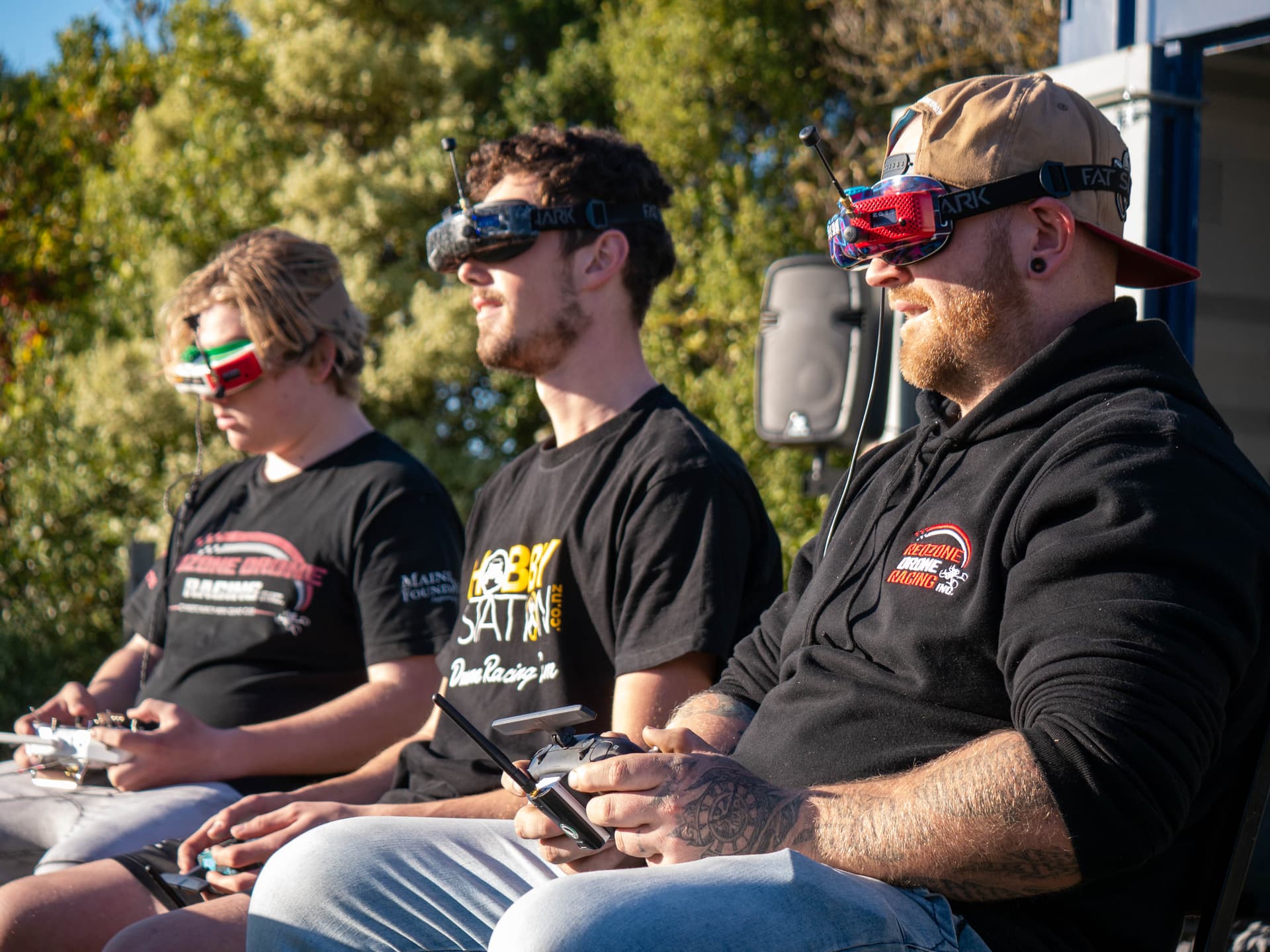
Best Indoor Drones for 2026, From Racing to Cinematic Flying
Weather and airspace restrictions push racers indoors, where a 25mW VTX cap and a 19-inch gate opening separate the right platform from the wrong one.

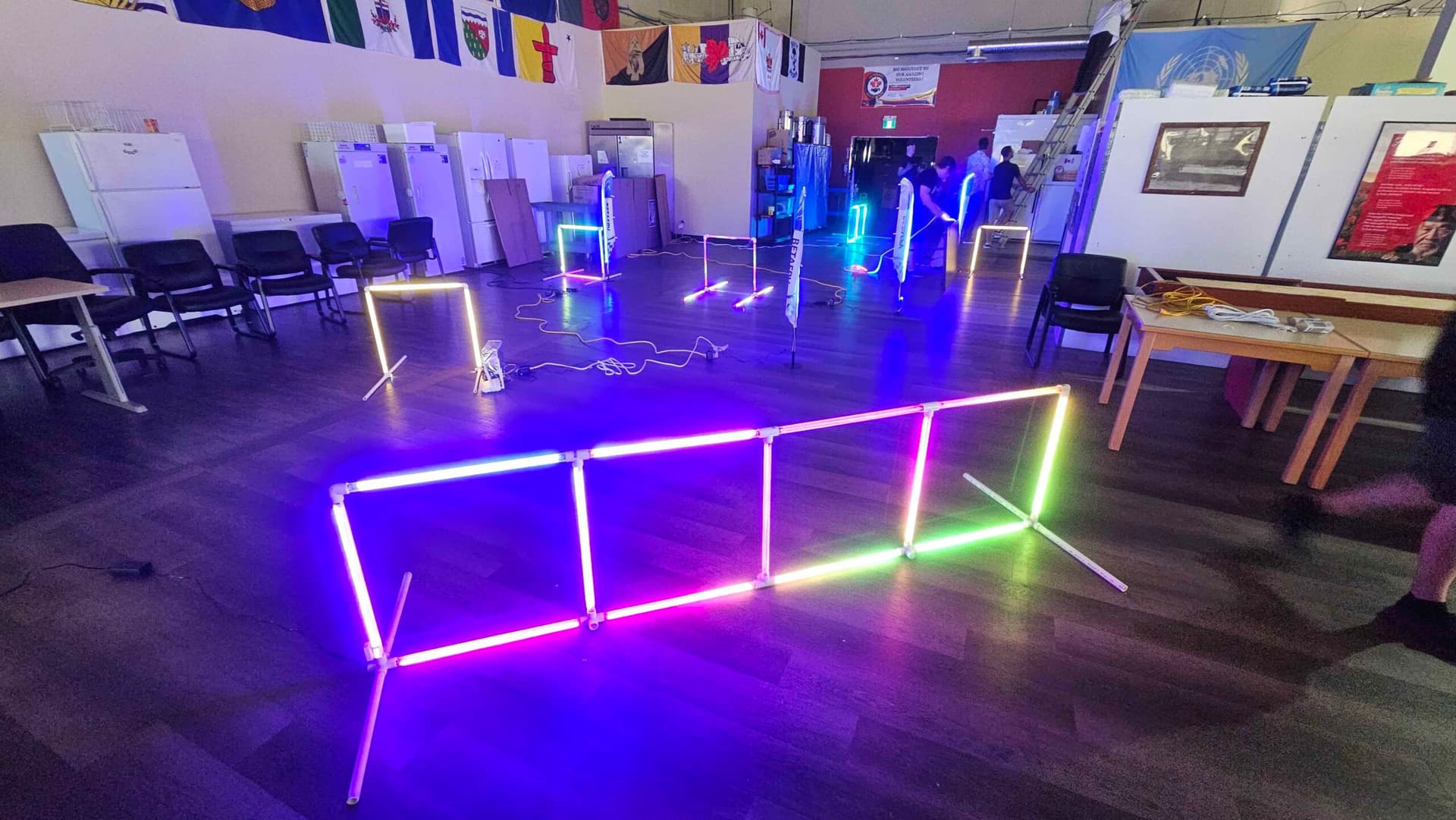
The walls come fast indoors. When the ceiling is 20 feet and the gates are just 19 inches wide by 19 inches tall, the margin for error that exists on an open outdoor track collapses within the first heat. Pilots who train exclusively outside feel it the moment they throttle up in a gym or warehouse: the same aggressive line that clears a flag gate on grass will clip a wall before the next corner arrives.
This is the problem most race-ready pilots solve quietly rather than publicly: how to keep stick time sharp when winter, rain, or restricted airspace pulls the outdoor track away. An indoor-capable platform is not simply a backup option; it is where micro-racing technique is actually built. The choice of platform determines how fast that process goes, and how expensive it gets when things go wrong.
Four variables drive the decision. First, prop size and ducting: smaller ducted props reduce tip speed and make close-quarters flight survivable for the drone and the venue around it. Second, VTX power output: indoor venues running multi-pilot heats routinely cap video transmitters at 25mW (the MultiGP Tiny Whoop class standard) to prevent RF interference between pilots on adjacent frequencies; a platform locked to high-power output is an immediate compliance problem. Third, durability relative to all-up weight: lighter frames recover faster from a gate clip but shatter against a wall, while heavier ducted platforms absorb punishment and keep sessions going. Fourth, the class the home venue actually runs: a 76mm Tiny Whoop slots directly into MultiGP's Whoop class, while a 3-inch cinewhoop maps to the 3.1-inch micro class that MultiGP sanctions for indoor courses and tight outdoor spaces.
The 19-by-19-inch gate dimension is the single most clarifying constraint in indoor racing. That opening is where the following platforms either earn their spot on the bench or collect wall-repair bills.
1. DJI Avata 2
The Avata 2 earns the overall top ranking for pilots who need one platform capable of handling serious indoor practice without demanding constant maintenance. Its ducted propeller configuration makes close-quarters flight significantly safer than open-prop designs, and its footprint (approximately 185 by 212 mm) sits comfortably within the dimensions of most gym and warehouse tracks. At 377 grams, it stays under key regulatory weight thresholds in most configurations, and its roughly 18-minute flight time per battery means a two-battery rotation covers a full indoor session with minimal downtime between reps. For pilots focused on building gate-to-gate consistency rather than chasing outright speed, no current platform at this weight class offers as much practical capability in one package.
2. EMAX Tinyhawk III
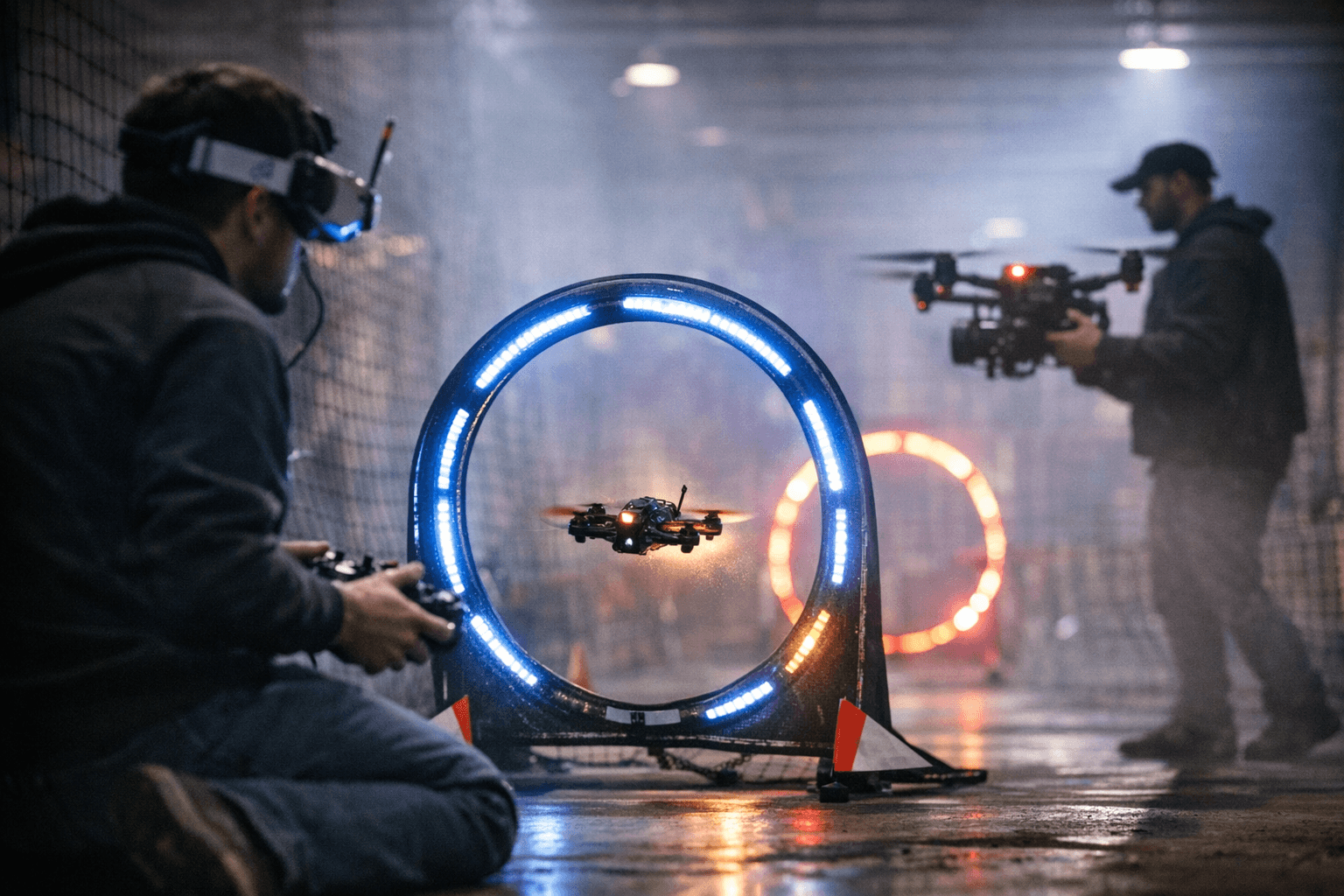
For pilots actually competing on MultiGP-style Tiny Whoop tracks, the Tinyhawk III is the most tactically sound choice for 2026. Its 76mm size class maps directly to the MultiGP Whoop class standard, and its 32-gram all-up weight (without battery) satisfies class AUW requirements while delivering enough authority to hold aggressive lines through a 19-by-19-inch gate at race pace. The VTX is switchable across 25mW, 100mW, and 200mW, which matters specifically at venues enforcing the 25mW ceiling; pilots can comply for competition heats and push the signal for solo practice sessions without swapping any hardware. The RunCam Nano 4 camera's low-light performance is well-suited to indoor LED track environments, and the broad parts and community ecosystem means a wall impact ends a session in minutes rather than days of sourcing replacement frames. Elite MultiGP competitors have long used Tiny Whoop-class platforms for off-season indoor drills precisely because gate timing and throttle management habits transfer directly to full-speed outdoor competition.
3. GEPRC Cinebot30
The Cinebot30 fills a specific gap that pure racing platforms do not address: producing high-quality footage from a platform durable enough to survive the repeated contact that defines technical indoor flying. Its 3-inch HQ T76mm prop configuration places it within the MultiGP 3.1-inch micro class, a format viable on both indoor tracks and compressed outdoor courses, giving pilots one platform that works across event types. The one-piece injection-molded prop guards use impact-resistant PC material that absorbs collision force rather than transferring it to the frame, and the 7075 aircraft-grade aluminum alloy camera bracket keeps optics stable through the kind of knocks that would ruin a lighter mount. Compatibility with the Naked GoPro Hero 8 and Insta360 GO2 means footage from indoor practice runs is publishable without extensive post-production correction, which changes the cost calculus for teams tracking pilot development across a training block.
4. BetaFPV Cetus Pro
The Cetus Pro is the right starting point for pilots who understand FPV fundamentals but have not yet built the throttle precision and spatial management habits that technical indoor flying demands. It ships as a complete kit, including goggles and controller, removing the ecosystem barrier that typically stalls beginner pilots before they ever develop real competitive instincts. The platform is designed for controlled indoor environments where pilots can drill consistent gate entries and learn to manage throttle discipline without the punishment of heavier, faster hardware. Pilots who skip this stage and jump directly to 3-inch or 5-inch platforms before establishing indoor technical habits typically spend more on frame repairs in their first competitive season than the Cetus Pro costs outright. The progression path from this kit toward the Tinyhawk III class is direct, and the muscle memory built in controlled indoor environments with this platform pays forward at every subsequent stage of development.
Know something we missed? Have a correction or additional information?
Submit a Tip