Betaflight Tuning Guide: Improve Lap Times and Cut Crash Risk
Practical Betaflight tuning tips to lower lap times and reduce crash risk for pilots with basic builds, focused on props, rates, filters, and disciplined testing.
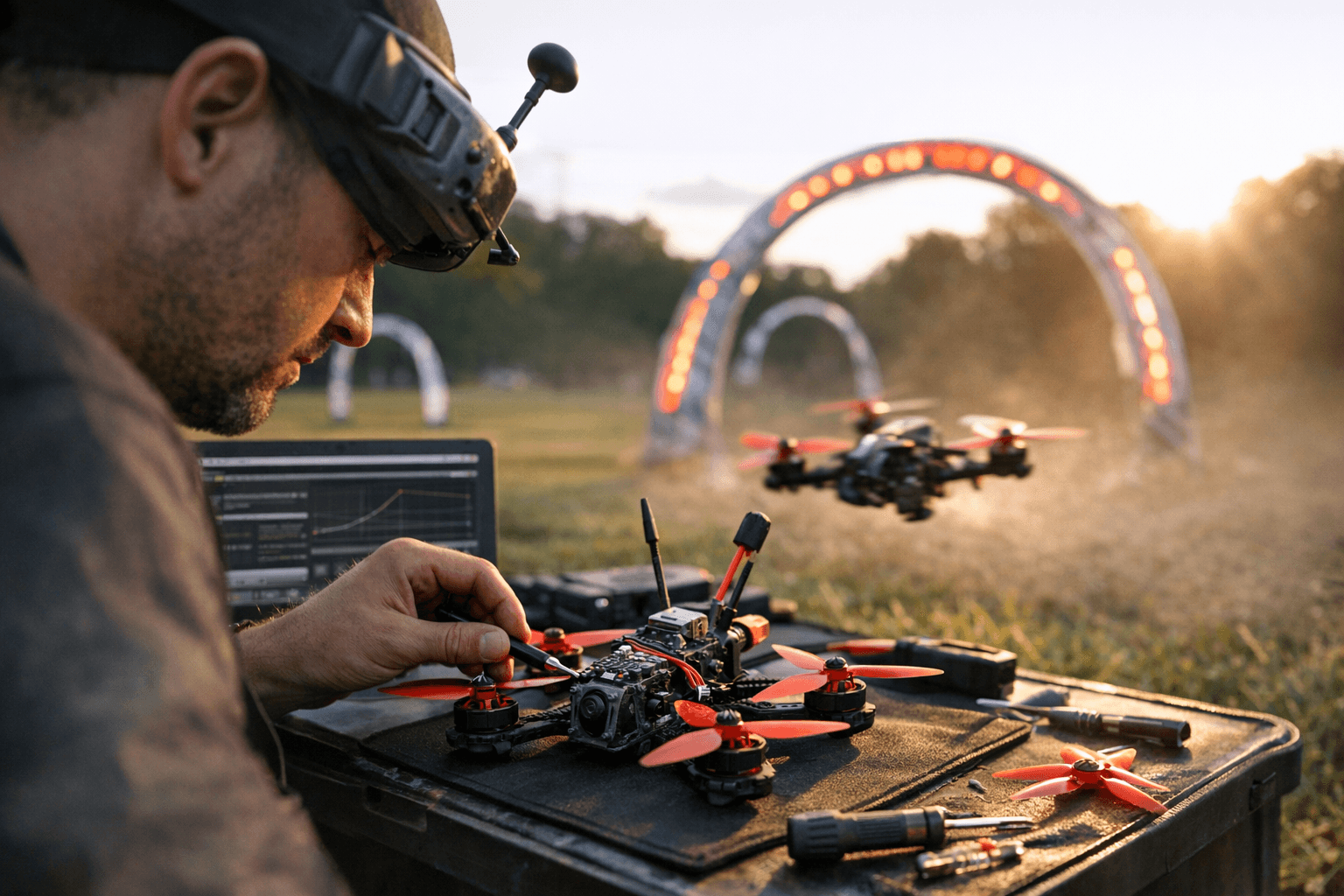
Fast lap times and fewer crashes start at the software level as much as the hardware level. For pilots flying basic builds, Betaflight and similar flight controller firmware offer a high-return path to performance: choose the right prop, start from a proven baseline, tune methodically, and log everything.
Begin with a known-good baseline. Use a frame-specific rate and PID tune from an experienced pilot running the same frame and prop combo rather than copying random community numbers. That establishes a predictable starting point and avoids chasing ghosts. Prop choice is the single most impactful hardware decision before PIDs - changes in pitch or blade shape often deliver more lap-time gains than aggressive PID fiddling. Pick a prop that balances grip and efficiency for your motor and weight, and expect tuning to change after any prop swap.
Rates shape your stick-to-rotor relationship. Set expo and RC rates so mid-stick corrections are smooth while allowing fast stick throws when needed. High rates with excessive expo create twitchy, inconsistent response that costs time and increases crash risk. Tune feedforward and P terms first to get crisp, immediate response; introduce D only to remove oscillation. Adding D too early can mask a poor I or P setup and lead to chasing noise.
Filtering needs to be surgical. Add RPM filtering and a notch only when telemetry or audible vibration shows clean noise at specific frequencies; improper filter settings can add latency and make a quad feel mushy. Lower filter cutoffs for a crisper feel but raise them if you see high-frequency oscillations or jerky response. Weight matters: shed excess camera mounts, heavy antennas, or redundant hardware. Lighter quads accelerate and brake faster, and any significant weight change requires retuning.
Battery sag and consistency affect top-end and handling. Use consistent battery brands and cell counts and track charge cycles; inconsistent voltage produces inconsistent lap times. Test flight regimes systematically: hover, slow forward flight, fast punch-outs, and full flips each reveal different tuning deficits. Record flights with blackbox or OSD telemetry to analyze oscillations, motor sync issues, and control saturation. Make one change per session, fly a few full laps, and then decide to keep or revert the change.
This approach shifts the sport toward precision and accessibility. Pilots without deep pockets can improve competitiveness through setup discipline rather than wholesale hardware upgrades. Race organizers and manufacturers will likely respond with more pre-tuned profiles and telemetry tools, while teams that prioritize data-driven tuning will gain consistency on race day. For pilots, the next steps are clear: standardize batteries, pick a prop and stick with it through a baseline tune, then iterate slowly with logs in hand to find genuine gains.
This article was produced by Prism’s automated news system from verified source data, official records, and press releases, then run through automated quality and moderation checks before publishing. The system is built and supervised by the people who set the standards it runs under. Read our full AI policy.
Did this article answer your question?