DJI Drone Prices Hit Record Lows, Avata 2 Bundles Drop Below $600
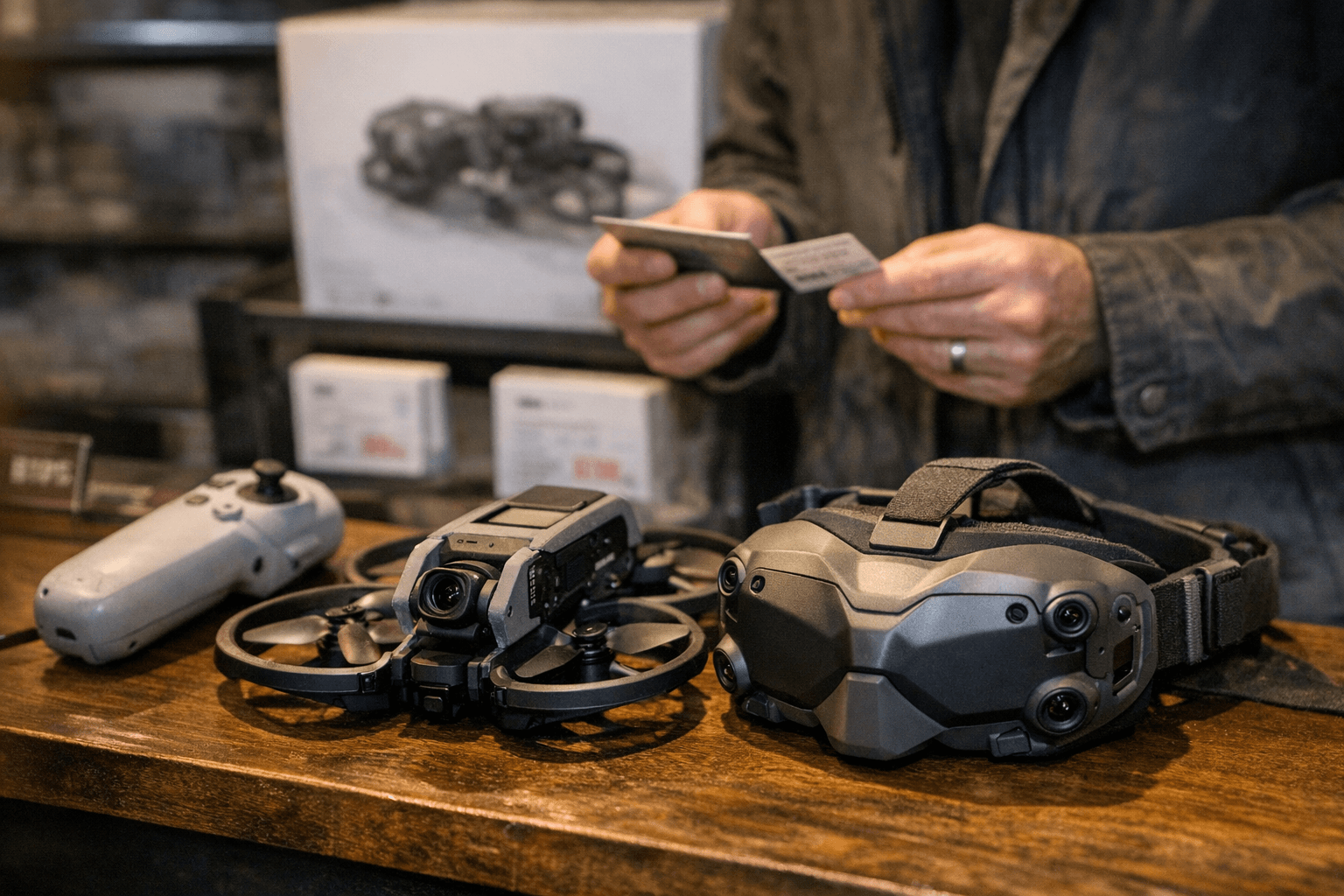
DJI's Avata 2 hit $520 in full goggles-and-controller bundles, driven by the Avata 360 launch cycle clearing older inventory at major retailers.

At $520 for a full goggles-and-controller bundle, the Avata 2 crossed a threshold last week that changes the math for competitive FPV pilots who have been postponing an HD system upgrade. Avata 2 packages landed in the $520-$600 range across major retailers during promotional periods, a pricing window analysts linked directly to DJI's product cycle: the Avata 360 launch is pressuring retailers to clear older inventory, and the discounts reflect that market mechanics more than any shift in the hardware's underlying value.
For race teams standardizing practice rigs across four or five pilots, the spread between $600 and $900 per kit is not an abstraction. It is the difference between outfitting a full squad or asking competitors to absorb the cost themselves. The pricing compression also removes one of the most persistent friction points in grassroots FPV racing: the upfront cost of the jump from analog to a digital transmission system, which has historically kept newer pilots on cheaper, less competitive hardware longer than necessary.
The discount window comes with circuit-level caveats worth understanding before placing an order. DJI's new product launches arrive alongside day-one DJI Fly app updates and firmware pushes, and the interaction between those updates and older hardware is not always clean. Regional equipment authorizations, particularly around remote ID compliance and firmware signing, can affect whether a discounted Avata 2 unit maintains its full warranty and update path once the product cycle advances. The specific concern for race directors: FCC Covered List guidance needs to be verified before mixing hardware generations in the same pit lane, especially if any pilot is pairing a discounted Avata 2 alongside a newer transmission standard. The recommendation for pilots considering a wholesale platform switch is to wait for stable firmware validation rather than buying into a new ecosystem during the turbulent first weeks after a flagship launch.
The broader implication for league growth is straightforward. Lower per-pilot hardware costs reduce the financial barrier at the entry point of the sport, making it easier for regional leagues to expand their rosters without requiring significant personal outlay from competitors. Sponsorship activations become cheaper to execute at scale when the hardware cost per activated pilot drops into the mid-$500s.
Product cycle pressure of this kind rarely holds open for long. Once Avata 360 supply stabilizes and retail channels absorb the new inventory, Avata 2 bundles will either firm up at a higher floor or exit shelves entirely. The $520 data point represents the bottom of the current cycle, not a permanent reset of DJI's pricing floor.
This article was produced by Prism’s automated news system from verified source data, official records, and press releases, then run through automated quality and moderation checks before publishing. The system is built and supervised by the people who set the standards it runs under. Read our full AI policy.
Did this article answer your question?