DJI Launches Enterprise AI Challenge to Push Drones Beyond Data Capture
DJI opened its Enterprise Drone Onboard AI Challenge 2026, pushing developers to build drones that act on data in real time, with a May 10 submission deadline.

Data capture is the easy part. DJI launched the Enterprise Drone Onboard AI Challenge 2026 on April 2, a developer competition built around the harder problem: getting drones to interpret what they see and act on it while still airborne.
The challenge is structured around three deployment tracks: fully on-drone AI, AI running on DJI's Manifold 3 onboard computer, and cloud-integrated AI woven into live drone workflows. That architecture covers the full spectrum of where onboard intelligence can realistically live, and by separating the tracks, DJI is forcing developers to prove viability in actual operational conditions rather than optimized lab environments.
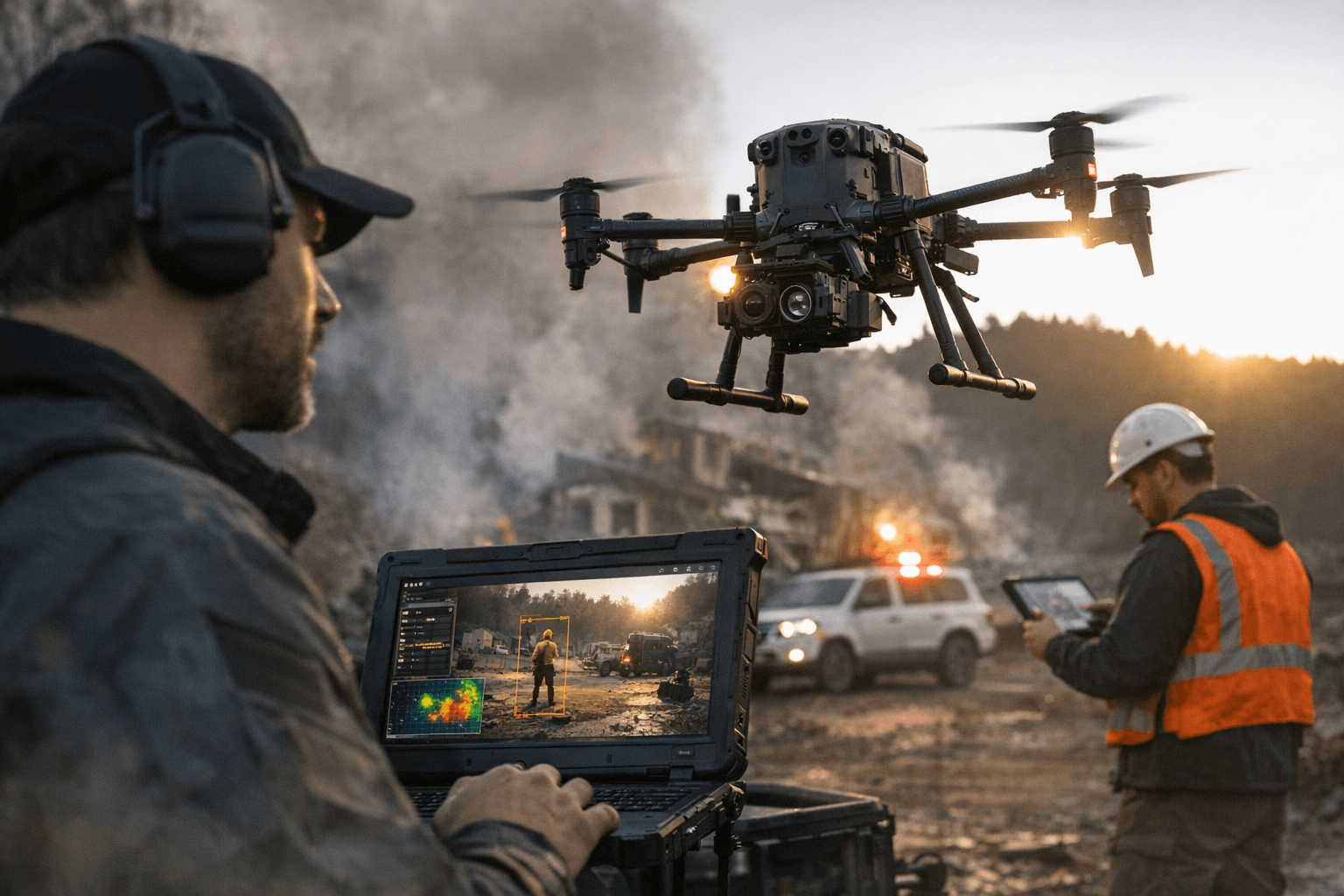
The use cases DJI cited are specific. Autonomous detection of infrastructure damage, real-time anomaly alerts during inspections, and faster decision-support for first responders are the targets. The underlying goal is collapsing the gap between perception and response at the hardware level, before the aircraft ever lands.
Submissions require a complete technical package: a description of the AI model, a working model linked to an approved test device, a validation dataset with a minimum of 20 samples, a full workflow screen recording, and a declaration of intellectual property ownership. Those requirements point toward production-readiness as the bar. DJI is not running an academic showcase; teams without reproducible, deployable systems will not make the cut. The submission window closes May 10, 2026.
Prizes are divided into two categories. The "Best Onboard AI Model" award covers pure technical performance, while "Industry Application Excellence" recognizes the most deployable solutions across energy, public safety, and agriculture. Winners receive hardware bundles, with cited examples including Manifold 3 combos and other DJI enterprise equipment, plus ecosystem support and official recognition.
For autonomous racing, the downstream implications are tangible. The Manifold 3 is already a competitive onboard computing platform, and low-latency perception is the same core capability driving AI Grand Prix formats, where software-controlled craft run at speed without a pilot in the loop. Faster, lighter models that emerge from this competition do not stay in the enterprise vertical. They migrate into autonomous race class hardware and reshape what rules committees think the machines can be trusted to handle independently.
DJI running a structured, deadline-driven push toward deployable onboard AI accelerates a development curve that competitive autonomous racing is already working hard to keep pace with.
This article was produced by Prism’s automated news system from verified source data, official records, and press releases, then run through automated quality and moderation checks before publishing. The system is built and supervised by the people who set the standards it runs under. Read our full AI policy.
Did this article answer your question?