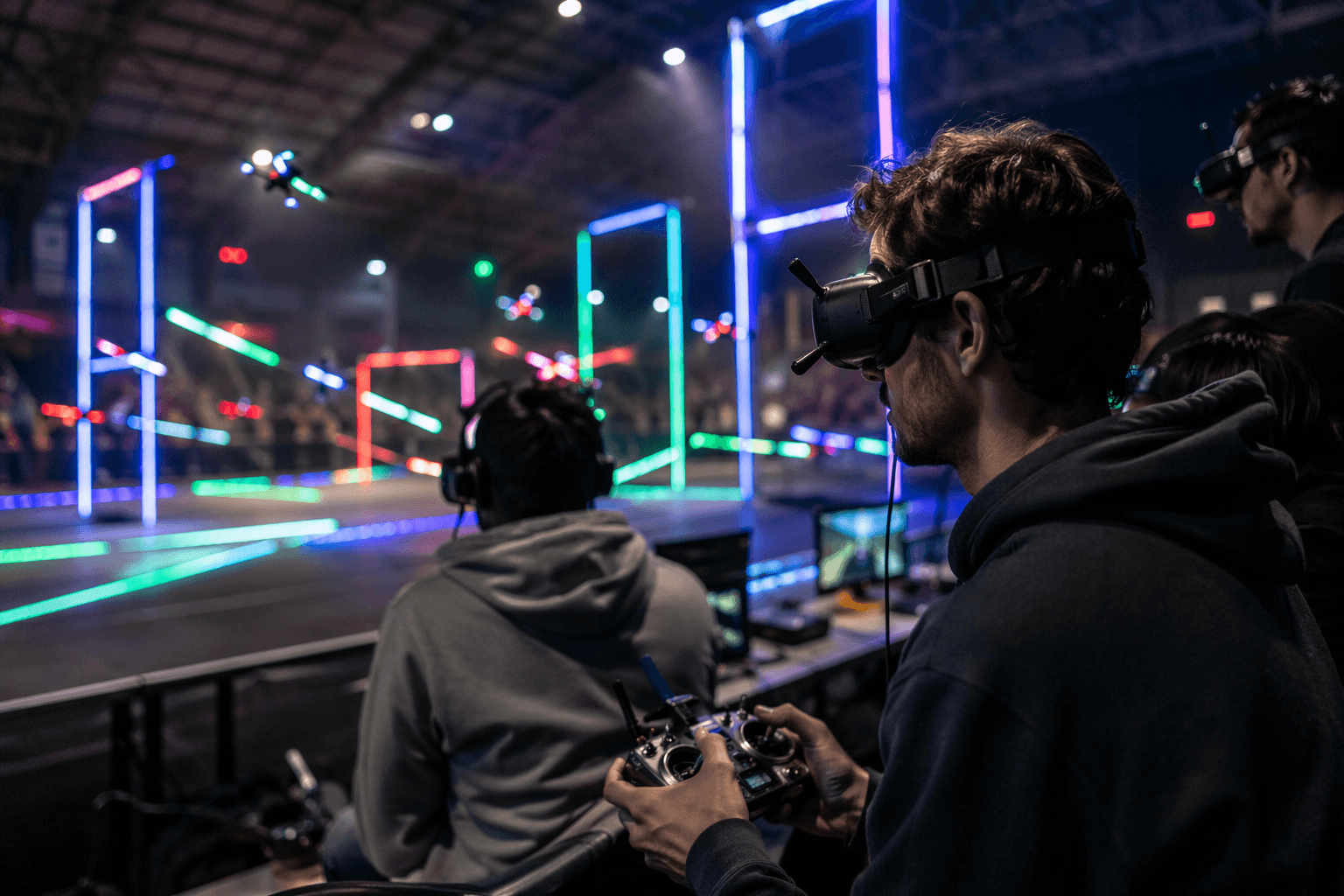
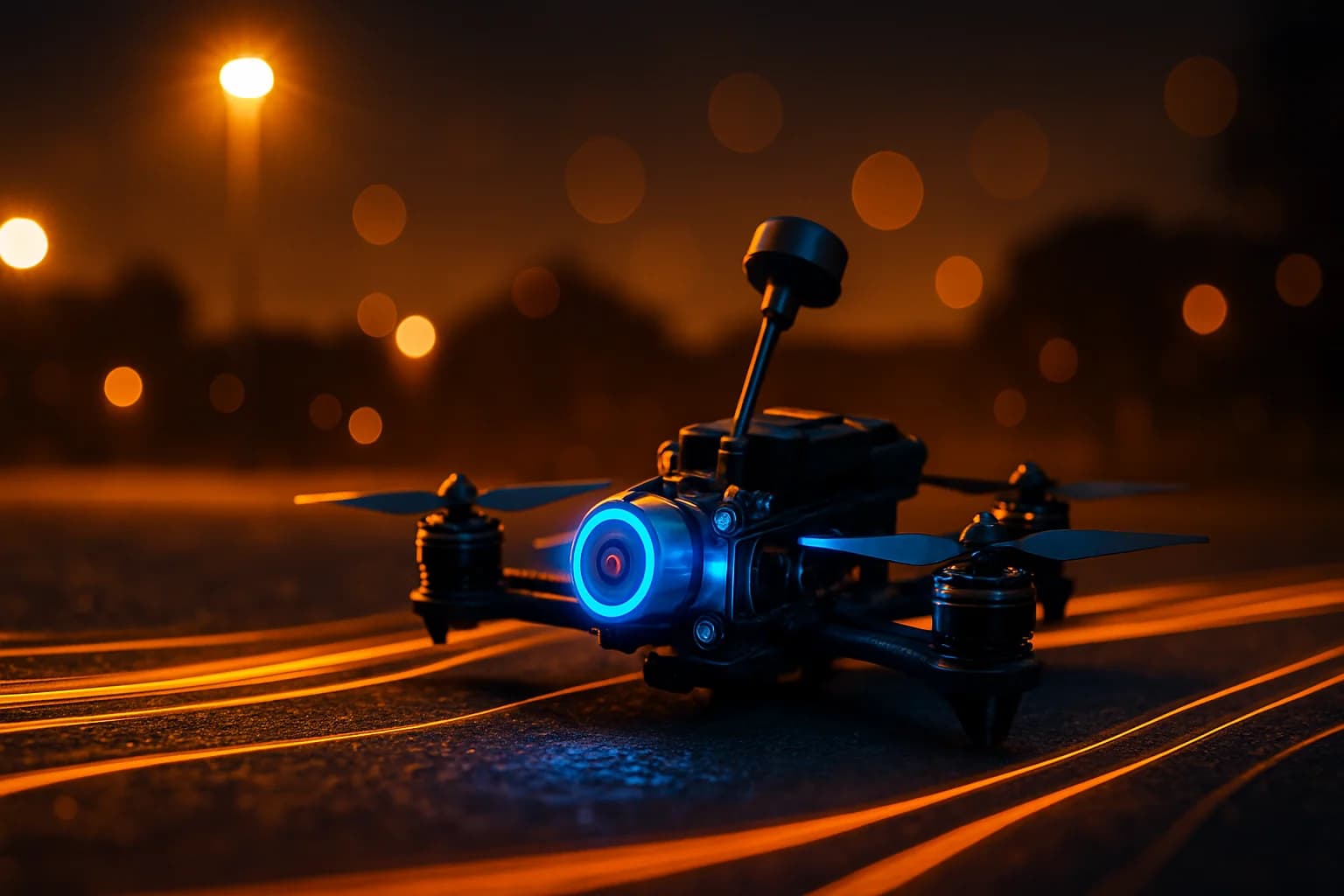
Drone Champions League blends mixed reality and elite drone racing
DCL makes drone racing legible without dulling it down. Its mixed-reality format, standardized drones and live venues are the clearest blueprint yet for growing the sport.
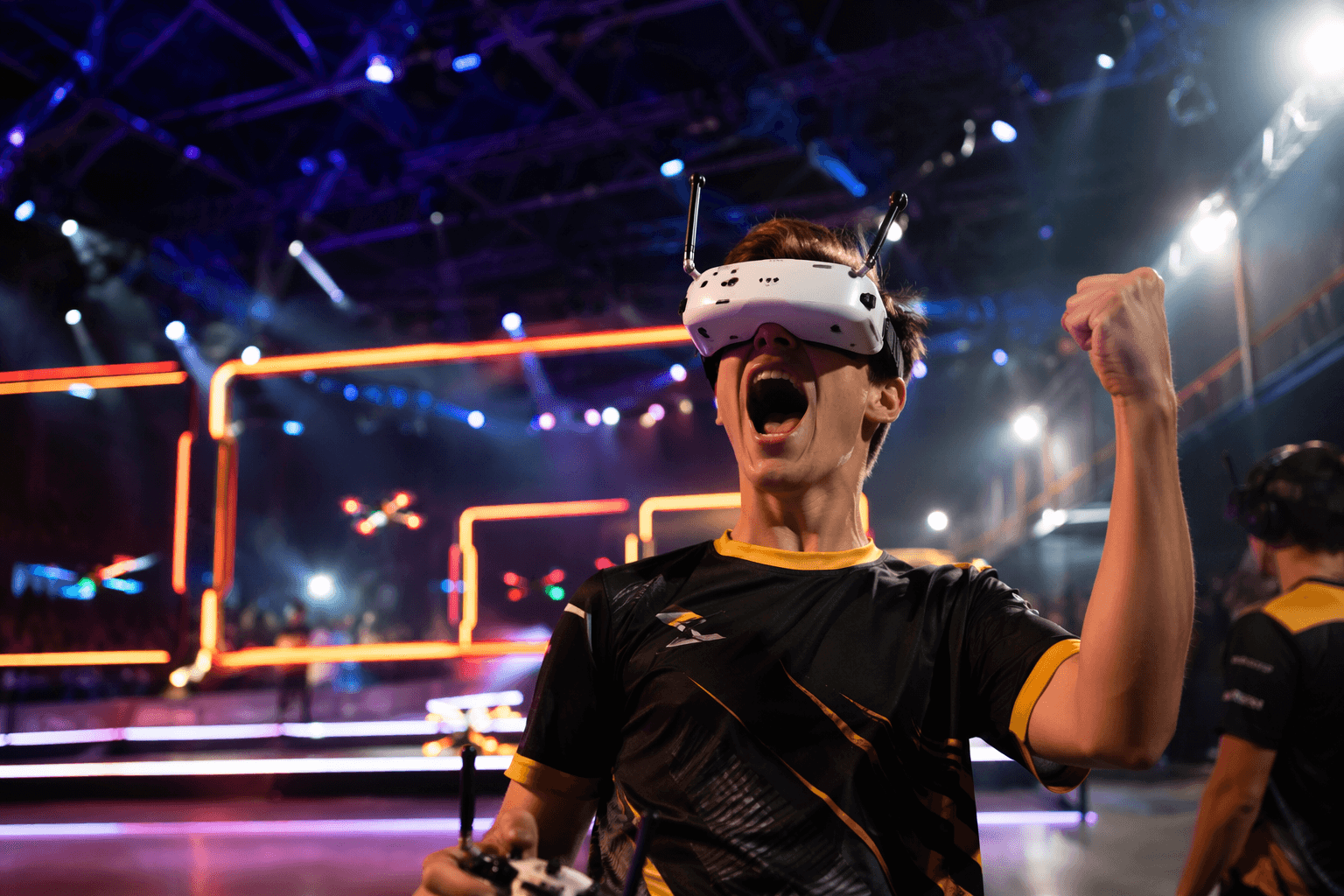
Drone Champions League has found the rare formula that lets drone racing stay technical and still look like a sport a newcomer can follow. It calls itself the world’s leading mixed-reality drone racing league, and it backs that claim with Digital Twin technology, real-world venues and a format built for Gen Z and Alpha. That combination is not cosmetic. It is the reason DCL can sell speed, skill and engineering in the same frame.
How DCL turns speed into something spectators can read
The basic problem in FPV racing is obvious: the best pilots are moving too fast for the eye to process cleanly. DCL’s answer is to layer the race with a mixed-reality presentation that merges the virtual and real worlds, then anchor that experience in actual tracks and stadium-style venues. The league also says DCL The Game is available on PC, PlayStation and Xbox, which gives fans a way to learn the circuit before they ever see a live race.
That matters because the game is not just a side project. DCL describes DCL The Game as the official pathway into the league and the backbone of its global drone racing community. More than 30 tracks, including real locations such as LAAX and Reutte, make the bridge even stronger: the same course can exist as a simulator, a broadcast asset and a competition venue. For a sport still trying to grow beyond niche status, that is a serious advantage.
Why the league’s rules matter as much as the visuals
DCL’s best trick is that it never lets presentation replace racing credibility. The league’s history page shows the spec sheet tightening and evolving over time: in 2016, the first season ran 5-inch drones with 32 LEDs and four-cell Li-Po batteries. By 2017, the light count had grown to 40 LEDs, including specially made LEDs so spectators could identify drones more easily.
The progression kept going. In 2018, the minimum diagonal rose to 325 mm with a 6-inch drone, and in 2019 it increased again to 360 mm with a 7-inch size. Modern DCL drones are standardized across teams, weigh about 800 grams and can generate around 5 kg of thrust. That is the sweet spot: tight enough to control the race, open enough to preserve engineering value.
Fabian Wachter, DCL’s race director, put the philosophy in plain terms: “similar to major motorsports, where the regulations are tight but every team has the possibility to be better than the others through engineering.” That is the line other leagues should steal. If the rules are too loose, the race becomes chaos. If they are too rigid, the engineering edge disappears. DCL sits in the middle and makes that middle watchable.
The real-world venues are not an afterthought
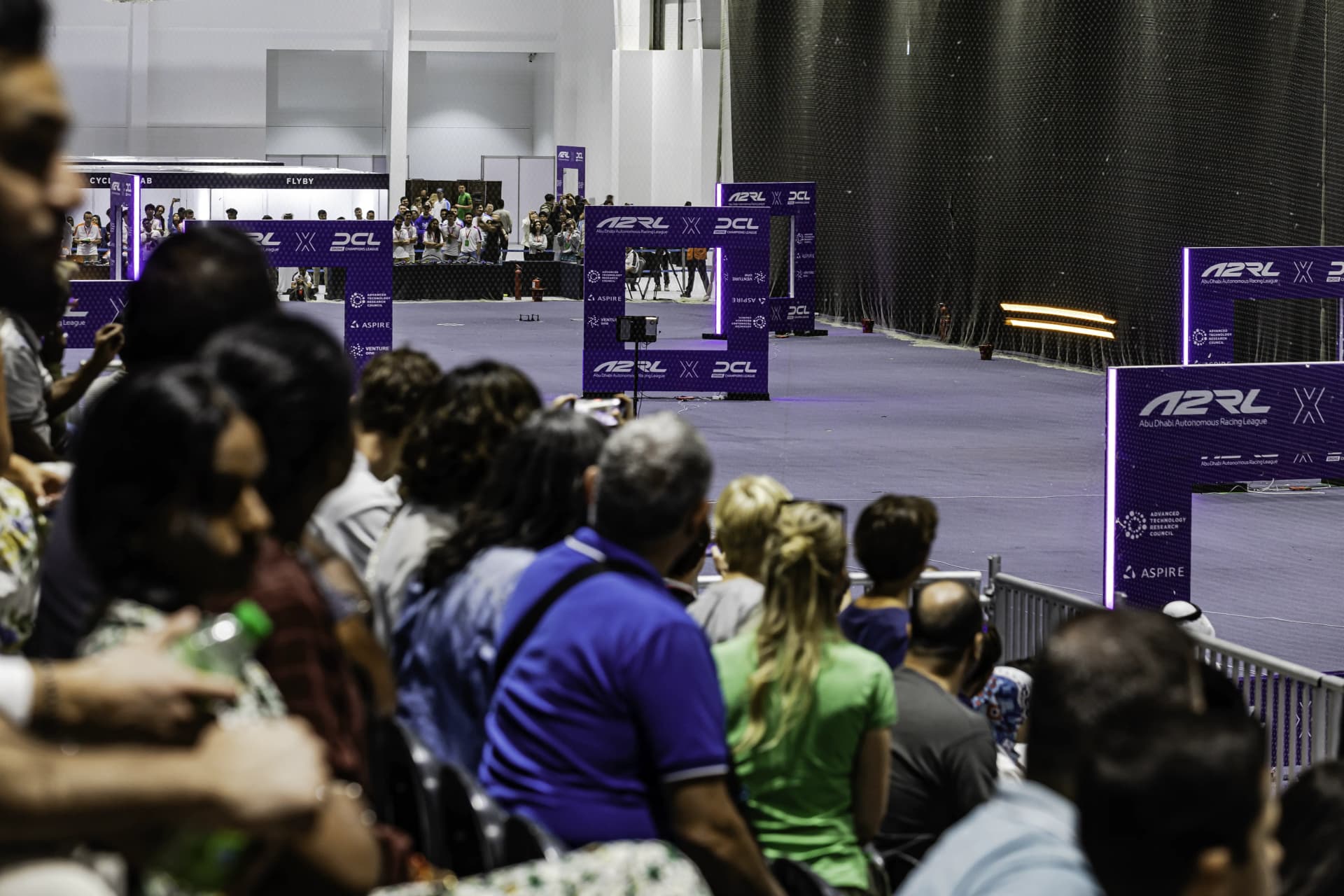
DCL’s mixed-reality identity would not land if it lived only inside a simulator. The league has staged live races at venues such as Yas Marina Circuit in Abu Dhabi and ADNEC Marina Hall, and those settings give the product scale. Drone racing needs spectacle because the pilots are already producing the speed. The venue has to make that speed feel consequential.
Abu Dhabi has become a particularly important test case. In December 2024, DCL’s Split 3 Finals in Abu Dhabi marked the return of real-life drone racing to the DCL stage and included qualification rounds for the A2RL x DCL Autonomous Drone Challenge. That is the kind of programming that changes how a fan reads the event: it is not just a race, it is a gateway into the next layer of the sport.
A year earlier, DCL and the Abu Dhabi Autonomous Racing League announced a $1 million autonomous drone race. Then in 2025, the autonomous drone championship finale materials said 14 international teams would compete at ADNEC Marina Hall in Abu Dhabi. The through line is clear: DCL is using the same city, the same infrastructure and the same broadcast-minded design to move between human-piloted racing and autonomous competition.
The pipeline is the product
The strongest leagues do not just stage events. They build ladders. DCL has done that with its simulator, its draft process and its team-banners structure. The 2026 draft-selection materials showed four pilots selected into official DCL team banners after the draft process, which reinforces the idea that this is a structured pro ecosystem, not a one-off exhibition.
That structure is what makes the league useful as a case study. DCL is not trying to choose between authenticity and accessibility. It is using the simulator to teach the sport, the rulebook to preserve competitive integrity and the venue design to make the action readable in real time. That is a model with obvious value for any racing property that wants to grow without flattening the sport into a highlight reel.
What other leagues should copy
A lot of sports talk about “fan engagement” as if it means softening the competition. DCL shows a better path.
- Build a digital twin or simulation layer that lets fans learn the course before race day.
- Standardize enough of the equipment to keep competition fair, then leave room for engineering to matter.
- Design the visuals for spectators who are seeing the sport for the first time, not just for insiders.
- Use real venues that make the race feel like an event, not a software demo.
- Create a clear pathway from game to live competition, so the audience can become participants.
That is the real value of Drone Champions League. It proves drone racing can keep its hardcore identity, its engineering depth and its speed, while still being packaged in a way that a wider audience can actually follow.
This article was produced by Prism’s automated news system from verified source data, official records, and press releases, then run through automated quality and moderation checks before publishing. The system is built and supervised by the people who set the standards it runs under. Read our full AI policy.
Know something we missed? Have a correction or additional information?
Submit a Tip