Drone Fire Debris Shuts Dubai Airport, Causing Mass Flight Diversions
Drone debris shut Dubai's main airport for 3.5 hours on March 30, diverting wide-body flights and contributing to a month where passenger numbers fell 42% year-on-year.

Debris from a burning drone grounded Dubai International Airport for three and a half hours on March 30, triggering one of the most disruptive closure events in a month that has repeatedly tested the world's busiest international hub. Fire, security, and air traffic personnel cleared the northern runway safety zones before phased operations resumed from roughly 10:00 GST, but the damage to the day's schedule was irreversible before the closure lifted.
At least four wide-body flights were diverted to Al Maktoum International during the suspension, while several long-haul services turned back to their originating airports entirely. Flydubai absorbed some of the heaviest schedule disruption among Gulf carriers, pushing departure times back by as much as five hours on routes including Delhi, Karachi, Dammam, and Islamabad. Airport authorities urged passengers to confirm their flight status before traveling to any terminal.
Emirates, Etihad, and Flydubai each moved quickly to contain the commercial fallout, issuing rebooking waivers with distinct coverage windows. Emirates extended rescheduling eligibility through May 31, Etihad through May 15, and Flydubai within a 30-day rolling period. International carriers temporarily suspended or rerouted services to and from DXB while the nature and scale of the incident were assessed.
March 30 was not an isolated event. On March 25, drone debris struck the roof of Terminal 3's arrivals area, generating roughly 85 minutes of delays. The more severe March 16 incident, in which a drone strike ignited a fire near a fuel tank in the airport's vicinity, prompted the Dubai Civil Aviation Authority to suspend all flights as a precautionary measure and diverted multiple services to Al Maktoum International, Muscat, and Doha. The compounding effect of that pattern is stark: March passenger volumes at DXB came in approximately 42% below the same period in 2025, a staggering contraction for a hub that handles more international traffic than any other airport on earth.
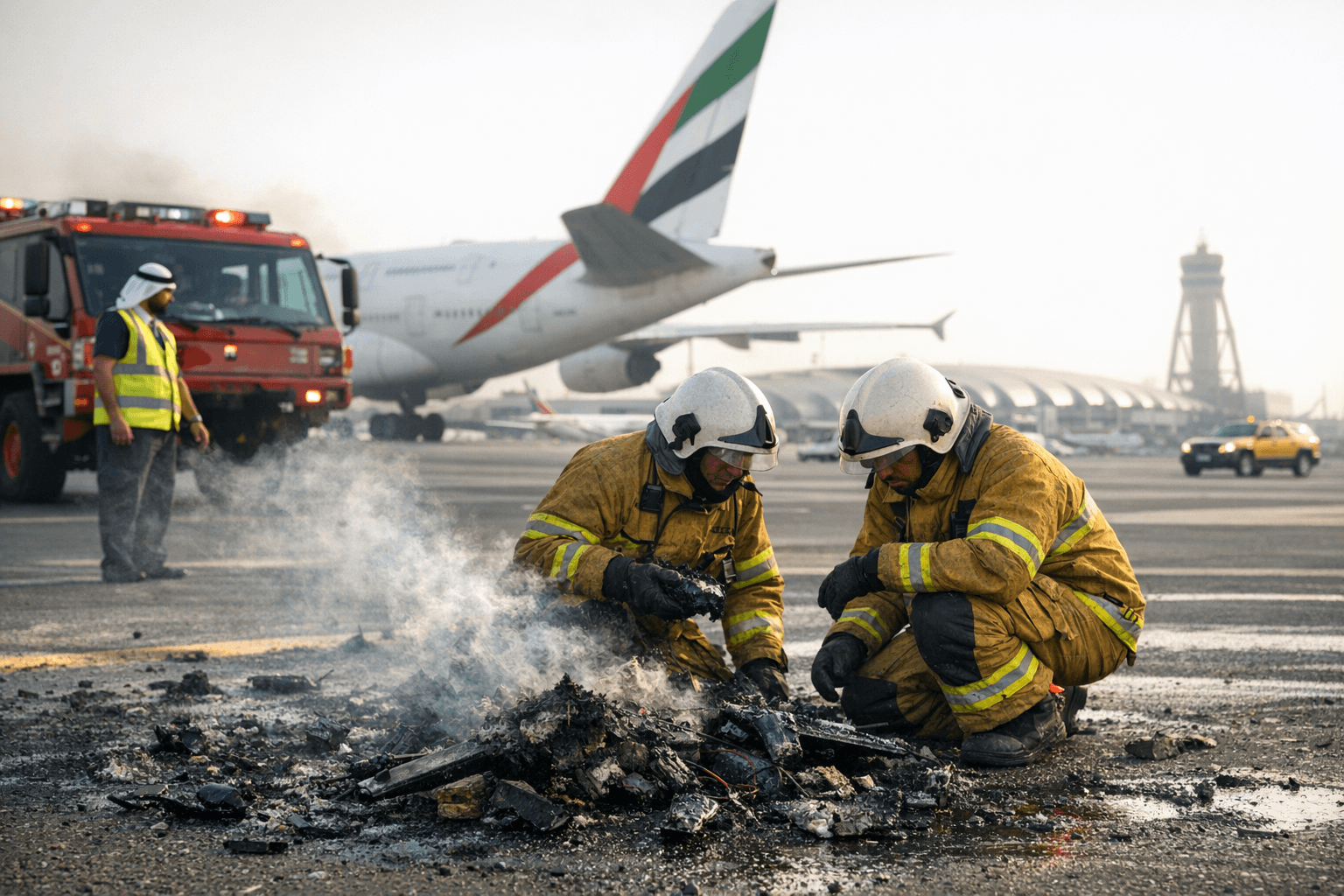
The operational lesson embedded in the March 30 closure is blunt. A small unmanned system, whether a malfunctioning commercial unit, a lost hobbyist aircraft, or a weaponized device, does not need to score a direct runway hit to freeze global air traffic. Debris alone, settling near a northern runway safety zone, was sufficient to halt 210 minutes of operations and force wide-body jets onto alternate flight plans across the region.
Dubai Airports confirmed phased resumption without publicly identifying the origin or nature of the drone involved, and airport perimeter monitoring protocols remain under heightened scrutiny. With multiple incidents now logged across a single month, the margin between a brief airspace scare and a day of cascading schedule collapse at one of the planet's most critical transit points has never looked narrower.
This article was produced by Prism’s automated news system from verified source data, official records, and press releases, then run through automated quality and moderation checks before publishing. The system is built and supervised by the people who set the standards it runs under. Read our full AI policy.
Did this article answer your question?