ESP32-Powered DIY Quad Surprises FPV Community With Competitive Speed Results
A $155 DIY quad named ESP-Blast hit 67 mph using a $5 ESP32 chip, placing garage-built hardware in territory normally reserved for purpose-built racing drones costing far more.
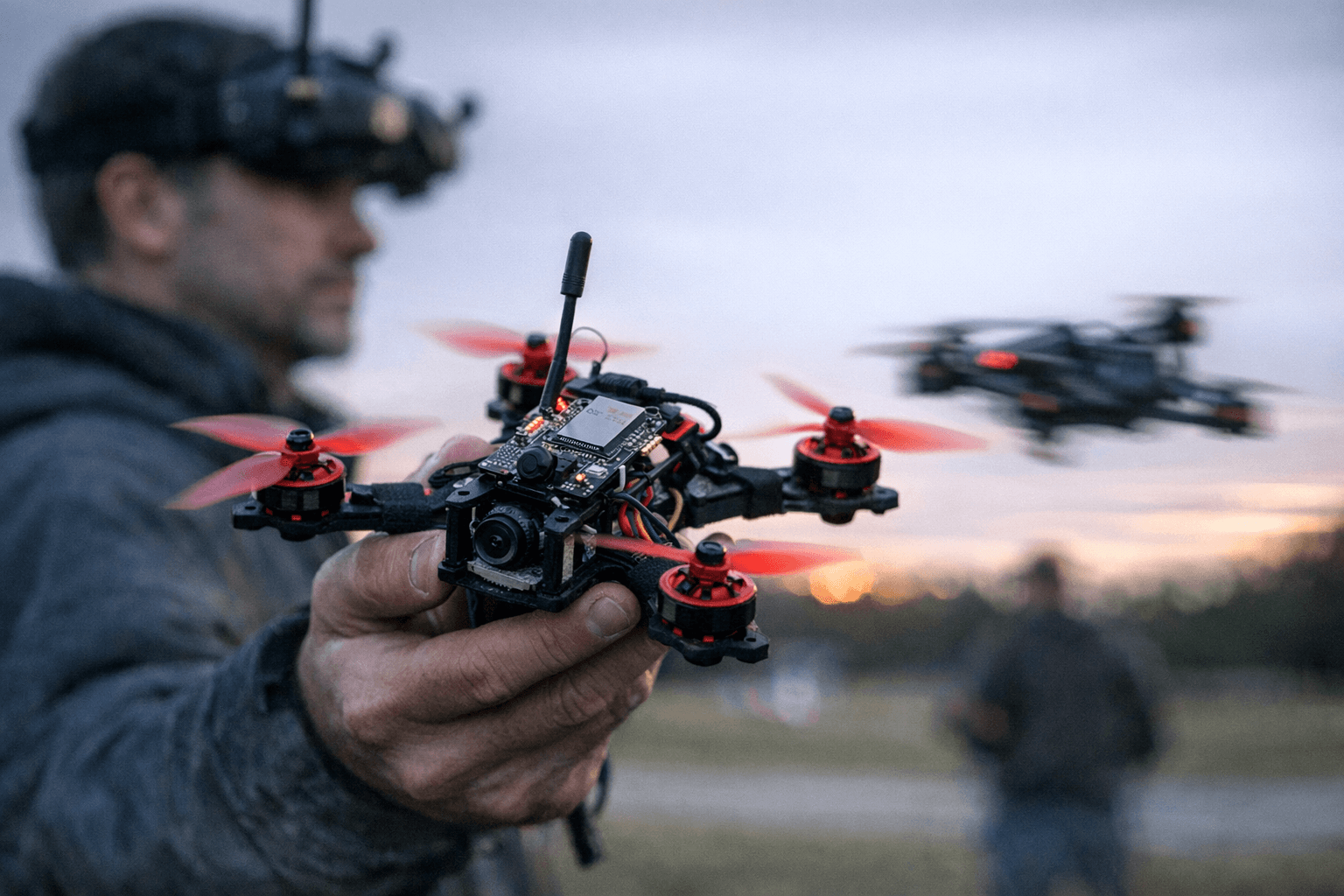
YouTuber Max Imagination shattered the assumption that high-speed drones require commercial flight controllers and four-figure budgets. His ESP-Blast quadcopter weighs 136 grams, costs $155 in parts, and rockets to 67 mph using an ESP32 microcontroller as its brain.
The number that matters in context: Ben Biggs' DIY Blackbird drone hit 430 mph in February 2026 using parts worth around $3,000 in total, making it more than 19 times more expensive than Max Imagination's machine. The ESP-Blast isn't competing for outright speed records. It's making the argument that the performance-per-dollar gap between hobbyist hardware and dedicated racing builds is far narrower than the FPV community assumed.
A dedicated flight controller for a high-performance FPV quad, something like a Betaflight F7 stack, typically runs a dedicated STM32 processor with hardware-accelerated sensor fusion, purpose-built firmware, and input/output timing designed specifically for the demands of multi-rotor control at speed. The ESP32 was not designed for any of that. This $5 chip is commonly used in Internet of Things smart home projects like modified coffee machines and security cameras. Max realized, however, that its 240MHz dual-core Xtensa LX6 processor and 520KB of RAM was ideal for his purposes, even if the chip's built-in Bluetooth and Wi-Fi antennas weren't required.
The airframe is equally unconventional. The frame is fully 3D-printed from PETG, a filament chosen for its balance of rigidity and impact resistance, produced on an Elegoo Neptune 4 Plus printer. Max iterated on the structure across multiple builds, which is a polite way of saying he crashed it, fixed it, and went faster until something held.
The ESP-Blast achieves its speed through four 1104 brushless motors spinning 2.5-inch tri-blade props, powered by 8A micro ESCs and a 450mAh 3S LiPo battery, with the entire airframe printing in a bullet-shaped design that cuts through air while surviving the inevitable tuning crashes. The 450 mAh battery pack keeps it airborne for roughly five minutes per charge, a short but usable flight window sufficient for high-speed runs and data capture during a typical test session before the battery must be swapped.
Max was inspired by two DIY high-speed drone efforts that have been trading records for the fastest RC quadcopters: one led by builder Benjamin Bigg and another associated with Luke and Maximo Bell. These teams have pushed their designs into the hundreds of miles per hour, with one recent machine reaching about 411 mph. Max Imagination's custom PCB integrates accelerometer, gyroscope, magnetometer, barometer, and GPS for just $8, with Betaflight 10.10 firmware tuning the system for stability at 100+ km/h speeds.
While the ESP-Blast does not aim to break absolute speed records, the project demonstrates how an off-the-shelf microcontroller and a consumer 3D printer can be combined into a compact, open, and reproducible platform capable of reaching impressive speeds. That reproducibility is the point. Max has indicated that he plans to continue iterating on the design, aiming to increase top speed in future versions while maintaining the low cost and accessible toolchain that define the current build. In a corner of motorsport where top-tier hardware often demands aerospace-level spending, a $5 chip hitting competitive numbers is the kind of result that rewrites assumptions about where the performance ceiling actually sits.
Know something we missed? Have a correction or additional information?
Submit a Tip