FAA Updates Public Safety Drone Policies at DRONERESPONDERS National Conference
FAA Deputy Executive Director Paul Strande told Williamsburg responders that drones are now an essential emergency tool, with BVLOS rulemaking and DFR waivers reshaping public safety airspace access.
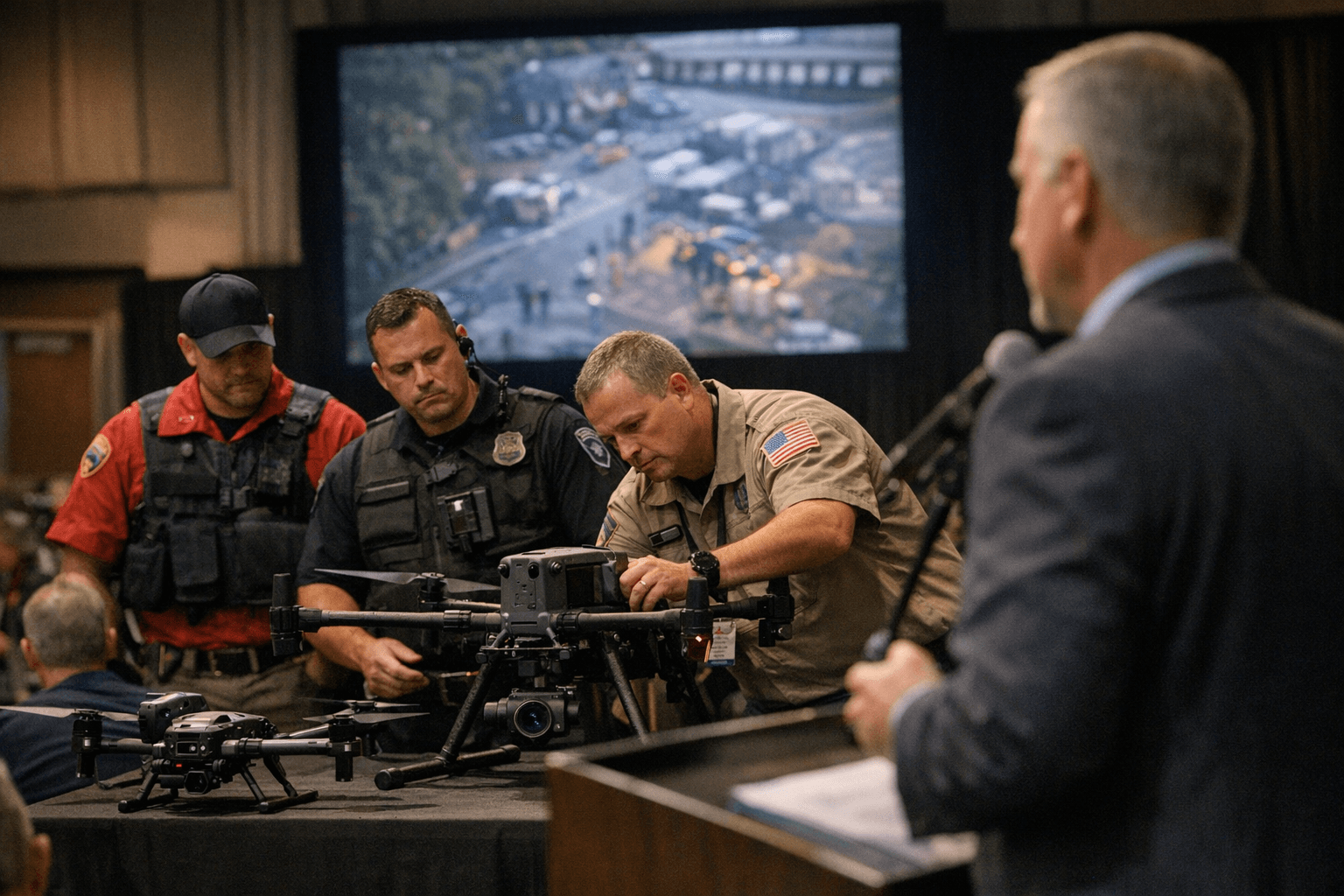
Paul Strande opened the DRONERESPONDERS National Public Safety UAS Conference in Williamsburg, Virginia on March 10 with a declaration that drone technology has already become an essential operational tool for emergency response agencies across the United States. Speaking as FAA Deputy Executive Director for the Office of Advanced Aviation Technologies, Strande addressed an audience of public safety professionals, aviation regulators, technology providers, and policymakers assembled for the annual gathering of the global nonprofit DRONERESPONDERS program.
"At the FAA, we recognize the value of that work," Strande told the conference, referring to the expanding role of drones in public safety missions. FAA leadership used the platform to highlight the rapid evolution of drones in public safety and the agency's ongoing efforts to support safe integration into the national airspace, with regulatory progress on BVLOS rulemaking and advances in Drone as First Responder waivers cited as active fronts.
The conference drew attention to the regulatory scaffolding already available to public safety agencies. Part 107, the small UAS rule, provides the baseline framework for operating small drones in the national airspace. Public entities can operate under Part 107, utilize authorized Part 107 operators, or qualify for public aircraft operations, giving agencies multiple operational pathways. For emergencies, the FAA has also made the Special Governmental Interest Process available, a mechanism through which agencies can expedite applications for authorizations or waivers to fly when time-critical situations arise.
The FAA's outreach record shows sustained engagement with the public safety community. The 2019 FAA UAS Symposium, held June 3-5 with the Association of Unmanned Vehicle Systems International in Baltimore, specifically targeted public safety agencies, with law enforcement officers participating in event programming. The FAA also hosted a dedicated webinar, "How Public Safety Agencies can Fly Drones During Emergencies," on September 12, 2019, walking drone pilots from law enforcement, fire, and emergency response through the Special Governmental Interest Process. A subsequent webinar planned for FY2020 was designed specifically around Counter-UAS technologies, reflecting growing agency awareness that public safety professionals needed clarity on who is authorized to use C-UAS systems and under what circumstances.
On that legal front, FAA materials draw clear lines. Directly interfering with or taking down a drone may violate federal laws, including trespassing and reckless endangerment statutes. Private citizens generally may not take down a drone flying over their property, and relief from federal laws applicable to Counter-UAS systems is limited to certain specified federal agencies. These constraints carry direct operational significance for event organizers and venue operators who may face incursions from unauthorized aircraft.
The agency has also pushed targeted public messaging, deploying hashtags including #FlySafe, #Drones4LEO, and #Drones4Safety, and committed to expanding in-person outreach at major law enforcement gatherings such as annual meetings of the International Association of Chiefs of Police. The FAA has also stated a goal of directly surveying the public safety community to ensure agency efforts reflect frontline needs.
Regulatory frameworks continue to evolve, and collaboration between regulators, technology providers, and frontline responders will play a key role in shaping the next phase of public safety aviation. For drone racing operators and event planners who share airspace with public safety programs, the FAA's push to streamline authorizations and expand BVLOS access represents a direct variable in how event airspace is managed and how quickly emergency drone assets can be cleared to operate.
Know something we missed? Have a correction or additional information?
Submit a Tip