FAI Drone Racing World Cup Series Explained, From Structure to 2026 Calendar
The FAI runs drone racing's most prestigious circuit under its F9 calendar, but its 2026 World Cup page on FPVScores currently shows zero linked events.

Drone racing has come a long way from a single FPV flight in Karlsruhe, Australia in 2011. Within fifteen years, the sport grew to fill arenas in Shenzhen and Dubai, draw sponsors including BMW, Allianz, and DHL, and earn broadcast slots on ESPN and Sky Sports. At the center of that institutionalization sits one organization: the Fédération Aéronautique Internationale, better known as the FAI.
What the FAI Is and Why It Matters
The FAI is the world governing body for air sports and holds recognition from the International Olympic Committee, which places it at the top of the governance hierarchy in any discipline it sanctions. In drone racing, that means the FAI's endorsement carries more formal weight than any independent series. The body organizes two distinct competitions pilots should understand: the FAI Drone Racing World Cup, a season-long series, and the FAI World Drone Racing Championship, an annual standalone event. These are related but not interchangeable, and the distinction matters when pilots are chasing ranking points versus a single championship title.
Within the FAI's structure, drone racing falls under the F9 (Drone Sports) calendar, managed through the FAI Aeromodelling Air Sport Commission, referred to by its acronym CIAM. CIAM is the body that votes on rule changes, establishes new competition formats, and confers official recognition. When sources describe the highest level of competitive legitimacy in this sport, they are describing CIAM-sanctioned results.
How the World Cup Series Works
The World Cup is structured as an international series of open events. "Open" is the operative word: these are not closed invitational competitions but qualifying events that any eligible pilot can enter. Across the series, pilots accumulate World Cup points, and top finishers earn CIAM recognition. The cumulative points system means consistent performance across multiple events matters as much as winning a single race.
This format differs meaningfully from the annual FAI World Drone Racing Championship, which functions more like a single-event title. The 2018 World Drone Racing Championship in Shenzhen, China, the first of its kind, illustrated the scale these events can reach: 128 athletes from 34 countries competed, and a 17-year-old Australian named Rudi Browning took the title. That result established both the global reach of FAI-sanctioned competition and a recurring theme in the sport: teenagers dominating the highest levels of the game.
The 2026 Calendar: What We Know
As of March 2026, the FAI World Drone Cups 2026 International page on FPVScores, the race management and score-tracking platform used to log events and results, displays zero total events, zero upcoming events, and zero past events. The page carries the description "The premier global FPV racing event sanctioned by the FAI, bringing together the world's fastest pilots to compete for the title of World Champion," but includes the explicit note: "No events linked to this competition yet."
That placeholder status on FPVScores does not necessarily mean the 2026 FAI World Cup series will not take place. FPVScores functions as a third-party platform where event organizers manually link individual races to a parent competition. It is plausible the FAI's official calendar contains 2026 dates that have not yet been ported to the platform, or that organizers are in the process of confirming venues before publishing. Pilots and followers tracking the 2026 schedule should cross-reference the FAI's own public calendar and CIAM pages directly rather than treating the FPVScores entry as definitive.
The e-Drone Racing World Cup: A Parallel Series
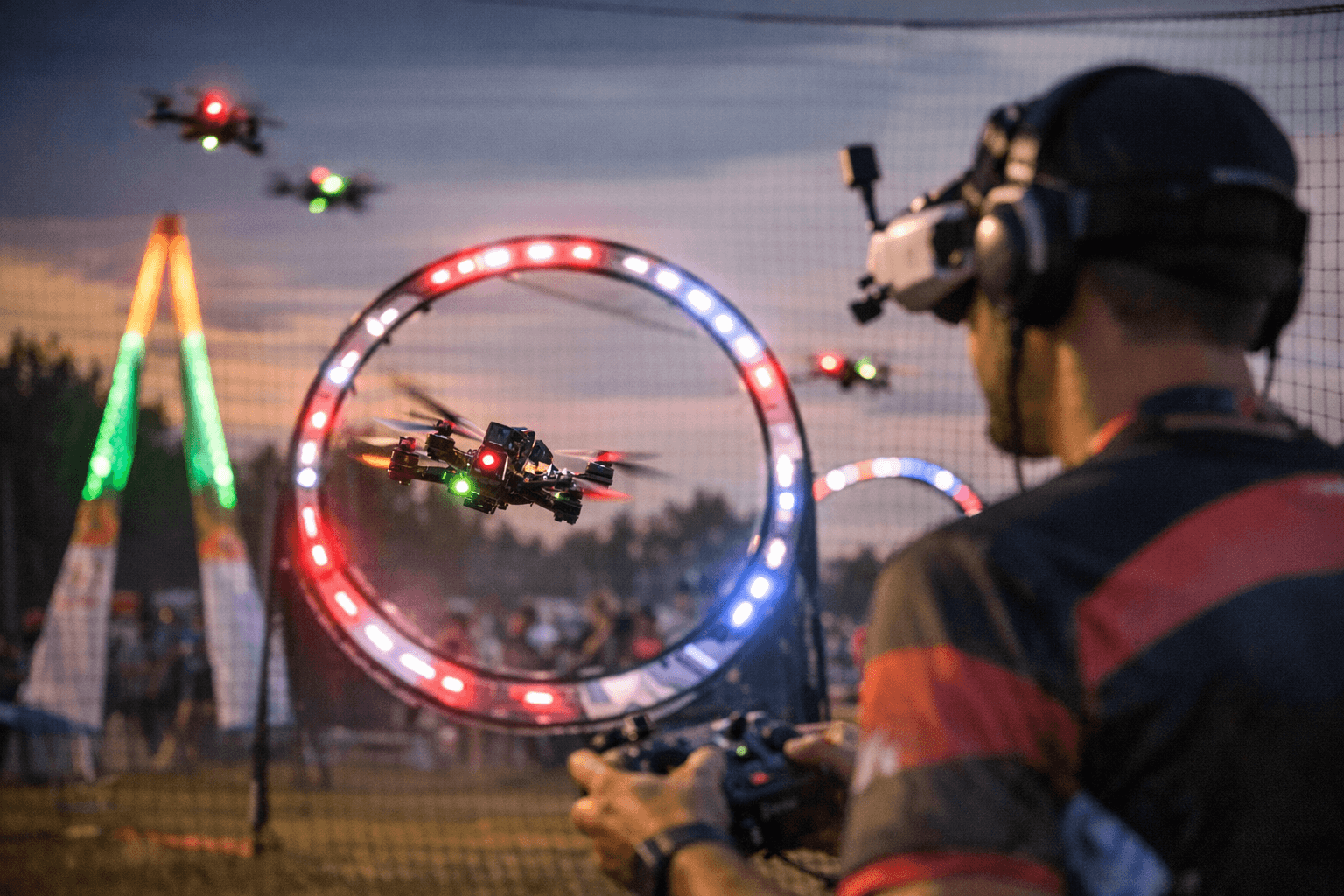
While the physical World Cup series awaits its 2026 event listings, a second, entirely virtual competition is already operating under FAI oversight. In March 2024, CIAM voted to establish the FAI e-Drone Racing World Cup, a series built around virtual FPV racing on digital circuits. As described by FAI's aeromodelling commission, e-Drone Racing "consists of virtual FPV drone races on virtual circuit with obstacles to overcome," and "all pilots may fly from home ('Remote' piloting) with their own computer."
The recognition structure for the virtual series mirrors the physical one in meaningful ways. The pilot who finishes at the top of the annual ranking earns the title of e-Drone Racing World Cup winner for that calendar year. CIAM medals and diplomas are awarded to the top three in the final annual ranking, with the possibility of additional prizes as they become available. The Ereadrone platform, which hosts event information for the virtual series, shows eight past events already completed, which suggests the program moved quickly from its March 2024 founding decision into active competition.
The Pilots Defining the Era
Drone racing has produced a recognizable roster of elite competitors, many of whom made their names before reaching adulthood. Rudi Browning, the 2018 FAI World Drone Racing World Champion, was 17 when he won in Shenzhen. MinJae Kim of South Korea was 14 when she won the 2022 FAI World Cup, the same year drone racing made its debut at the World Games. Luke Bannister, a British pilot, was 15 when he won $250,000 of the $1 million prize pool at the 2016 World Drone Prix in Dubai.
The current competitive scene is equally stacked. MCK, the pilot known as Minchan Kim, claimed back-to-back MultiGP Championships in 2022 and 2023, establishing him as one of the most consistent performers in the sport. Killian Rousseau of France won the 2024 MultiGP World Cup, cementing a European presence at the top of the rankings. In the UAE, Levi Johnson, competing as Leviathann, won the 2024 Sharjah Drone Racing Champions event in the 7-inch PRO Spec class.
FAI vs. MultiGP: Understanding the Landscape
MultiGP functions as a major independent organizing body, separate from the FAI's governance structure. The pilots listed above have often competed across both systems, but the circuits operate under different rules, point structures, and recognition frameworks. FAI-sanctioned events sit at the top of the formal international hierarchy given the IOC relationship; MultiGP events carry significant competitive prestige and often larger fields in certain regions but without the CIAM recognition that FAI competitions confer.
For pilots deciding where to focus their season, the practical difference is substantial. FAI World Cup points and CIAM recognition can matter for national federation support, official rankings, and championship eligibility in ways that results from independent series may not replicate. The two ecosystems are not mutually exclusive, as pilots like MCK and Killian Rousseau have shown, but understanding which results carry which weight is essential for anyone navigating the sport professionally.
From $25,000 to Global Broadcasts
The commercial arc of drone racing tracks its institutional one. The 2015 US National Drone Racing Championship at the California State Fair drew over 100 participants and offered a $25,000 prize, a landmark moment for domestic competition in North America. A year later, the World Drone Prix in Dubai raised the stakes to a $1 million prize pool and drew international attention. By the time the FAI staged its first World Drone Racing Championship in 2018, the infrastructure of a professional global sport was in place.
Today the sport counts BMW, Allianz, and DHL among its corporate sponsors, and its competitions reach audiences through ESPN and Sky Sports. The combination of IOC-recognized governance, a virtual racing series accessible from any home computer, and a generation of world-class pilots still in their teens or early twenties means the FAI World Cup series enters 2026 with significant momentum, even as its official event calendar for the year is still taking shape.
Know something we missed? Have a correction or additional information?
Submit a Tip