FAI explains drone racing’s World Games format, precision and speed
Four pilots, three laps, one headset. FAI’s World Games format shows drone racing rewards clean execution and nerve as much as outright speed.

Four drones on one course can look like chaos, but FAI’s World Games format is built to reward the pilots who stay calm, stay smooth and keep making the next gate. The event compresses speed into a precision test: three full days, four pilots per race, and a finish line that comes only after three laps through a gate-heavy circuit.
How the World Games format works
FAI’s guide treats drone racing as a structured competition, not a free-for-all sprint. In the World Games setup it describes, 31 athletes race over three days, each heat sends four pilots onto the track at once, and the target is to complete three laps in under three minutes. That short window matters because the stopwatch is unforgiving, yet so is the course itself, which is packed with gates and obstacles that punish even a small mistake.
The qualifying stage is where consistency starts to matter more than raw speed. Each athlete flies five races, and standings come from the average of the three best lap times. That design forces a pilot to be repeatable, not merely fast once, and it gives the better line holder a real advantage over someone who is brilliant in one run and messy in the next.
Why the bracket rewards nerve, not just throttle
After qualifying, the field moves into elimination, and FAI’s World Games rules use a double-elimination sequence in the 32-athlete scenario. The logic is simple enough to follow while still creating tension: the top two pilots in each round keep moving toward the final, while the lower two are not instantly out. They fall into a second-tier path and get another shot to race back into contention.
That structure changes how the competition feels on race day. A pilot cannot treat the first corner like a drag race and expect to survive every round, because one bad turn can push them into a longer route back through the bracket. The final stage then gathers the best performers from both paths, and the winner is the first athlete to win two final races. FAI says results are calculated immediately, which means the medal ceremony can happen within minutes of the deciding heat.
The numbers around the event underline how high the stakes were. FAI’s World Games preview named 32 athletes from 20 countries in the field, including 13 juniors and eight female pilots. FAI’s earlier qualified-athlete announcement had listed 30 athletes, showing how the entry list tightened and expanded as the event approached. For a niche air sport, that kind of international spread is part of the story.
What the pilot sees through the goggles
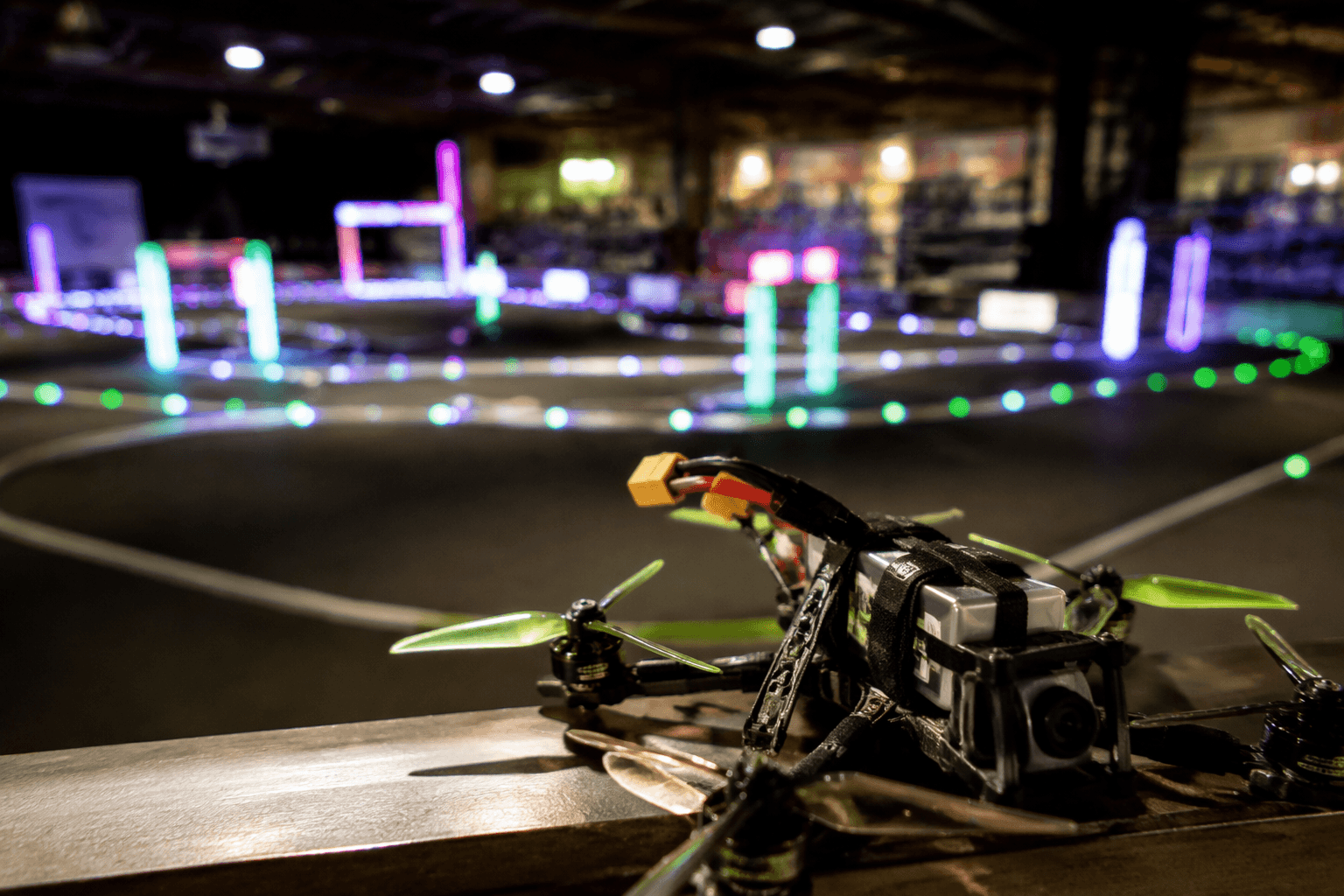
Drone racing starts with the headset. The International World Games Association says pilots fly small radio-controlled aircraft through a head-mounted display that shows a live video feed from the aircraft, and it says the drones can top 150 km/h. That first-person view is what gives the sport its signature look and its difficulty, because the pilot is not watching the drone from the outside but flying through the machine’s camera.
That is also why control precision matters so much. At those speeds, the difference between a clean gate and a clipped frame can be measured in the lap time that decides whether a pilot stays in the main bracket or drops into the recovery path. For a new fan, the easiest way to understand the gear is to think of the headset as the cockpit and the controller as the steering wheel, throttle and brake all at once.
Why clean laps beat reckless speed
FAI’s explanation of the format makes one point very clear: speed only counts if it survives contact with the course. The best three lap times from qualifying are what matter, not the wildest single run, and that is a built-in reward for pilots who can repeat a fast line under pressure. The same logic carries into elimination, where the opening rounds demand discipline because one mistake can send a pilot into extra races.
That is where practice habits separate contenders from the rest of the field. Simulator work matters because it lets pilots rehearse gate lines, corner entry and throttle control without risking a crash, and the World Games format gives that kind of repetition real value. If the course punishes drift, oversteer or a late correction, then the pilot who has already built muscle memory for the line usually has the edge.
The course is built to expose flaws
A top-level drone track is not just a string of hoops. FAI’s 2024 world championship course in Hangzhou had 43 gates and 12 L-shaped obstacles stretched across roughly 600 meters, a useful benchmark for how technical elite racing can get. That kind of density shows why drone racing looks frantic from the stands: every second contains multiple decisions, and every decision has a consequence.
The World Games course in Chengdu, China, added another layer of spectacle. FAI said the 2025 event ran there from 13 to 16 August 2025, and the track was revealed in June with a giant panda’s head shape that linked the racing to the host city’s identity. The sport’s visual appeal matters because the action is fast enough to grab casual viewers, but the real drama comes from the technical demand hiding inside the speed.
Why this stage matters beyond one medal table
The World Games gives drone racing a platform that fits its rise. The IWGA describes The World Games as the world’s second-largest multi-sport event after the Olympic Games, and that scale gives a niche air sport a much larger audience than it would have on its own. FAI says drone sports have brought tens of thousands of new people into air sports, which helps explain why the discipline now sits beside better-known international events instead of staying in a specialist corner.
The sport also has a clearer lineage than many newcomers realize. FAI says the first FAI World Drone Racing Championships were awarded to Shenzhen, China, in 2018, giving the discipline an official world-title history before its World Games spotlight. FAI also notes that air sports have been part of The World Games since 1997, so drone racing arrived as the newest expression of a much older competitive family.
That is the useful lesson inside the format: drone racing is not won by the loudest throttle finger. It is won by the pilot who sees the course cleanly through the goggles, trusts the line, and keeps the drone fast enough to matter without ever losing control.
This article was produced by Prism’s automated news system from verified source data, official records, and press releases, then run through automated quality and moderation checks before publishing. The system is built and supervised by the people who set the standards it runs under. Read our full AI policy.
Did this article answer your question?