FlyWing X-Wing Fighter's cockpit-first VTOL RC reshapes FPV hobby landscape
FlyWing’s X-Wing Fighter marries VTOL and fixed-wing flight with a cockpit-first FPV design, turning a CES curiosity into one of 2026’s most talked-about hobby RC platforms.

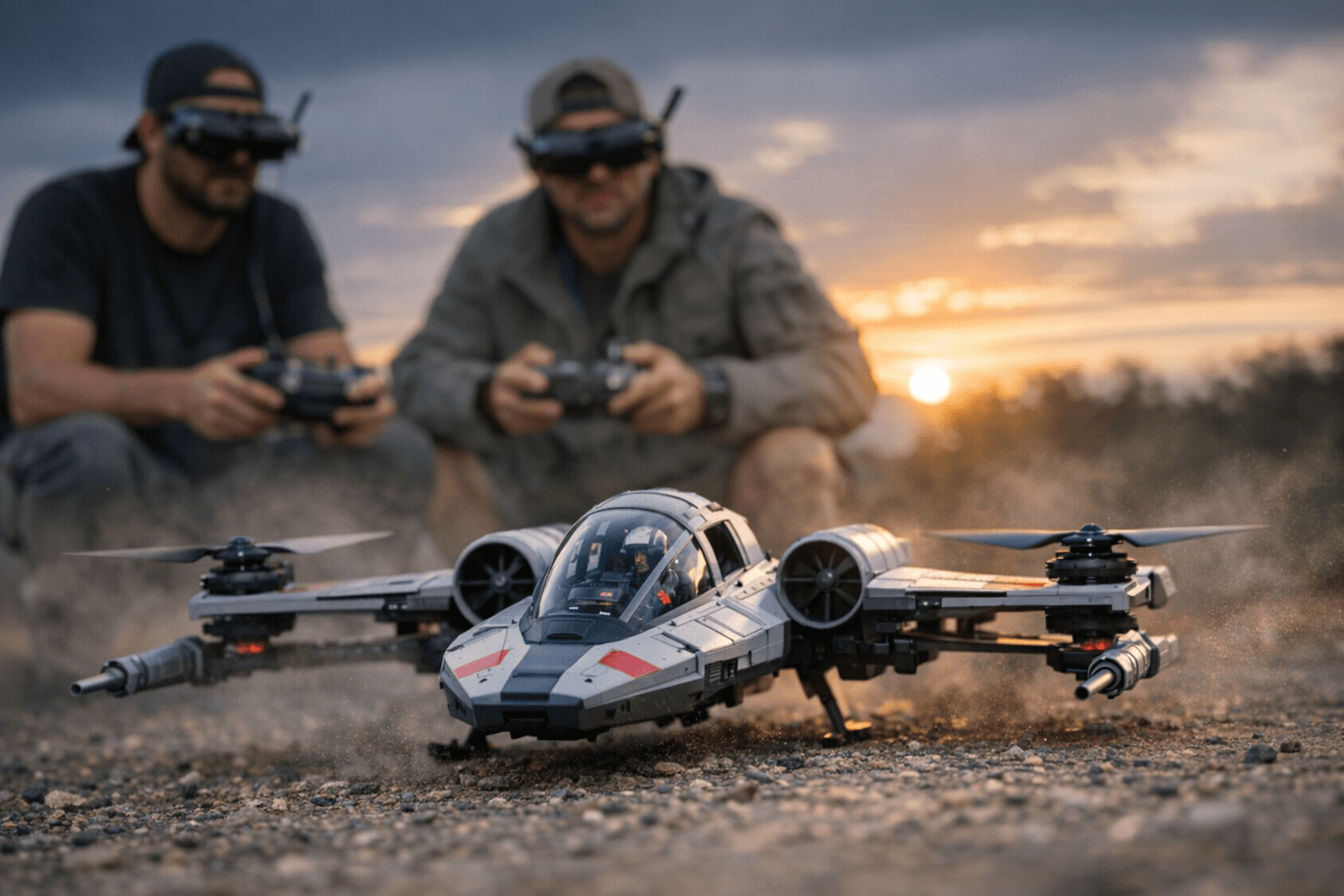
The first thing pilots notice is not a camera angle but a cockpit perspective: the X-Wing Fighter’s design centers the pilot’s FPV goggles as if they were peering through a canopy, and its VTOL-capable fixed-wing airframe makes that viewpoint practical across hover and forward-flight regimes. FlyWing introduced the concept at CES and on February 21, 2026 the product moved from curiosity toward a broader hobby conversation as pilots and vendors parsed what a cockpit-first platform means for practice and racing.
FlyWing bills the X-Wing Fighter as a VTOL-capable fixed-wing RC platform engineered around that cockpit-first FPV experience rather than the camera-as-cinematic-tool approach that dominates most consumer models. The configuration lets the aircraft operate in vertical lift and wing-borne modes, preserving the pilot’s forward-facing orientation during transitions. That technical choice foregrounds piloting fundamentals over cinematic framing and requires different tuning of video transmitters, antenna placement, and flight controllers than typical multirotor builds.
The shift from cinematic camera to cockpit-first design has immediate implications at the hobby level. What debuted at CES as a demo attracted sustained attention on February 21, 2026 because the X-Wing Fighter forces organizers and builders to reconsider class definitions that separate multirotors, traditional fixed-wing, and hybrid VTOL entries. Race directors who count on fixed-wing lap speeds and multirotor agility now face a machine that can launch vertically, climb like a quad, then accelerate on a wing. That combination complicates gate placement, timing segments, and safety buffers used in current FPV race formats.
For pilots and shops the practical changes are also concrete. Cockpit-first flight flips how goggles are set up, how pilots practice transitions, and how tuning priorities are ranked between hover stability and wing-borne efficiency. FlyWing’s emphasis on a cockpit feel suggests pilots will spend practice time on controlled hover-to-cruise transitions and on antenna orientation to keep that forward view clean through rapid attitude changes. For build shops, the platform pushes a market for airframes and control systems optimized for mixed-mode flight rather than pure cinematic mounts.
The X-Wing Fighter’s rise from CES curiosity to a focal point of conversation on February 21, 2026 sets a clear inflection for FPV hobbyists: hardware and race infrastructure that assumed camera-as-cinematic-tool will need revision. Expect organizers and pilots to draft specific class rules and practice protocols in the coming weeks as the community decides how to fold cockpit-first VTOL fixed-wing aircraft into competitive and casual flying.
This article was produced by Prism’s automated news system from verified source data, official records, and press releases, then run through automated quality and moderation checks before publishing. The system is built and supervised by the people who set the standards it runs under. Read our full AI policy.
Did this article answer your question?