Hezbollah FPV Drone Strikes Exploit Unprotected IDF Armored Vehicles in Lebanon
Hezbollah struck four IDF armored vehicles with FPV drones on March 31, exploiting a glaring gap: none of the targeted vehicles carried improvised top-mounted slat armor.
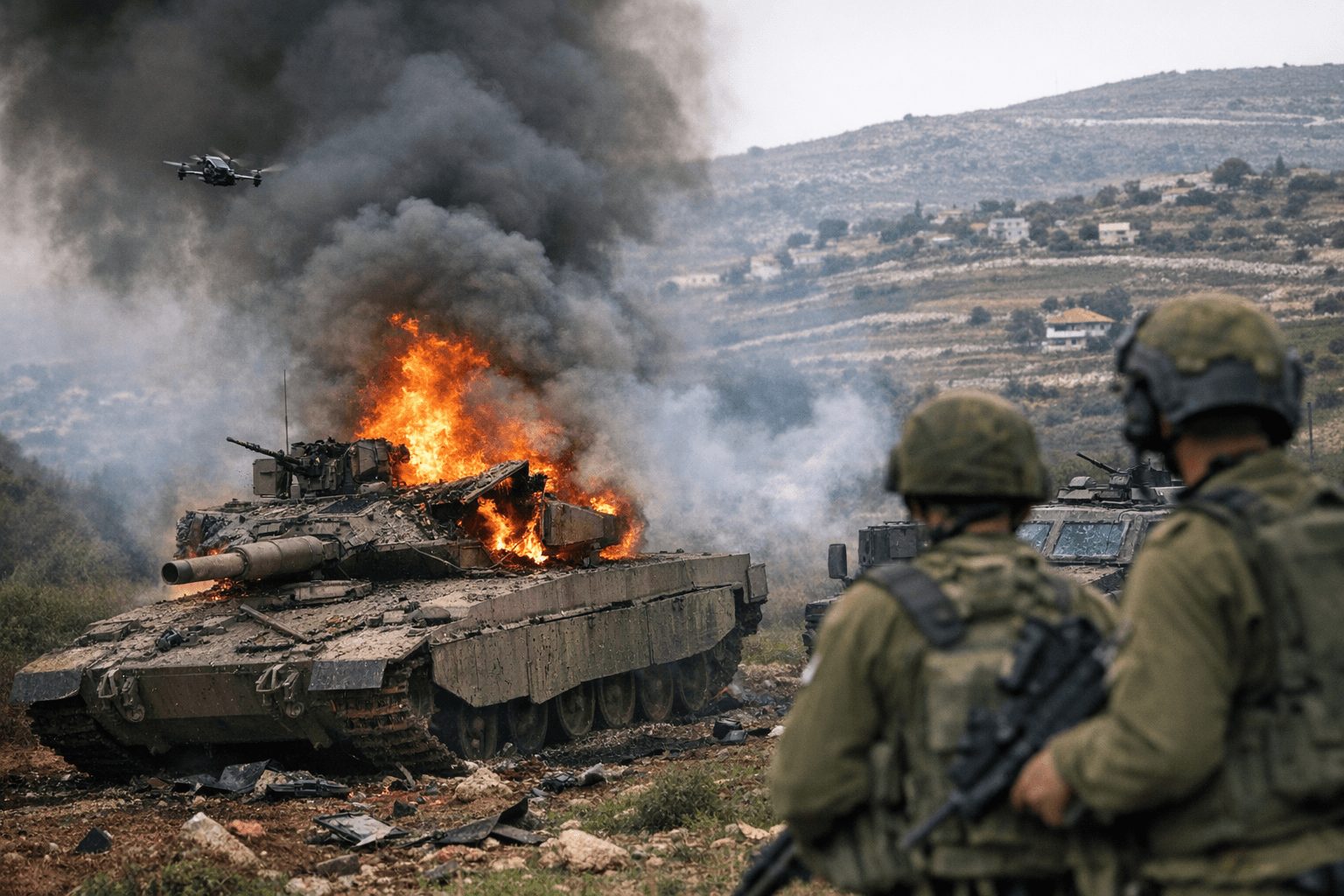
Four Israeli armored vehicles in southern Lebanon absorbed FPV drone strikes on March 31 without a single piece of improvised top-mounted slat armor between them, a detail buried in the Critical Threats Project and Institute for the Study of War evening update that carries outsized significance for anyone tracking how small rotary-wing systems are reshaping ground combat.
Hezbollah conducted four first-person view drone strikes against IDF armored vehicles in southern Lebanon on March 31. None of the IDF's armored vehicles that Hezbollah struck appeared to be equipped with improvised top-mounted slat armor to protect the vehicles against FPV drone attacks or anti-tank munitions. The absence of that improvised cage armor, known colloquially as "mangals" in the Ukraine theater, is not a minor footnote: it is precisely the topside exposure that makes operator-guided attack quadcopters lethal against otherwise capable armored platforms.
On March 27, Hezbollah released footage on Telegram showing an FPV drone hunting and striking the turret of an Israeli Merkava tank. The group said the tank was hit at a newly established camp in southern Lebanon. The March 31 strikes followed that blueprint at scale, with four separate engagements confirming the tactic had moved from demonstration to operational routine.
The CTP-ISW analysis frames the strikes within a broader campaign logic. Iranian proxies have deployed FPV and small rotary-wing attack drones specifically to complicate maneuver and logistics for armored columns, targeting turrets, vehicle tops, and exposed equipment where warhead effects are most likely to inflict mission-degrading damage. The strikes are not harassment; they are precision engagements against identified vulnerabilities.
Israeli military tanks going into Gaza and Lebanon in 2023 to 2025 were seen equipped with cages over their turrets, indicating preparations against drone warfare, but the weapons were largely absent from each conflict. FPV drones appeared first in recent weeks in Iraq, when an Iran-backed militia published footage striking buildings at a U.S. base, then hitting a U.S. Black Hawk helicopter. The March 31 strikes in Lebanon mark the consolidation of that capability into Hezbollah's standard operating toolkit.
The technological lineage running from hobby and racing FPV components to battlefield attack systems is direct and well-documented. High-power brushless motors, compact high-bandwidth analog video links, and the manual piloting skill developed in racing and freestyle contexts all feed into the attack drone pipeline. The successful use of FPV drones by Hezbollah shows the group has been able to reconstitute itself to some degree since its earlier setbacks.
For defense and procurement communities, the CTP-ISW update is unambiguous: layered counter-UAS defenses paired with tactical mitigations including armor modifications, revised formations, and disciplined concealment of topside vulnerabilities are no longer optional upgrades. The four strikes on March 31 demonstrated that unprotected vehicles, regardless of their base armor rating, remain soft targets for any operator with an FPV rig and a shaped charge. The gap between "equipped with slat armor" and "not equipped" has become, in the Levant theater, the difference between a survivable hit and a mission kill.
This article was produced by Prism’s automated news system from verified source data, official records, and press releases, then run through automated quality and moderation checks before publishing. The system is built and supervised by the people who set the standards it runs under. Read our full AI policy.
Did this article answer your question?