Human FPV Champion Edges Out AI in Down-to-the-Wire A2RL Finale
World FPV champion Minchan Kim edged out TII Racing in a 5-4 best-of-nine finale after the autonomous drone struck a gate, underscoring how close human instinct and vision-based AI have become.

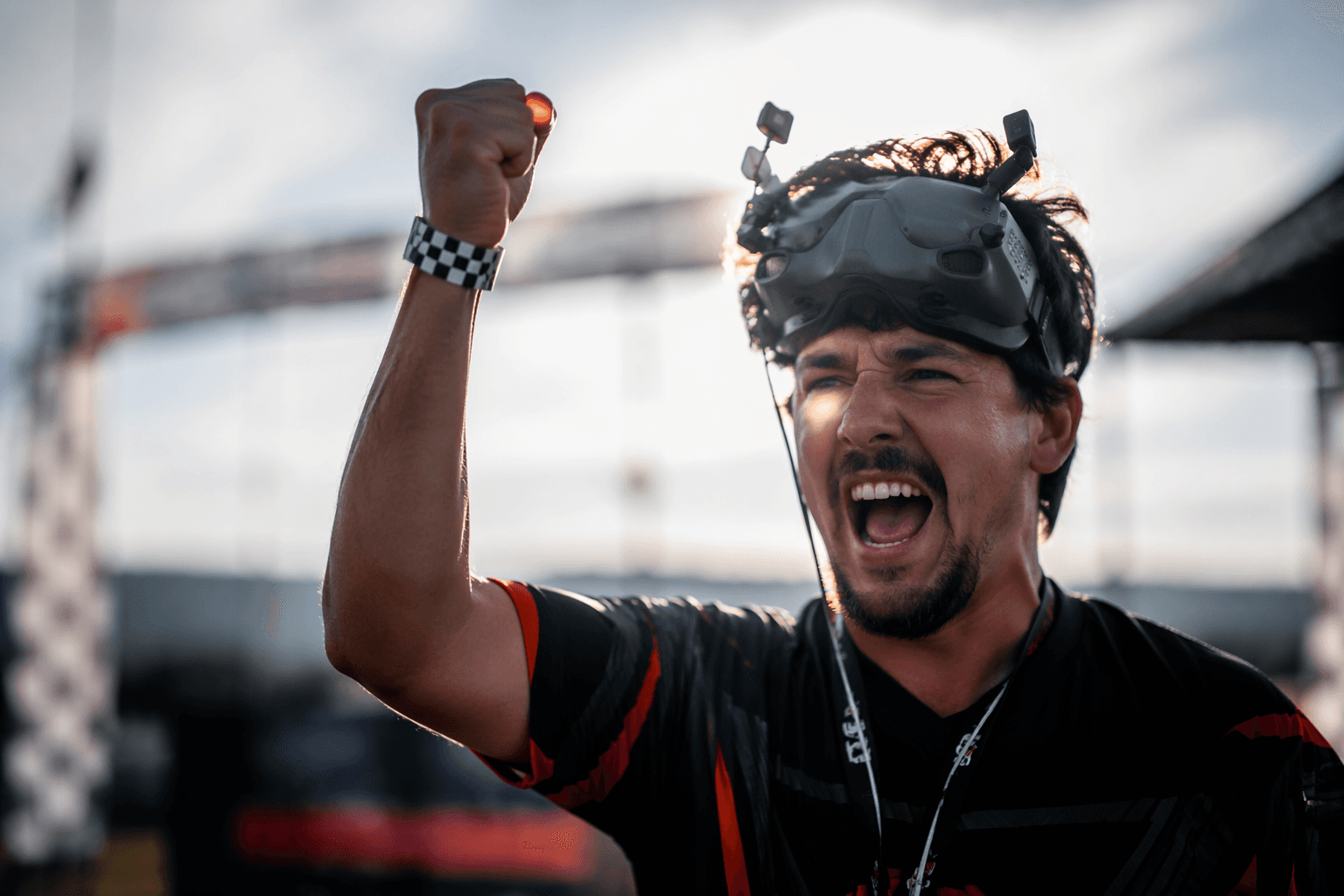
The Abu Dhabi A2RL Drone Championship delivered a dramatic finish when World FPV champion Minchan Kim narrowly beat Technology Innovation Institute’s TII Racing in a best-of-nine Human vs AI final that was tied 4-4 before a decisive ninth run. The autonomous craft clipped a gate and could not recover, handing Kim the victory in a contest that compressed years of autonomy research into two days of high-stakes racing.
Held during UMEX on 21–22 January and organized by ASPIRE, the innovation acceleration arm of the Advanced Technology Research Council, the Championship carried a USD 600,000 prize pool and showcased multiple formats: an AI Speed Challenge, multi-drone Gold and Silver races, and the head-to-head Human vs AI challenge. The event underlined both the rapid progress of vision-based autonomy and the narrow margins separating human pilots and machines at racing speed.
TII Racing set the benchmark in the AI Speed Challenge with a fastest autonomous lap of 12.032 seconds, while MAVLAB posted 12.832 seconds to finish second in the speed runs. In multi-drone formats that tested interaction in shared airspace and multi-agent coordination, MAVLAB secured the multi-drone title and FLYBY took the Multi-Drone Silver Race, signaling strong advances in coordinated autonomy beyond raw velocity.
Organizers deliberately constrained autonomous platforms to a minimal sensor suite so software, not hardware, would determine performance. As the press materials put it, "All autonomous drones competed using a single forward-facing RGB camera and inertial measurement unit, without LiDAR, stereo vision, GPS, or external positioning." That monocular-vision constraint forced teams to push perception, real-time collision avoidance, trajectory planning, and control algorithms to the limit, approximating the single-eye feed human pilots get through FPV goggles.
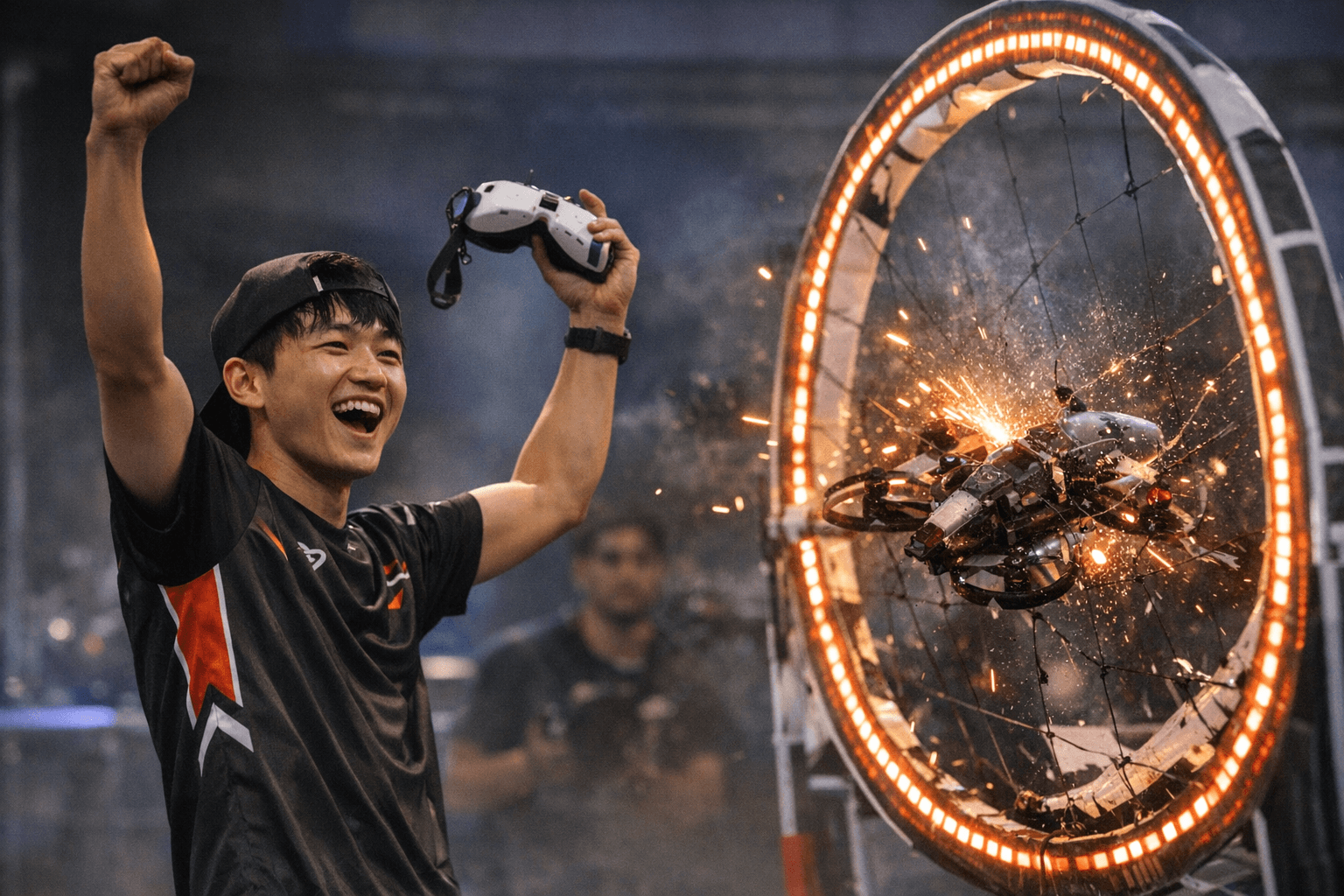
The Human vs AI finale became a case study in edge-case behavior under stress. After eight split results left the series tied 4-4, Kim held an advantage in the final run while the autonomous system struck a gate and failed to recover. Sources do not specify the technical root cause of the strike, and teams will need to provide debriefs to determine whether perception, planning, or control logic was responsible.
Beyond the track, A2RL Summit 3.0 framed the competition as a public testbed with direct implications for industry and society. Sessions focused on regulation, simulation-to-reality transfer, scaling autonomy, and how lessons from vision-based racing can translate to logistics, emergency response, and future air mobility. For investors and policymakers, the Championship offered measurable benchmarks such as the 12.032 second lap and side-by-side human comparisons that make technical progress tangible.
For the FPV community and broader public, the outcome is both thrilling and clarifying: human situational intuition still matters, but machines are closing the gap fast when limited to human-like sensors. The near-miss finish raises the stakes for teams and regulators alike, and sets the agenda for follow-up reporting: official timing sheets, technical debriefs from TII Racing on the gate strike, and confirmation of the champion’s preferred name spelling as reported across outlets. Expect A2RL to be the proving ground where future policy, products, and pilots are tested under racing pressure.
This article was produced by Prism’s automated news system from verified source data, official records, and press releases, then run through automated quality and moderation checks before publishing. The system is built and supervised by the people who set the standards it runs under. Read our full AI policy.
Did this article answer your question?