Luisa Rizzo’s rise shows drone racing’s human side
Luisa Rizzo’s title run shows drone racing as a sport of skill and access, not just hardware, with a women’s world crown and a path built on freedom.
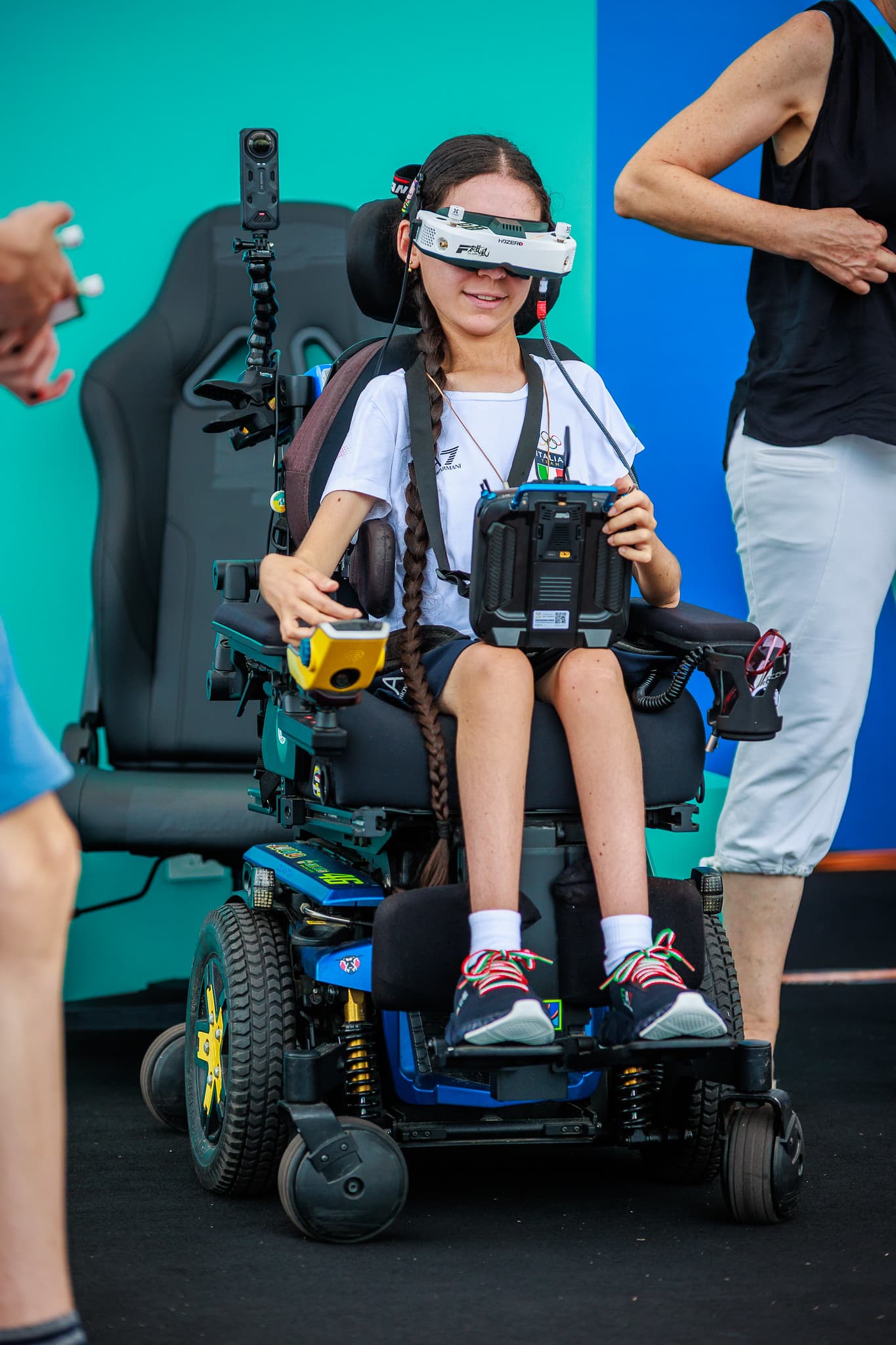
Luisa Rizzo’s rise gives drone racing a face that is bigger than speed and circuitry. The FAI named her the Women’s World Drone Racing Champion in 2024, and by the time she arrived at The World Games 2025 in Chengdu she had already been flying drones for eight years, building a career that reached far beyond a single breakout result.
A champion built on access and repetition
Rizzo’s story starts with a drone her father bought her in 2017 to help keep her hands moving because she is affected by spinal muscular atrophy. That detail matters because it explains why drone racing is not only a test of reaction time, but also a place where access can create opportunity. The FAI says she went on to compete in at least 15 World Cup events and three FAI World Championships, turning an adaptive entry point into an elite racing career.
Her 2024 gold in Hangzhou, China, was not a symbolic moment. It was the first gold medal of her career at the FAI World Drone Racing Championship, and it came in a field that later event coverage placed at 111 pilots. That is the scale that separates drone racing from a novelty demo: there are grids, titles, qualifying pressure and the kind of national and international competition that gives a result real weight.
Why drone racing suits more than one kind of athlete
The Fédération Aéronautique Internationale describes drone racing as one of the fastest-growing air sports in the world, and The World Games frames it as a discipline built on reaction time and a steady hand through a course of obstacles. That formula is part of what makes the sport unusual. Physical size and raw strength matter far less than precision, rhythm and split-second judgment.
That is also why the sport has become a meaningful stage for disabled athletes. The FAI says disabled pilots can compete in drone racing and notes that wheelchair users are often seen on the start line. It has also pointed to Spanish pilot Isabel Vila Roura, who is deaf since birth, as another example of how the sport can function as a level playing field. Rizzo fits into that same broader picture, but her profile is more than representative. She is an elite racer whose results show that inclusion and high performance can exist in the same lane.
The FAI has quoted Rizzo describing the sport as a place where she has "no limits anymore," and she has also said that drone racing gives her freedom. That is not just a personal line. It is the core of why her career resonates beyond the FPV crowd. She shows that the sport’s human value lies in what it allows athletes to do, not in how many people still reduce it to hardware specs.
The results that turned her into a global name
Rizzo’s rise has a clear competitive timeline. She finished third in the 2023 FAI World Drone Racing Championships in Namwon, South Korea, then placed second in The World Games Athlete of the Year 2023 poll with 55,834 votes. The FAI said that was the strongest performance by an air-sports athlete in that contest, a notable marker for a sport that still fights for mainstream recognition.
Her speed also became part of her public profile. In 2023, the FAI said she was flying at speeds over 160 km/h. That number helps explain why drone racing pulls in core tech fans, but it does not fully explain why her story travels wider. The bigger story is that those speeds belong to a pilot who turned an adaptive hobby into a world title, and then used that platform to widen the definition of who belongs on the start line.
Her résumé also includes a Guinness World Records entry from 2018, when she cleared 56 gates in 60 seconds on live television at age 16. That record still matters because it shows how early her talent was visible. By the time she won in Hangzhou, she was not a curiosity. She was a racer with years of results behind her.
A sport that already has a wider lane
Drone racing’s future depends on whether it can be seen as more than a niche of controllers, cameras and firmware. Rizzo’s profile helps make that case because her path touches several audiences at once: women in sport, disabled athletes, young competitors and fans drawn to high-skill competition. The FAI’s championship materials include women’s and junior categories alongside the overall title, which makes the structure of the sport look less like a one-off spectacle and more like a competition system with room to grow.
That broader structure matters to the audience drone racing wants next. Tech-savvy fans may arrive for the machinery, but they stay for the pressure of qualifying, the burden of precision and the stories attached to the pilots. Rizzo’s career supplies all of that. Her title in Hangzhou, her podium in Namwon, her second-place finish in the Athlete of the Year poll and her Guinness record all give editors and promoters something the sport often lacks: a human arc with competitive proof.
From race track to movie set
Rizzo’s story also reaches outside sport. She studies cinematography and arts at university and has said she wants to work with drones on movie sets. That ambition fits the same throughline that runs through her racing: drones are not just machines for speed, but tools for movement, perspective and control. In her case, the sport and the career path are linked by the same hands, the same precision and the same confidence that came from learning to fly.
She even competes in Powerchair Football, another reminder that her athletic life is not limited to one discipline. Taken together, those details make her more than a champion of a single event. She is a proof point that drone racing can accommodate different bodies, different goals and different definitions of success without lowering the competitive bar.
Rizzo competed in The World Games 2022 in Birmingham, Alabama, before returning to Chengdu in 2025, which shows how consistently she has remained part of the sport’s highest tier. Her 2024 world title was the culmination of that climb, not a one-time surprise. For drone racing, that is the strongest possible argument for legitimacy: a champion whose freedom, access and elite performance all arrive in the same frame.
This article was produced by Prism’s automated news system from verified source data, official records, and press releases, then run through automated quality and moderation checks before publishing. The system is built and supervised by the people who set the standards it runs under. Read our full AI policy.
Did this article answer your question?