Master Drone Racing Skills With GetFPV's Champion-Level Practice Guide
GetFPV's practice guide distills tips from Captain Vanover, FPV_Davis, and Freefall into drills that can take you from casual flyer to race-ready competitor.
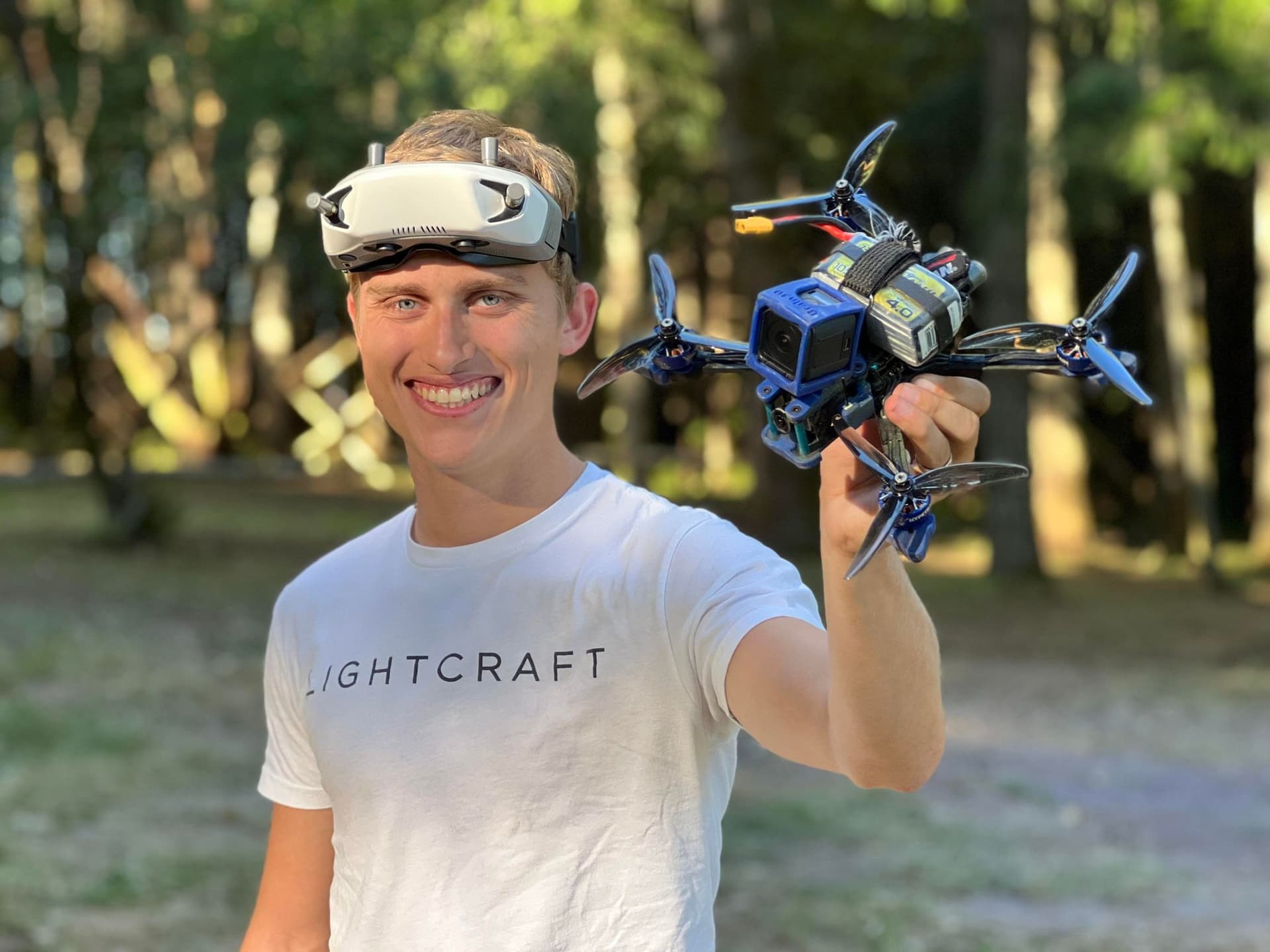
So you wanna be a drone racing champion. Cool, most of us do! However, getting there takes a ton of practice, dedication, and adulting tends to get in the way of stick-time." That opener from GetFPV's long-form practice guide cuts right to the point. Compiled from lessons shared by Captain Vanover, FPV_Davis, Freefall, and top pilots of The Other Guys (TOG), Freefall's home MultiGP chapter in Colorado, the guide is built around a simple promise: help you maximize every minute of practice so you can move from novice to racing veteran as quickly as humanly possible. What follows is a breakdown of every principle, drill, and technique the guide delivers.
Maxim #1: Practice with your crew
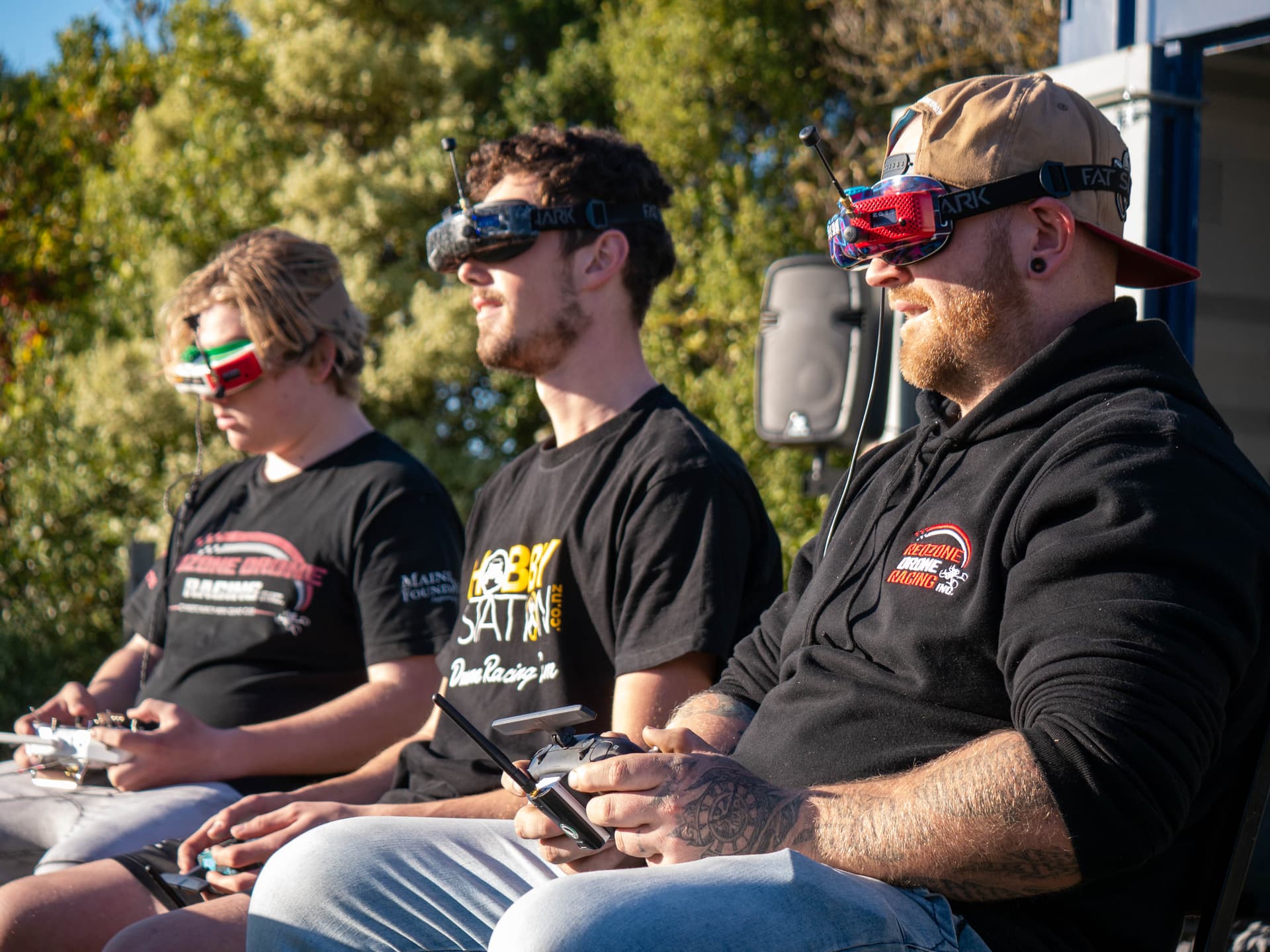
The single biggest mistake pilots make is waiting until they feel "ready" to race. The guide is blunt about this: "If you've been holding off on racing until your skills are on par with the MultiGP pilots you see on YouTube, I encourage you to throw that logic in the trash." The reasoning is straightforward. You cannot learn to race by flying alone at your own pace. The technique that separates good pilots from great ones is absorbed by watching and competing against people who are better than you. As the guide puts it, "Every champion has a tribe of people that helped them get to the top — people that encouraged them to push harder and faster and lent a helping hand when things got tough."
The social dimension of the guide is worth taking seriously. Finding a local chapter like TOG, showing up to events, and lining up against faster pilots is not optional polish on top of technical training; it is the training. "The sooner you find your crew and race them every chance you get; the faster your skills will improve." And for anyone anxious about standing next to elite pilots in the pits? The guide dismisses that concern directly: "There's no reason to be intimidated by the pros. They're all great people and more than happy to help and encourage you."
Maxim #2: Practice mindfully, not mindlessly
Simulator hours and pack after pack of real stick-time are only valuable if you know what you are working on. The guide is specific: "Whether you're flying in a simulator or getting in some real stick-time, you won't be doing yourself any favors by merely flying through gates and ripping packs. Stick-time on its own has little value." Every session needs a declared objective, whether that is tightening a specific corner, smoothing throttle input on a banked turn, or nailing the entry point of an inverted gate.
The guide provides a memorable way to frame this habit: "If it helps, every time you plug in, the ESC's on your quad should sing a little song that says 'What. Are. You… Working…On?'" It sounds playful, but the underlying principle is sound. Deliberate practice with a specific target consistently produces faster skill gains than open-ended repetition.
Physical prep: finger and hand exercises from MultiGP
Racing is not just about throttle curves and line selection. At the highest level, the precision of your thumb movements directly limits your performance, which is why MultiGP includes dedicated hand exercises in its training material.
The first drill is Thumb Opposition:
1. Put your thumb and index finger together.
2. Squeeze them as hard as possible without causing pain and hold for five seconds.
3. Move to the middle finger and repeat.
4. Continue through each finger so the thumb squeezes with each one in turn.
5. Repeat the entire sequence three times so each finger receives three repetitions.
The second drill is Finger Abduction:
1. Place your hand palm-up, as if asking someone for money.
2. Squeeze all fingers together, with the thumb aligned and squeezing inward.
3. Keeping your fingers as straight as possible, squeeze as hard as you can.
4. Hold for five seconds and repeat ten times.
These exercises are easy to dismiss as filler, but consider the precision demands of competitive FPV: the margin between a clean Split-S and a wall strike can be a matter of millimeters of stick deflection. Building strength and isolation in each finger pays direct dividends in fine motor control on the sticks.
Gear readiness: the preflight checklist
Lost practice time is often not about skill; it is about gear failures that could have been caught in 90 seconds. MultiGP is direct: "Seems simple, but it is often overlooked. Go through a 'checklist' for all your gear (craft, batteries, transmitter, goggles, charger). Make sure that all your gear is set up properly. Every pilot of a full-sized aircraft goes through a checklist before every flight, so should we."
The five-category checklist covers:
- Craft
- Batteries
- Transmitter
- Goggles
- Charger
The logic behind this is unambiguous. "If you know all your equipment is working as intended you can focus your practice time on flying, not fixing." Every minute spent diagnosing a battery connection or a misconfigured VTx channel is a minute not spent flying, and those minutes compound over a full season.
DVR as a training tool: the Guitar Hero method
One of the most underused tools in a pilot's kit is already built into most FPV setups: the DVR recorder in your goggles. The guide frames it directly: "Use your DVR as a valuable training tool, both for reviewing your flights to look for ways to improve and as a sort of 'Guitar Hero' for FPV."
The comparison to Guitar Hero is more than a clever analogy. At the Regional Finals, observers noted that during bad-weather delays, pilots were watching their recorded practice runs through their goggles — and holding their transmitters while doing it. "Some of the pilots were even holding their transmitters and 'flying along' with their footage; they were practicing the stick movements necessary to negotiate the track." This technique trains muscle memory and, critically, timing: "Knowing when to start a turn is just as important as how the turn is done." The Sky Bridge obstacle was cited as a specific example where this kind of timing rehearsal translates directly to cleaner execution on race day.
What autonomous racing tells us about human limits
For context on exactly why these training methods matter, consider the findings from a Nature study on Swift, an autonomous drone racing system. Human pilots in the experiment were given one week of practice on a race track designed by an external world-class FPV pilot, a course featuring challenging maneuvers including a Split-S. After that week, each pilot competed against Swift in head-to-head races: two drones starting from a podium after an acoustic signal, with the first to complete three full laps through all gates in correct order declared the winner.
The results were stark. "Swift won several races against each of the human pilots and achieved the fastest race time recorded during the events." The researchers claimed their work "marks the first time, to our knowledge, that an autonomous mobile robot achieved world-champion-level performance in a real-world competitive sport."
Two structural advantages explain much of the gap. First, Swift uses inertial data from an onboard inertial measurement unit, an input analogous to the human vestibular system that human pilots simply cannot access because they are not physically inside the aircraft. Second, and perhaps most illuminating for any pilot thinking about training: Swift's sensorimotor latency is 40 ms, compared to an average of 220 ms for expert human pilots. That is nearly a six-fold difference in reaction speed.
The implications for human training are direct. You cannot eliminate sensorimotor latency the way an autonomous system can, but you can reduce its practical effect through better anticipation, sharper track knowledge, and more precise timing. DVR rehearsal, mindful practice targeting specific maneuvers, and physical drills that sharpen fine motor control are all methods for closing that gap incrementally. The Swift research does not suggest human training is futile; it maps the biological constraints human pilots work within and makes the case for training methods that address timing and decision-making at their core.
GetFPV's guide, drawing on the experience of Captain Vanover, FPV_Davis, Freefall, and the TOG community in Colorado, translates that challenge into a concrete practice framework. Find your crew, fly with intention, protect your hands, protect your gear, and use every minute on or off the sticks as a structured learning opportunity. That is the competitive edge that separates pilots who plateau from pilots who progress.
Know something we missed? Have a correction or additional information?
Submit a Tip