Minchan Kim Tops TII in Abu Dhabi 5-4 After 12.032s Fastest Lap
TII Racing clocked a blistering 12.032-second autonomous lap, but World FPV Champion Minchan Kim narrowly beat the machine 5-4 in Abu Dhabi's A2RL human-vs-AI finale.
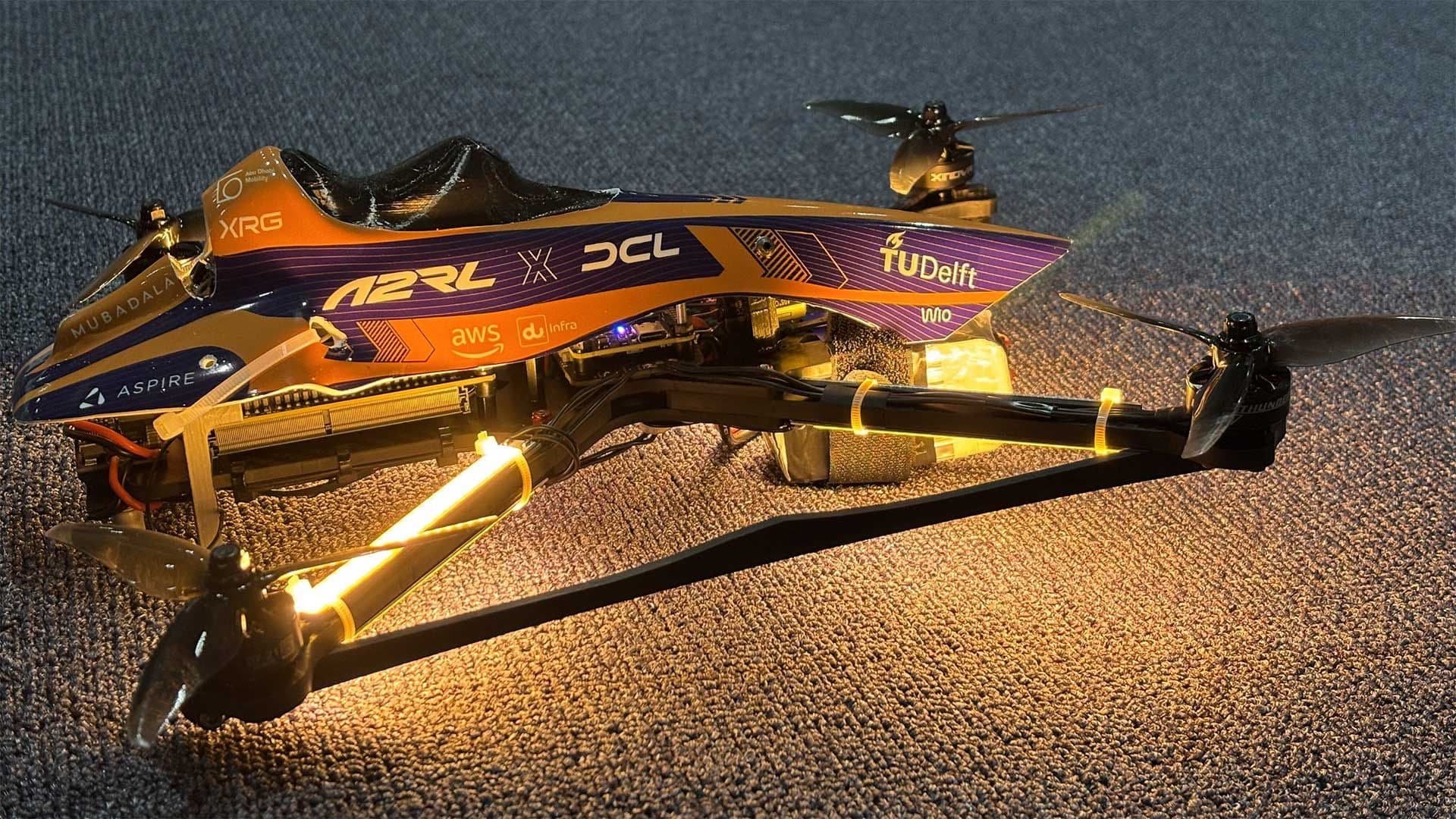
TII Racing stunned the timing boards with a 12.032-second autonomous lap in the AI Speed Challenge, yet World FPV Champion Minchan Kim still edged TII 5-4 in a best-of-nine human-vs-AI finale after the autonomous drone clipped a gate in the deciding run. The Abu Dhabi Autonomous Racing League championship took place during UMEX on 21–22 January 2026 and featured solo speed trials, multi-drone coordination races, and direct head-to-head showdowns.
Organized by ASPIRE under the Advanced Technology Research Council umbrella, A2RL offered a USD 600,000 total prize pool and a deliberately strict sensor rule set that forced teams to race on vision and algorithms. Stephane Timpano, CEO of ASPIRE, said the field’s gains were driven mainly by software: “Compared to Season 1, teams are achieving higher speeds with greater stability and consistency, driven almost entirely by software advances.”
The AI Speed Challenge isolated raw autonomous capability and produced tight margins. TII Racing’s 12.032s lap led the field and was followed by MAVLAB at 12.832s, a gap of roughly 0.8 seconds that multiple teams framed as evidence of a narrowing top-end performance spread. Giovanni Pau, Technical Director at TII Racing, credited software engineering for the result: “Achieving the fastest lap reflects the depth of our software development and testing. Performing at this level in a pure autonomy challenge shows what disciplined, vision-led systems can deliver when pushed to their limits.”

Multi-drone races emphasized the opposite problem: calm coordination in shared airspace. MAVLAB won the Multi-Drone Gold Race while FLYBY took Silver, outcomes that highlighted multi-agent planning, real-time collision avoidance, and trajectory management under pressure. Organizers and commentators called multi-agent autonomy “one of the most difficult problems in autonomous aerial systems,” and MAVLAB’s gold was cited as proof that coordinated autonomy can function reliably in race conditions.
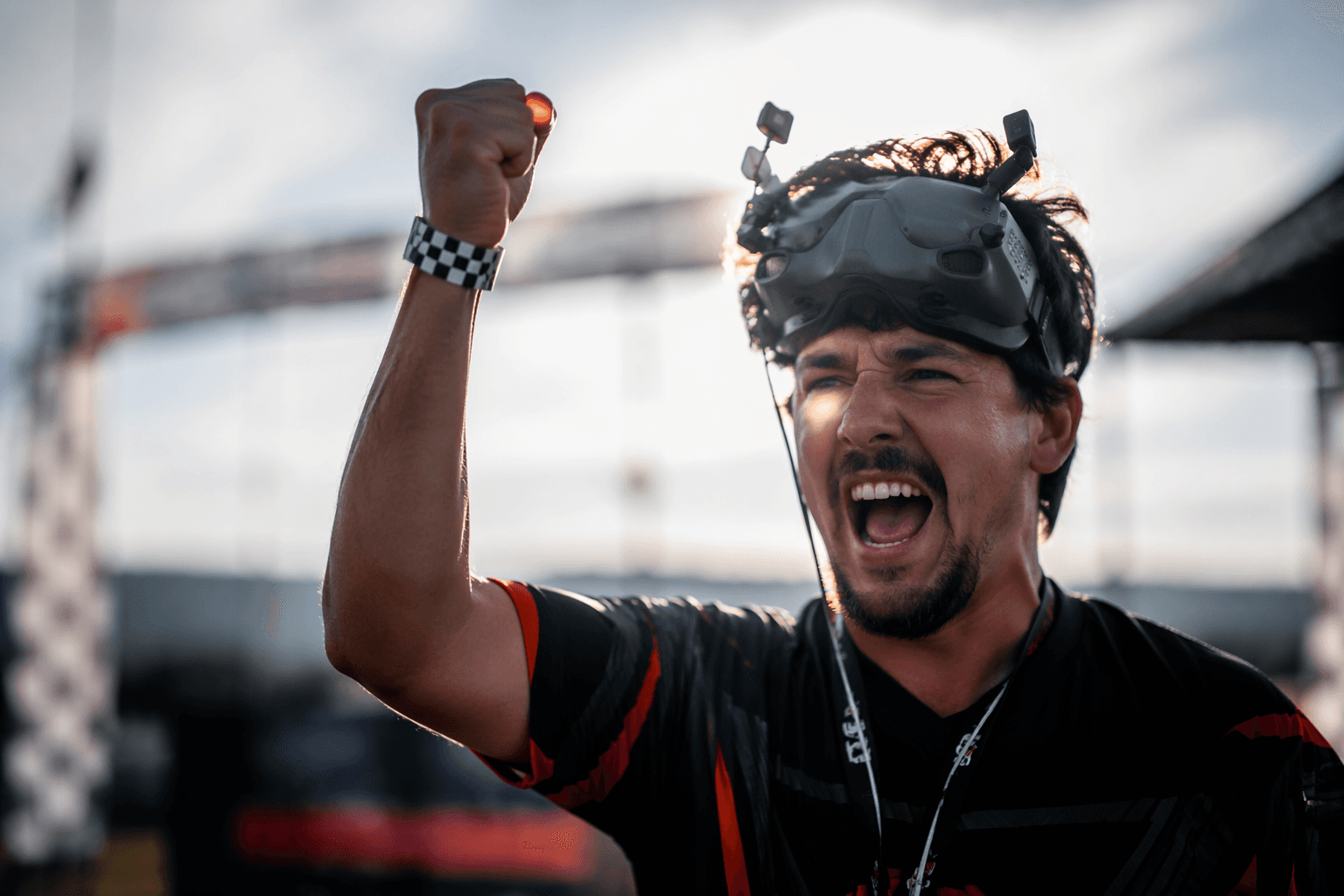
The human-vs-AI best-of-nine duel came down to a 4-4 tie before the final run. Minchan Kim held a lead as the autonomous craft struck a gate and could not recover, handing Kim the 5-4 victory and reversing last year’s result when AI outperformed elite pilots. The finish underlined that, at the absolute limit, human instinct and split-second line selection still deliver decisive advantages.

A2RL’s single forward-facing monocular RGB camera plus IMU rule was central to the competition’s aims. Race Director Shane Adams framed the restriction as a cost-and-innovation lever: “Breaking the tech barrier. The idea is to reduce the costs of the robots and also push the limits of tech to open new avenues in the future.” With USD 600,000 on the line and software improvements driving year-over-year gains, the series left manufacturers, teams, and race promoters with a clear business signal: vision-led autonomy is ready for faster, tighter competition and closer commercial translation into real-world aerial systems.
This article was produced by Prism’s automated news system from verified source data, official records, and press releases, then run through automated quality and moderation checks before publishing. The system is built and supervised by the people who set the standards it runs under. Read our full AI policy.
Did this article answer your question?