Mitchell Tech launches drone racing team, linking sport with careers
Jyler Tharaldsen’s FPV laps at 25 mph are now part of Mitchell Tech’s new drone team, built to turn racing reflexes into job-ready skills.
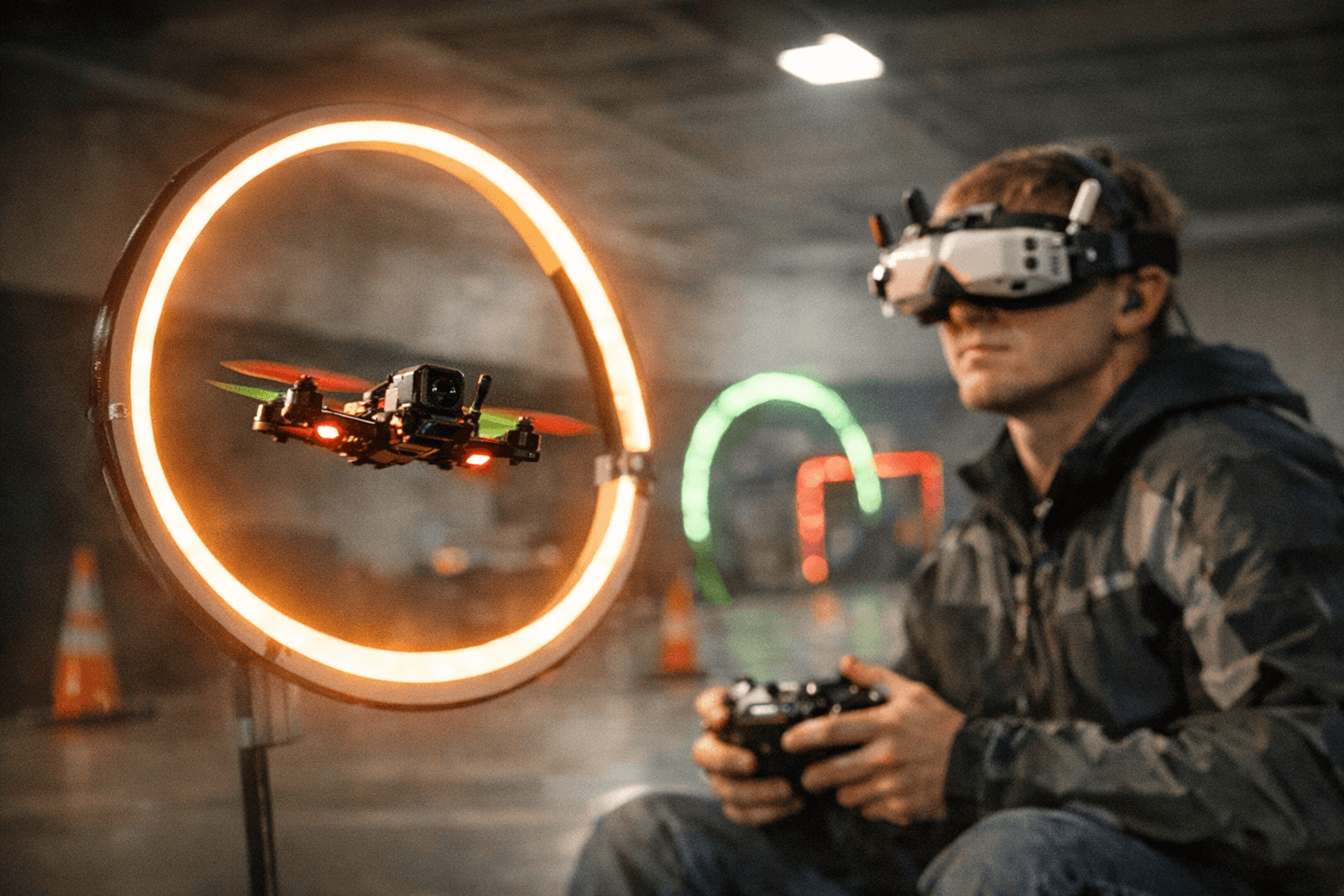
Jyler Tharaldsen pulled on first-person-view goggles in a Mitchell Technical College lab and sent a drone through gates, around obstacles and into tight turns at about 25 mph. At Mitchell Tech, that is not just practice for a race. It is the start of a new pipeline from drone racing to careers in GPS, GIS and unmanned aircraft systems.
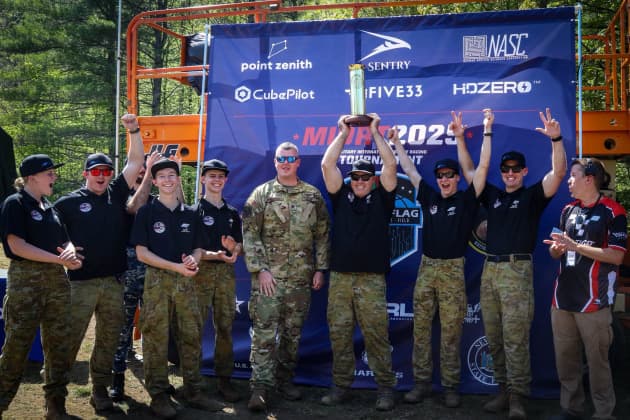
Mitchell Tech launched its inaugural drone racing team this year through the Drone Aviation & Geospatial Technologies program, giving students a chance to compete against 10 other schools across the Midwest. The setup looks and feels like a sport, with speed, reflexes and split-second corrections deciding who stays clean through a lap and who clips a gate. But the school is making a bigger bet: the same control, patience and spatial judgment that win races can also matter in the field on jobs that use drones every day.
The program is built around that idea. Mitchell Tech describes its Drone Aviation & Geospatial Technologies program as a one-year track centered on GPS, GIS, drone technology and unmanned aircraft systems. The college also ties the program directly to employment paths, listing careers such as GPS technician, survey field technician, GIS specialist, spatial analyst and mapping technician. In other words, the team is not bolted onto a campus club calendar. It sits inside a technical program designed to turn flying skill into workplace skill.
That matters because drone racing demands more than nerves. Mitchell Tech says the sport teaches precision, patience and quick decision-making, and the lab work makes that obvious. A movement that is too large can send a drone crashing. A movement that is too small can bleed off speed and cost a lap. That kind of fine control is exactly what gives FPV racing its edge as training, and it is why the team feels like more than a novelty.
Devon Russell is the figure anchoring that approach. He joined Mitchell Tech in 2013, helped create South Dakota’s first drone programs and later helped launch the school’s Geospatial Technologies program in 2015. He is now listed as the program coordinator and instructor for Drone Aviation & Geospatial Technologies, a sign that Mitchell Tech sees drone racing as part of a longer technical-career ladder, not an isolated add-on.
For scholastic FPV racing, that is the real shift. Mitchell Tech is treating the sport as a proving ground for the next generation of drone workers, and the lab in Mitchell, South Dakota is becoming as important as any race gate on the Midwest circuit.
This article was produced by Prism’s automated news system from verified source data, official records, and press releases, then run through automated quality and moderation checks before publishing. The system is built and supervised by the people who set the standards it runs under. Read our full AI policy.
Did this article answer your question?