Multiple drone and artillery attacks injure dozens in Nikopol as Russian Shahed/Geran barrages continue
Russian FPV and Shahed drone strikes hit Nikopol three nights running, wounding 29 people total; a 75-year-old woman was left in serious condition.
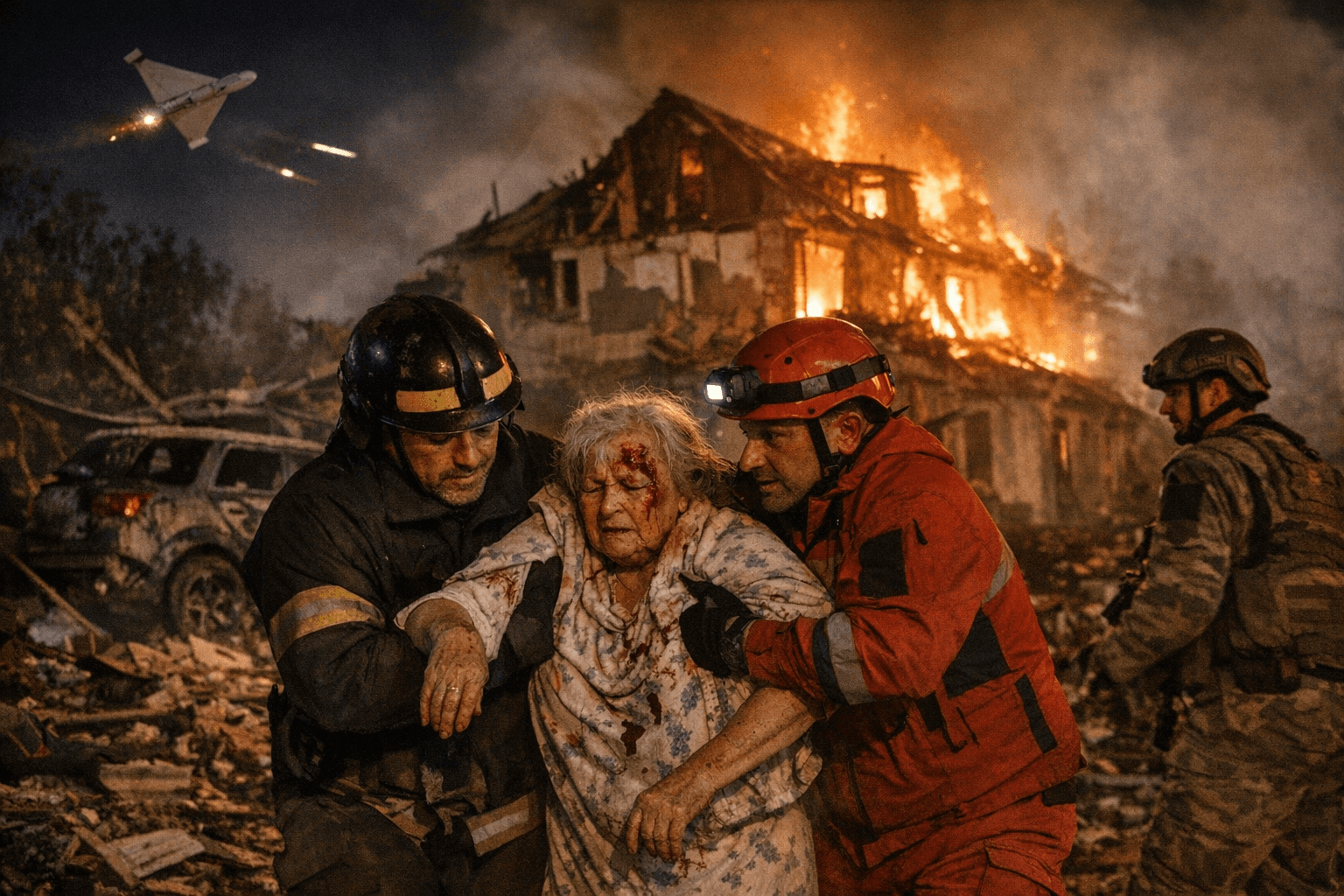
Twenty-nine people were wounded across three consecutive nights of Russian drone and artillery strikes on Nikopol, a city in Dnipropetrovsk Oblast that absorbed near-daily punishment through the final days of March and into April. The pace and casualty toll underscore how overlapping unmanned systems, combining long-range Shahed loitering munitions with short-range FPV attack quadcopters, are compressing the threat landscape for Ukrainian civilian populations.
Regional governor Oleksandr Hanzha reported eight wounded on March 30 following an FPV drone strike, then eleven more casualties on March 31 in a second FPV attack. The April 1 overnight barrage produced ten additional injuries. Among the latest victims was a 75-year-old woman left in serious condition; other casualties sustained blast and shrapnel wounds and fractures and were transported to local hospitals for treatment. Residential apartment blocks, shops, and vehicles were damaged or destroyed across the incidents, with debris and secondary fragmentation accounting for a significant share of the harm.
The April 1 strikes arrived as part of a wider aerial barrage that the Ukrainian Air Force tracked at 339 incoming strike drones, a mix of Shahed, Geran-type, and Italmas variants, with roughly 200 assessed as Shaheds. Ukrainian air defenses destroyed or suppressed 298 of those aircraft, a high interception rate that nonetheless left approximately 20 drones reaching targets across 11 locations, with debris impact reported at five additional sites. The arithmetic is instructive: an interception rate above 85 percent still produces lethal and damaging effects on the ground when the incoming volume is large enough.
The Nikopol casualty sequence illustrates the tactical logic behind Russia's layered drone campaign. FPV quadcopters, far cheaper and more agile than cruise-style loitering munitions, can be deployed in concentrated numbers against urban targets that larger air-defense systems are not optimized to engage at close range. When combined with Shahed-scale barrages that force defenders to prioritize and allocate interceptors across a wide area, the result is persistent local effects even inside a functioning air-defense envelope. Hanzha's consecutive-night casualty reports from the same city reflect exactly that pattern in practice.
For a city like Nikopol, the cumulative toll across those three nights, 29 wounded, multiple hospitalizations, and significant property destruction, represents a sustained degradation of civilian life that high national interception tallies do not fully capture.
This article was produced by Prism’s automated news system from verified source data, official records, and press releases, then run through automated quality and moderation checks before publishing. The system is built and supervised by the people who set the standards it runs under. Read our full AI policy.
Did this article answer your question?