Northern Alberta FPV League hosts dawn to dusk solstice drone race
A 15-hour solstice meet at Ministik Park mixed six qualifying heats, freestyle practice and a $10 charity entry, turning Edmonton FPV into an all-day endurance test.
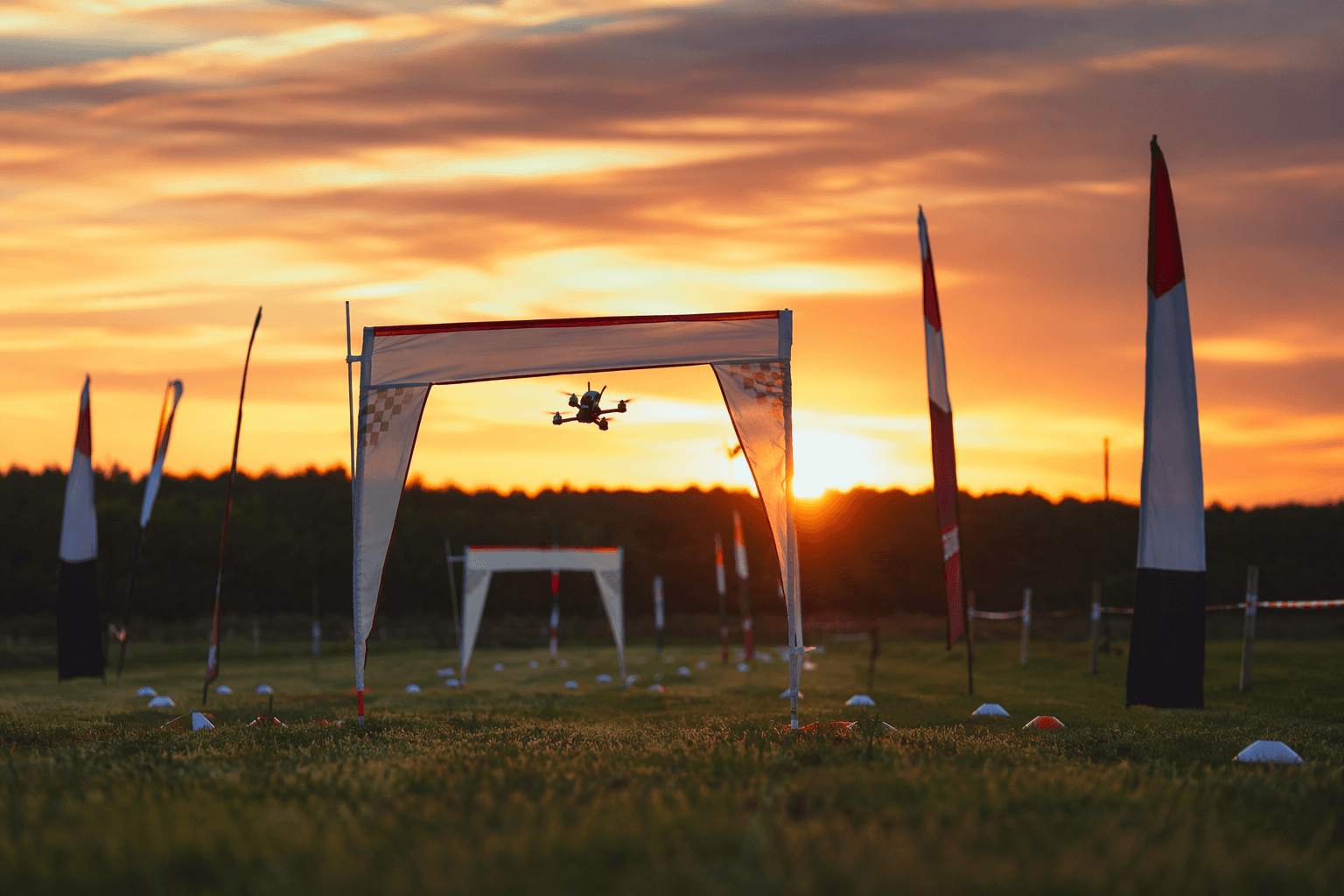
A dawn-to-dusk format changes everything for FPV racers. At Ministik Park, Northern Alberta FPV League stretched the solstice meet from 7:00 a.m. to 10:00 p.m., turning June 21 into a 15-hour grind where battery management, lap pacing and heat-to-heat consistency mattered as much as raw speed. The schedule included a practice heat, roughly six qualifying heats in the morning, afternoon racing, freestyle practice and other fun-fly sessions, with first-timers, spectators and all skill levels explicitly welcome.
That is what separated this from a casual fly-in. Northern Alberta FPV League, which describes itself as Edmonton’s FPV drone racing league, has built its identity around Tiny Whoops for indoor winter racing and 5-inch quadcopters for outdoor summer racing. The solstice race fit that seasonal rhythm, landing in the middle of a 2026 calendar that also includes a June 28 Lazerte Whoop Race, July 5 and July 19 Ministik Park Drone Races in Feather Class, and a July 12 MultiGP Global Qualifier.
The competitive framework was real, not just ceremonial. The event ran as an open-class race capped at 800 grams all-up weight, with a maximum frame size of 305 millimeters diagonal between motors and a battery limit of 4.35 volts per cell. Video transmitters had to be set to 25 milliwatts on analog or HDZero using Raceband channels 1 through 8, while DJI and Walksnail pilots were allowed to compete in separate heats. Those are the kind of rules that shape outcomes before the first gate is ever hit: they narrow the equipment gap, keep the field orderly and reward pilots who can hold pace under identical constraints.

The setting added another layer. Ministik Park greenspace sits in Strathcona County, southeast of Edmonton, inside the Beaver Hills Biosphere, which Strathcona County says was designated a UNESCO biosphere reserve on March 19, 2016. The area includes the Ministik Bird Sanctuary and other protected lands east of Edmonton, a reminder that this race unfolded in a landscape defined as much by wetlands and boreal mixed-wood habitat as by open sky.

Entry was set at a $10 donation to either the Veteran’s Association Food Bank or Lazerte High School athletic programs, and pilots needed MAAC membership because the club’s insurance comes through that association. They were also told to comply with Canadian Aviation Regulations, including registration for aircraft over 250 grams and at least basic RPAS certification. Put together with MultiGP’s global footprint of more than 30,000 registered pilots and more than 500 active chapters worldwide, the solstice race looked less like a one-off meetup and more like a summer tentpole: part race, part gateway, and part proof that Edmonton’s FPV scene is plugged into a much larger competitive calendar.
This article was produced by Prism’s automated news system from verified source data, official records, and press releases, then run through automated quality and moderation checks before publishing. The system is built and supervised by the people who set the standards it runs under. Read our full AI policy.
Did this article answer your question?