Student AirRace launches rapid-response drone challenge in Munich
Five teams from four countries will race a critical medical payload through Munich, turning Student AirRace’s spring event into a 4-month test of speed, autonomy, and mission execution.
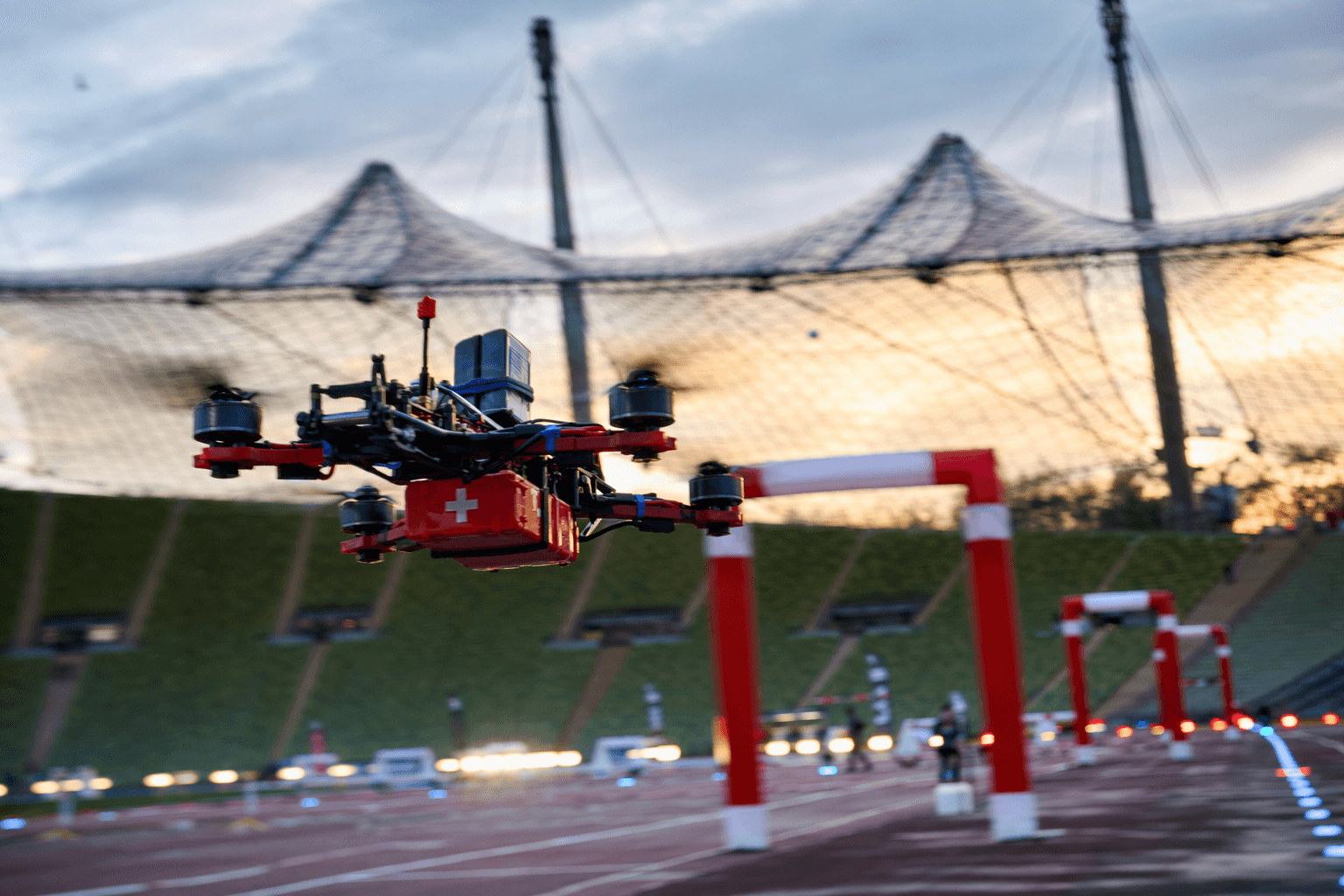
Student AirRace is pushing drone racing into a different lane. Its Rapid Response Challenge 2026, set for May 20-22 near Munich, Bavaria, will ask teams to do more than turn fast laps. The spring event is built around a simulated humanitarian mission, with student crews racing a critical medical payload through a course that measures route planning, reliability, and how well pilots handle pressure when every second counts.
That shift is the point. Student AirRace describes itself as Europe’s first international drone racing competition created by and for students, and the 2026 format gives the sport a stronger technical identity than a standard sprint course. The rules allow active students only, with one team per university, and teams can fly manually or add computer vision for autonomous payload delivery to earn scoring bonuses. In other words, raw FPV skill still matters, but so does software integration, autonomy, and the ability to move a drone from fast machine to useful system.
The organization says the Rapid Response Challenge will bring together five teams from four European countries, the most international field yet for the student-built series. That matters for the sport’s next stage because it widens the talent pool beyond local campus rivals and gives the event a more credible path toward elite competition. A format built around a mission race with a challenge in the middle rewards pilots who can adapt mid-course, not just those who can shave the cleanest seconds off a lap.
Student AirRace’s own roadmap shows where it wants to go. The spring challenge is framed around agility, software integration, tactics, and low-cost engineering, while a fall event is positioned as the heavier-lift test. The Rapid Response Challenge is presented as an intensive four-month development cycle, which means teams will not simply show up and fly. They will have to build, test, iterate, and decide how much autonomy they can trust when the target is a time-critical delivery rather than pure speed.
The model also explains why the project has traction with universities and aerospace programs. Student AirRace says its 2025 debut in Munich ran October 13-19, with the first on-site racing held October 14-16 in Königsdorf near Munich, and drew about 30 students from universities in Munich, Bucharest, and Barcelona. Founded by volunteer students from the Technical University of Munich and integrated into EUROAVIA Munich since 2025, the series has quickly moved from campus showcase to a structured pipeline where FPV racing, robotics, and future UAV work meet on the same course.
This article was produced by Prism’s automated news system from verified source data, official records, and press releases, then run through automated quality and moderation checks before publishing. The system is built and supervised by the people who set the standards it runs under. Read our full AI policy.
Did this article answer your question?