TII and Qualcomm Partner to Advance Edge-AI for Autonomous Racing Drones
TII and Qualcomm teamed up to bring Qualcomm’s Dragonwing IQ9/IQ10 edge-AI platforms into TII robotics work, a move that could cut latency and boost autonomy in racing drones and coordinated aerial systems.

The Technology Innovation Institute announced a strategic collaboration with Qualcomm Technologies to embed Qualcomm’s Dragonwing IQ9 and IQ10-class edge-AI platforms into TII research projects, accelerating on-device perception, sensor fusion, vision processing and real-time decision-making for robots and coordinated aerial systems. The partnership, unveiled on January 23, 2026, targets autonomy that can operate reliably in disconnected or harsh environments - a capability with clear relevance for high-performance drone racing and autonomous testbeds.
At the top level the work is about pushing compute onto the aircraft so that perception-to-control loops happen on the drone rather than in the cloud. That shift matters to pilots and teams because lower latency and robust on-edge inference change the dynamics of split-second control, gate negotiation and swarm maneuvers. Qualcomm’s Dragonwing platforms bring hardware-accelerated computer vision and connectivity that can be adapted for real-time autonomy, while TII will integrate these modules into research systems spanning indoor and outdoor coordinated aerial vehicles. TII framed the collaboration as broadening the institute’s ability to build robots that are “more aware, adaptive, and capable of operating in real‑world conditions.”
For the drone racing ecosystem the implications are twofold. First, performance: onboard AI that fuses lidar, IMU and camera streams can enable more consistent line holding, faster recovery from disturbances, and autonomous lap-running that approaches human-level precision without cloud lag. That capability could spawn new race classes where autonomy is the competitive variable - organized time-trial testbeds or head-to-head autonomous heats - and change how teams tune control stacks and sensor suites. Second, safety and accessibility: reliable indoor autonomy reduces runway and line-of-sight constraints, allowing tighter venues and expanded spectator experiences while opening avenues for broadcast augmentation using onboard AI-driven telemetry and replay systems.
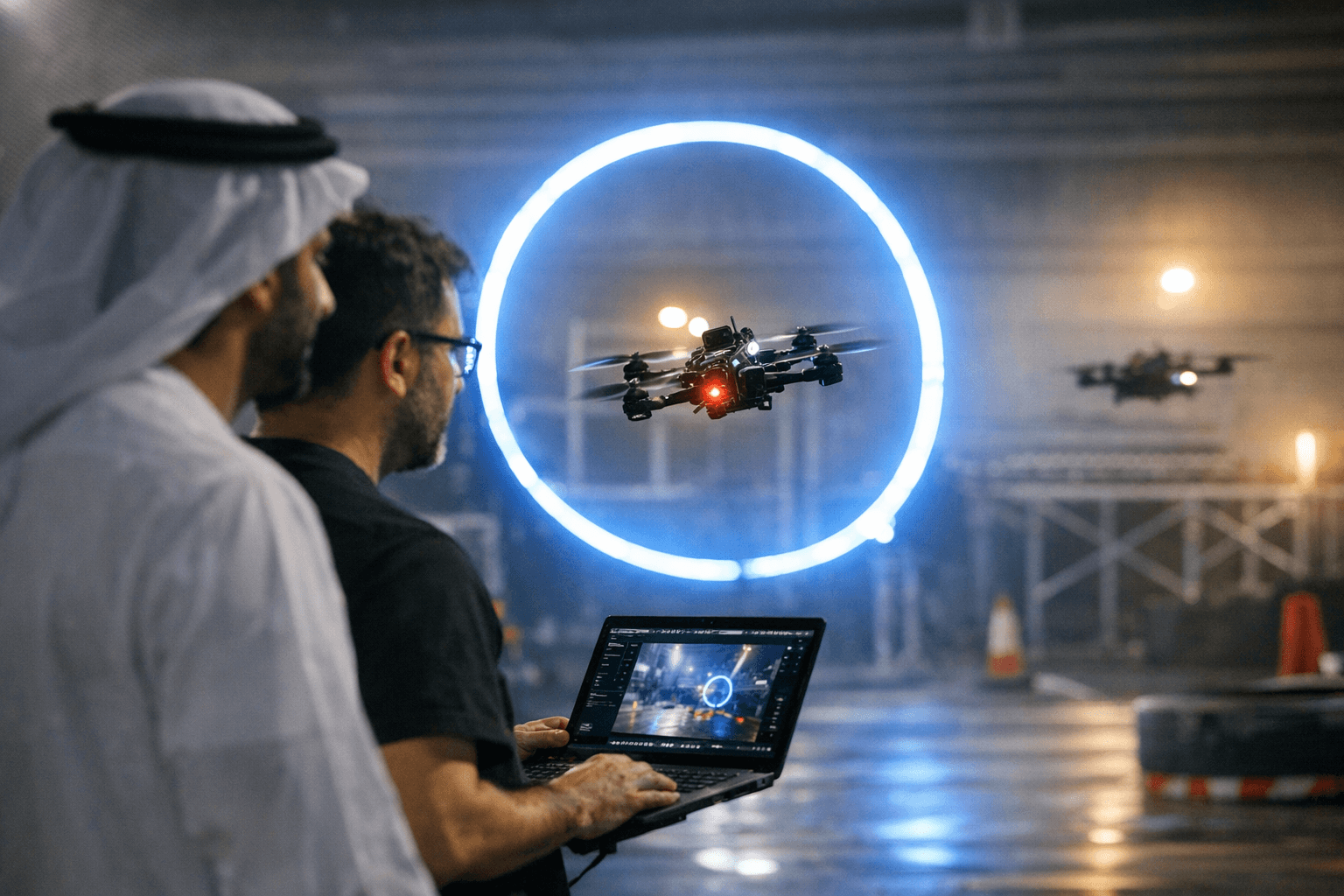
The partnership also carries larger industry weight. TII and Qualcomm expect to adapt these systems for industrial missions such as search-and-rescue, inspection and environmental monitoring across energy, mining, construction and smart city deployments. Those commercial pathways mean investment flows from enterprise buyers into hardware, software stacks and race-ready test platforms, creating business opportunities for drone builders, component suppliers and event organizers who can certify autonomous-ready arenas.
Culturally the move accelerates a long-running dialogue in the racing community about manned FPV skill versus autonomous precision. Expect a period of hybrid experimentation where pilots and autonomy share the sticks, and where teams trade millisecond gains in perception for strategic advantages on course. For readers: watch for prototype demos, autonomous heat rules at testbed events, and early adopters showcasing Dragonwing-equipped quads. The immediate next step will be field trials and performance benchmarks that translate these platform promises into lap times and podium outcomes.
This article was produced by Prism’s automated news system from verified source data, official records, and press releases, then run through automated quality and moderation checks before publishing. The system is built and supervised by the people who set the standards it runs under. Read our full AI policy.
Did this article answer your question?