Ukraine Tests FPV Drone With Fiber-Optic and Radio Backup Controls
Ukraine's frontline engineer built a dual-control FPV drone that switches from fiber-optic to radio the instant the cable snaps, for just $60 extra.
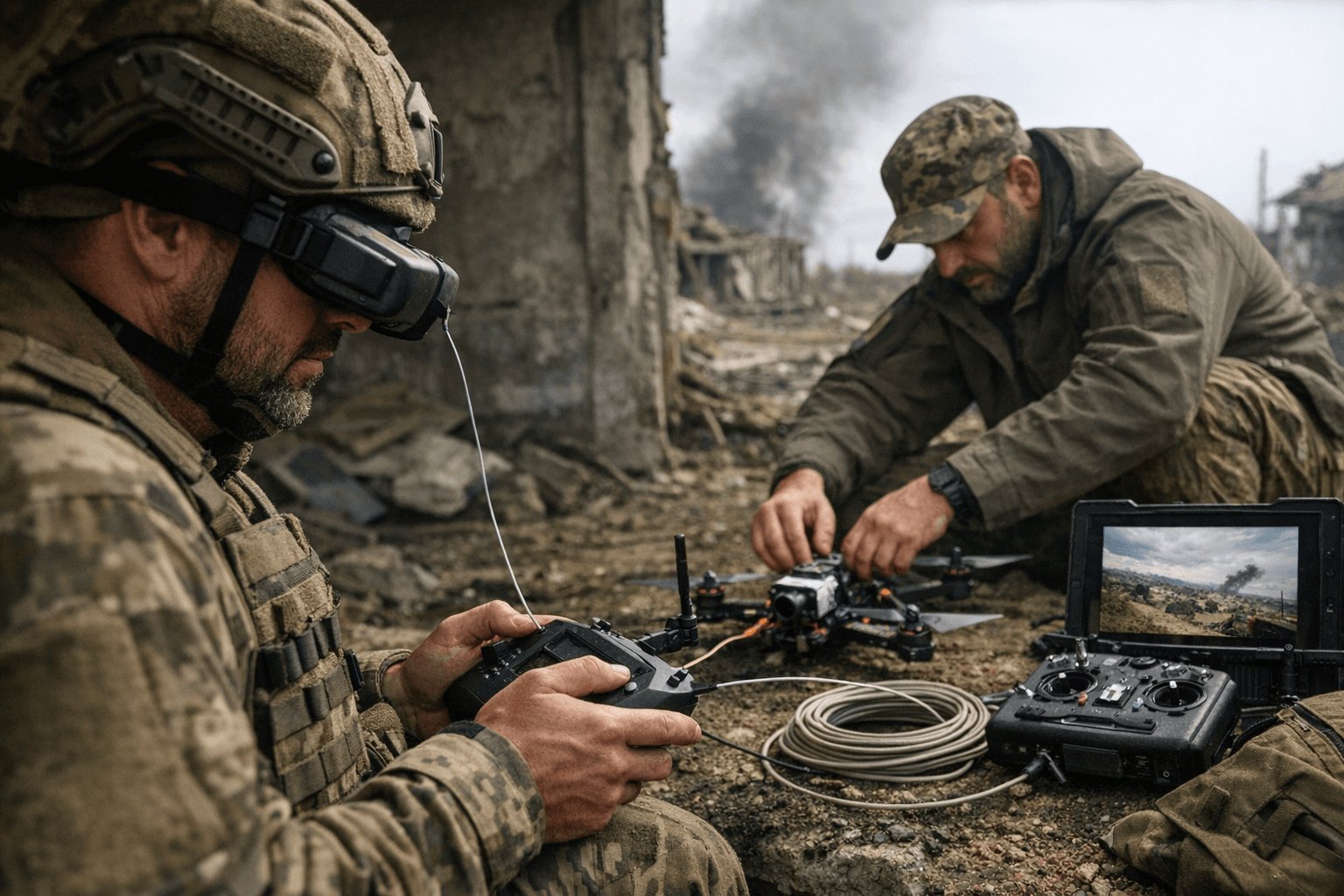
A cable trailing a fast-moving FPV drone through wind and broken terrain will eventually break. An engineer inside a Ukrainian frontline platoon decided that when it does, the mission shouldn't end with it.
Tetyana Chornovol, a Ukrainian journalist and platoon commander currently serving in the Armed Forces of Ukraine, described the development, attributing it to an engineer in her platoon. Test footage showed a drone relaying synchronized video feeds while being controlled through both optical and radio channels simultaneously. Chornovol disclosed the development on March 22, 2026, as reported by Militarnyi.
The engineering logic is straightforward. Fiber-optic drones are impossible for defense forces to jam because control travels over a physical cable, not a radio frequency. But that immunity only holds as long as the cable does. The initiative was driven by frequent breaks in fiber-optic cables, particularly during long-range flights, as well as a shortage of optical fiber at the front.
The dual-channel system addresses two distinct failure modes. The obvious one is a physical snap. The less obvious one, as Chornovol explained, is that "not all breaks are optical breaks. More often, these are loops that jam the video, but during the flight, the optical loops unravel and the optical video channel is restored." A drone running on radio during a temporary loop failure can simply continue once the cable unwinds, recovering full fiber control without ever aborting the mission.
"It is especially difficult when the drone is large and carries a heavy payload, and losing it far from the target is highly stressful for the entire crew," Chornovol said. "However, nothing prevents the drone from reaching the target via radio control, even if performance is not as reliable as with fiber optics. These are not the only advantages of dual control."
The tradeoff is real: adding a radio link narrows the electronic warfare immunity that makes fiber-optic drones valuable in the first place. Russian EW systems are specifically designed to jam radio-controlled drones before they reach their targets, and a drone broadcasting on radio frequency becomes vulnerable the moment it switches. The dual-channel design accepts that exposure in exchange for mission completion when the cable fails.
Chornovol noted that "General Chereshnya" produced the first ten 13-inch dual-control drones for her unit to test the technology. The cost premium for adding radio capability alongside fiber-optic control amounts to just UAH 2,500, roughly US$60, per drone.
The shortage of optical fiber at the front added a second motivation: when cable runs low, units have been making do with shorter spools and shorter missions. A drone that can complete a run on radio after an early cable failure wastes less of a scarce supply.
Chornovol was candid that the work is ongoing. "We are still refining the technology. This is a drone that we modified ourselves," she said. She also called on Defense Minister Mikhail Fedorov to pay attention to the technology. Whether the prototype stays confined to Chornovol's platoon or feeds into Ukraine's broader fiber-optic FPV production push will depend on that call being answered.
Know something we missed? Have a correction or additional information?
Submit a Tip