VelociDrone Launches iOS App, Bringing FPV Sim Training to Mobile Pilots
VelociDrone dropped its iOS app on March 24, adding two new maps and a touch-optimized UI so pilots can log leaderboard laps away from their desktop rigs.
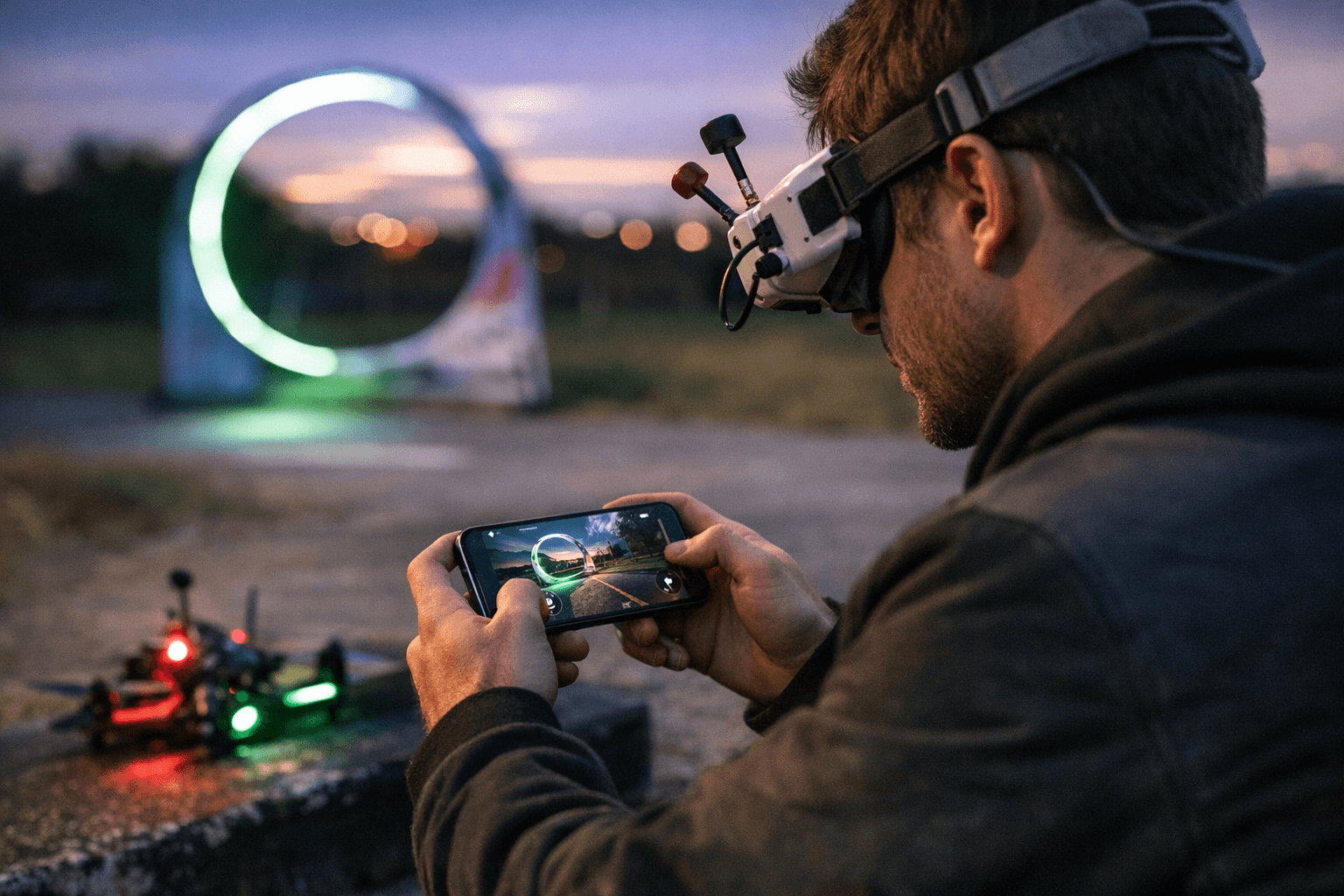
VelociDrone extended its simulator beyond the desktop last week, releasing a native iOS build that carries the platform's full practice and leaderboard infrastructure onto mobile devices. The March 24 release marks the first time pilots can submit time-stamped, validated lap attempts from a tablet or phone without sitting down at a dedicated rig.
Three changes headlined the update: the iOS application itself, a redesigned user interface built around touch-control ergonomics and faster map switching, and two new maps added to the leaderboarded track library. That library is the competitive core of VelociDrone's appeal to serious racers; MultiGP chapters and sim-based qualifier organizers rely on it to seed pilots and run virtual selection rounds where consistent, reproducible lap times are the currency.
The mobile build runs on an updated engine core and reads the same track editor file formats used on desktop, meaning any course published through the desktop version remains playable on iOS, with performance scaling to the device. The implication for pilots already invested in the desktop ecosystem is continuity: the gate lines, timing references, and leaderboard benchmarks they have been chasing translate directly to the mobile session.
For junior programs and school-based teams that may not have full desktop setups available at every practice location, the accessibility shift is significant. A pilot with an iPad and a Bluetooth controller can now log qualifying-caliber laps in a gym, at a chapter meet, or between flights at a live event, without a laptop on the table. That removes one of the more persistent logistical barriers in sim-based training, where preparation quality has historically tracked closely with access to hardware.
The timing of the release reflects where competitive FPV is heading. Drone racing increasingly runs on two parallel tracks: live gate events at stadiums and chapter venues, and sim-qualifier rounds where pilots produce lap submissions remotely on a defined track within a defined window. Teams that operate across multiple time zones, or travel-heavy pilots who spend weekends at events rather than at home desktops, have had to absorb a gap in training continuity that the iOS release is designed to close.
VelociDrone's move also signals an intent to pull in a broader pilot population. The desktop simulator built its reputation among dedicated athletes targeting leaderboard rankings and qualifier seeding. A mobile-native release, with a UI explicitly tuned for touch, opens the platform to pilots who may engage more casually or who are earlier in their competitive development, expanding the funnel from which the next wave of MultiGP competitors emerges.
Know something we missed? Have a correction or additional information?
Submit a Tip