Wing and Walmart launch 30-minute drone deliveries across Greater Houston
Wing and Walmart rolled out 30-minute drone deliveries around five Houston Walmart Supercenters, a development that changes low-altitude traffic for drone racers and FPV pilots.
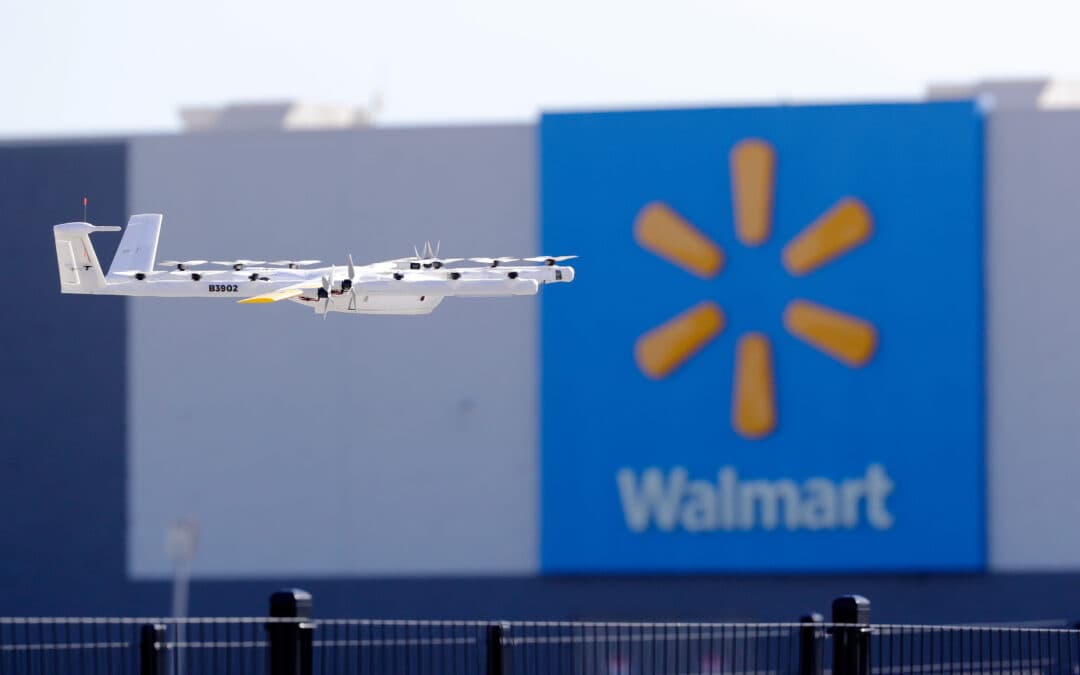
Wing and Walmart expanded commercial drone delivery into Greater Houston, offering customers near five Walmart Supercenters deliveries that can arrive in as little as 30 minutes. The move, announced Jan. 15, 2026, extends a program that has already completed hundreds of thousands of deliveries in U.S. markets and signals larger-scale use of urban-capable multirotor platforms that share the same low-altitude airspace drone racers prize.
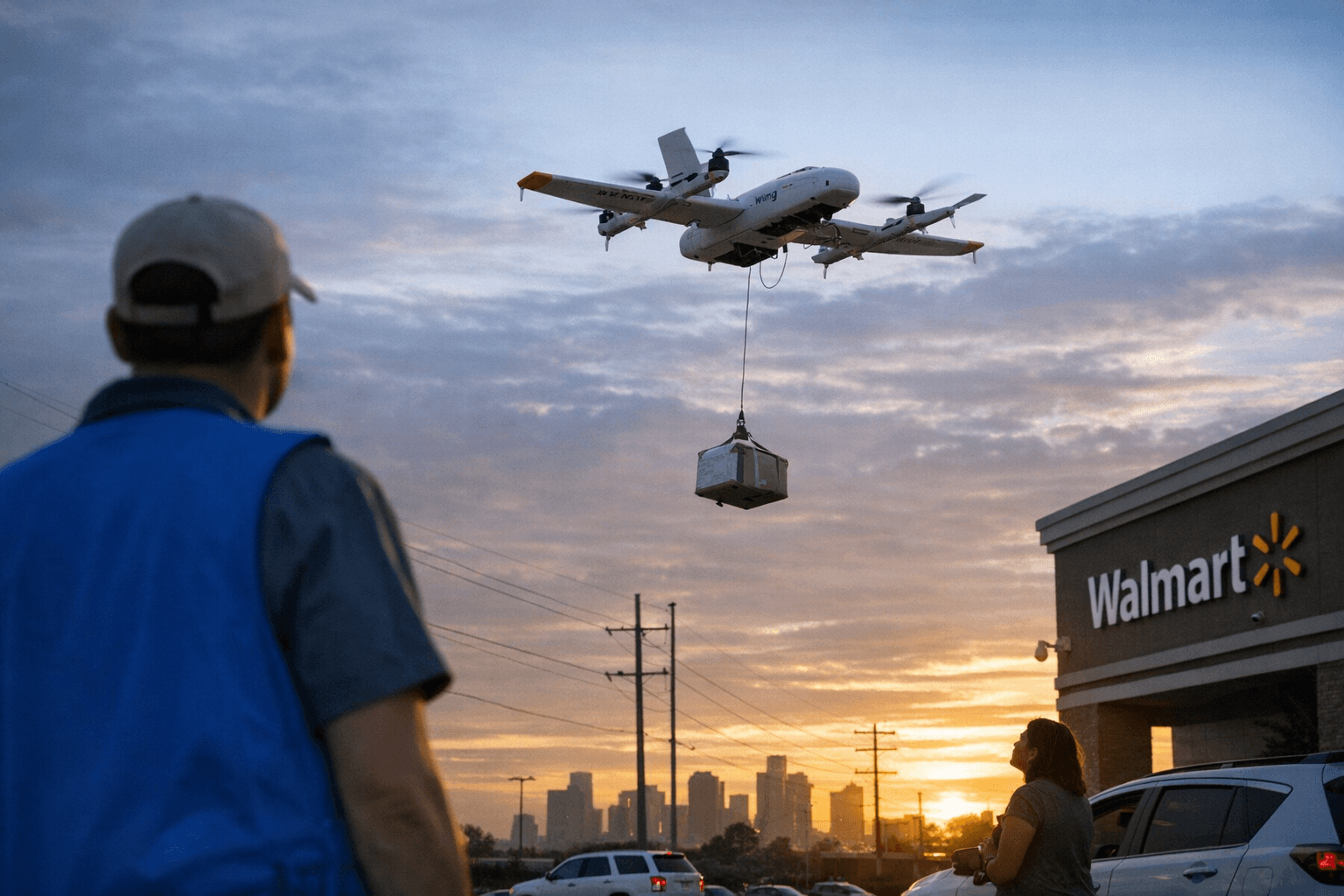
Wing’s delivery craft operate roughly 150 feet above ground level and reach top speeds of about 60 mph, lowering packages on a tether-and-winch system to avoid landings. Customers place orders via the Wing app. The partners pointed to prior scale in markets such as Dallas-Fort Worth and Metro Atlanta and outlined plans to expand the service to more than 270 Walmart stores nationwide. In Dallas-Fort Worth, average drop times ran under 19 minutes, demonstrating how fast-turnaround logistics are becoming routine rather than experimental.
Performance-wise, the Wing platform occupies a niche between consumer camera quadcopters and competition FPV race rigs. A 60 mph cruise with the endurance needed for repeated urban shuttles favors efficiency and reliability over raw acceleration and agility. For racers, that matters: race craft and commercial delivery multirotors are converging on common technologies such as high-efficiency motors, advanced flight controllers, and precise GPS and sensor stacks. That shared tech stack creates both opportunity and friction - parts, skills, and even pilots may find new commercial pathways, while more automated traffic in urban corridors will complicate practice windows and race scheduling.
Airspace is the connective tissue here. Regular deliveries at 150 feet AGL add predictable, persistent traffic into the low-altitude band where FPV events often stage air gates and freestyle sessions. Race organizers must account for persistent corridors, geofencing, and tethered lowering points when planning courses and obtaining authorizations. The expansion also pressures local event planners to tighten coordination with municipal authorities and any airspace authorization frameworks that govern shared low-altitude use.
From an industry standpoint, the scale-up to hundreds of thousands of sorties and a 270-store rollout underscores sustained commercial demand for robust multirotor platforms and operational systems that can integrate into dense metropolitan environments. That translates into business opportunities for vendors that can supply higher-reliability motors, batteries optimized for many short hops, and collision-avoidance sensors that suit both delivery fleets and competitive racing.
For the drone-racing community, the practical takeaway is clear: expect more persistent multirotor traffic in urban fringes, and plan events, practice sessions, and gear development with that reality in mind. Increased commercial operations also widen career options for experienced pilots who can parlay FPV skills into validated, regulated delivery roles. As Wing and Walmart scale across the country, the low-altitude skyline becomes a contested, valuable sporting ground where rules, tech, and local culture will define who gets priority in the air.
This article was produced by Prism’s automated news system from verified source data, official records, and press releases, then run through automated quality and moderation checks before publishing. The system is built and supervised by the people who set the standards it runs under. Read our full AI policy.
Did this article answer your question?