XAG Debuts P150 Max in U.S., 80kg Payload Agricultural Drone
XAG launched the P150 Max in the U.S., a heavy-lift agricultural quad carrying about 80 kg, a platform that could reshape drone racing logistics and spawn new heavy-lift classes.
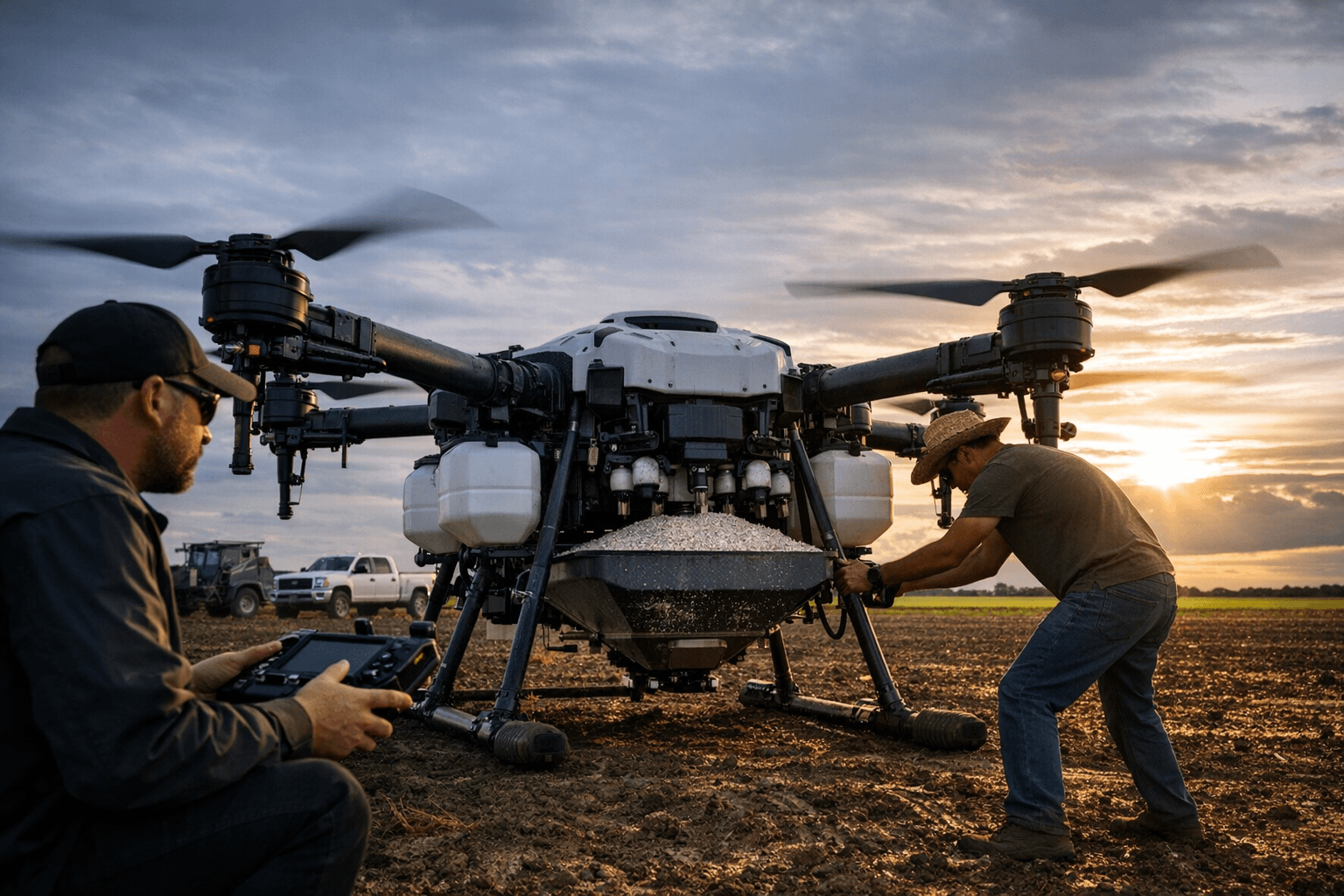
XAG has brought its P150 Max to the U.S., unveiling a large agricultural quad capable of carrying roughly 80 kilograms (about 176 pounds) and designed for high area throughput. The debut on February 5, 2026 marks a move by a major ag-drone manufacturer into the American market with a platform that changes the scale of what unmanned airframes can do outside traditional farming tasks.
At the top, the P150 Max is a heavy-lift workhorse rather than a sprinting racer. As a quadcopter built around payload capacity, its core numbers matter to pilots and organizers: an ability to haul close to 80 kg shifts what "support drone" means for FPV events. Race promoters can imagine logistics rigs carried by air, from spare batteries and props to modular gate assemblies and broadcast cameras, while teams and pit crews may rethink how they stage equipment on-site. The P150 Max's emphasis on area throughput signals efficiency gains for large-course maintenance and aerial services that previously required trucks and cranes.
For drone racing as a sport, the immediate competitive impact is indirect but significant. Heavy-lift platforms like the P150 Max are unlikely to enter classic freestyle or time-trial classes where agility and top speed dominate. Instead, this hardware creates new subcultures: heavy-lift demonstrations, cargo-carrying challenge events, and endurance showcases that stress power management, control under load, and crew coordination. Those formats reward skill sets that mirror industrial operations: load planning, redundancy checks, and precision placement under throttle.
Business implications ripple beyond race day. Manufacturers and sponsors will follow revenue streams tied to infrastructure and broadcast upgrades. The P150 Max's presence in the U.S. widens the vendor pool for organizers seeking turnkey aerial logistics and could attract nonendemic sponsors from agriculture, logistics, and heavy equipment sectors interested in the spectacle and real-world utility of big drones. Insurance, certification, and airspace coordination will become more prominent line items for event budgets as heavier platforms operate near crowds and critical equipment.
Culturally, the arrival of a true heavy-lift quad into the FPV orbit underscores drone racing's maturation from backyard track hobby to multi-faceted sport with industrial crossover. Pilots who cut their teeth dodging pylons may find new creative outlets in cargo challenge formats, while race directors refine safety protocols and pit operations to accommodate heavier payloads.
For readers who fly circuits or run events, expect the landscape to evolve: new classes may be proposed, vendor relationships will expand, and race weekends might include heavy-lift demonstrations that blend spectacle with practical support. The P150 Max does not replace the lightweight, high-throttle craft that define FPV racing, but it does widen the apron of possibilities for how drones serve the sport and its growing business of live events.
This article was produced by Prism’s automated news system from verified source data, official records, and press releases, then run through automated quality and moderation checks before publishing. The system is built and supervised by the people who set the standards it runs under. Read our full AI policy.
Did this article answer your question?