XTEND Scorpio 1000 Uses Net Capture to Safely Intercept Rogue Drones
XTEND's Scorpio 1000 and ParaZero's DefendAir net launcher autonomously chase and capture hostile drones intact, preserving forensic evidence while producing zero debris.
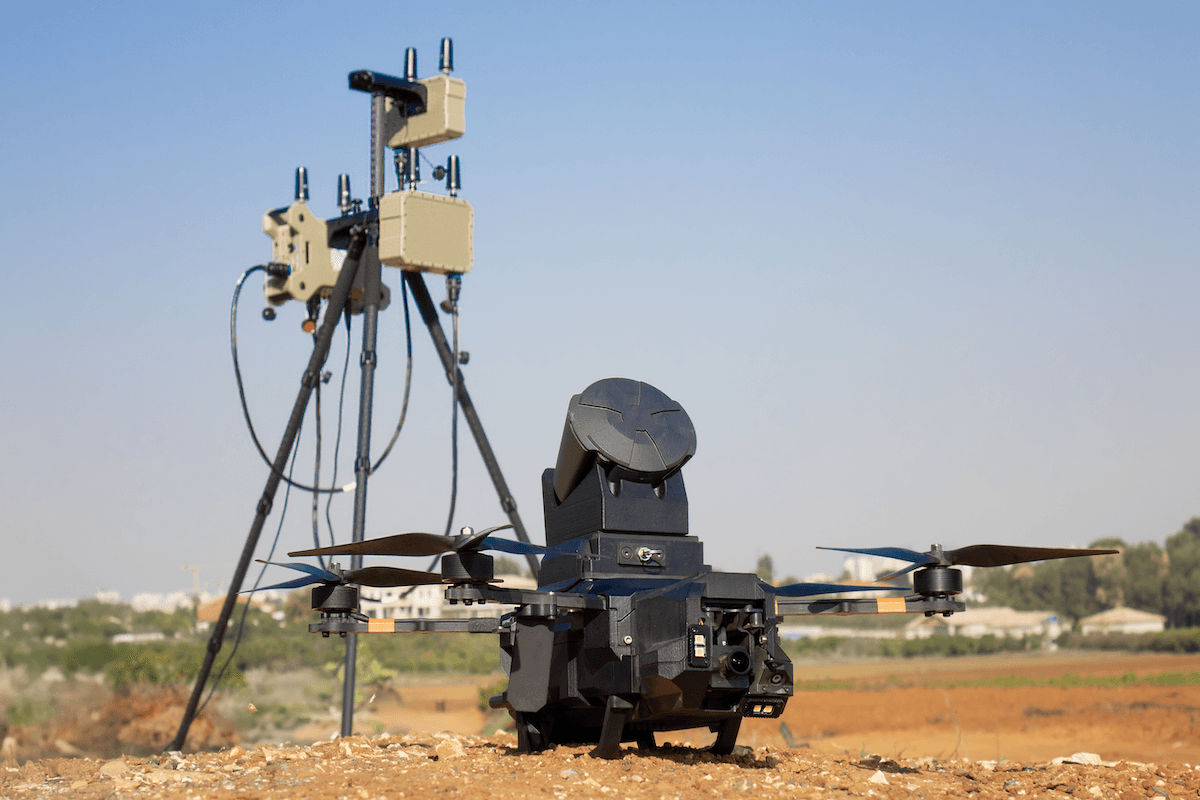
The Scorpio 1000 does not shoot down rogue drones. It catches them.
Demo footage released March 31 showed XTEND's Scorpio 1000, running the company's XOS operating system, executing a four-stage intercept sequence: onboard sensors detect and classify a small hostile UAS, the autonomy stack plots a pursuit trajectory, the platform closes on the target at speed, then fires ParaZero's DefendAir net-pod once the intruder enters the capture envelope. The footage shows the target secured and the Scorpio holding position, drone in net.
The partnership between Israeli firms XTEND, listed on Nasdaq as JFB, and ParaZero Technologies (Nasdaq: PRZO), was formally announced on March 26, 2026. ParaZero, founded in 2014 by aviation professionals in Kfar Saba, Israel, brings the DefendAir hardware, a kinetic net-launching platform already proven in both battlefield and urban counter-UAS roles. XTEND contributes the Scorpio 1000 airframe, described by the company as battle-proven with high payload capacity and superior maneuverability at high speeds, plus the XOS autonomy layer handling real-time threat classification and intercept geometry.
The case for net capture over kinetic or radio-frequency jamming alternatives comes down to three operational realities. Fragmenting interceptions scatter debris, which is unacceptable over populated areas or sensitive infrastructure. RF-heavy approaches cause collateral disruption to nearby communications. Net capture delivers the third advantage neither of those methods can: the recovered drone arrives intact, supporting forensic examination and preserving chain-of-custody evidence for prosecution or intelligence exploitation.
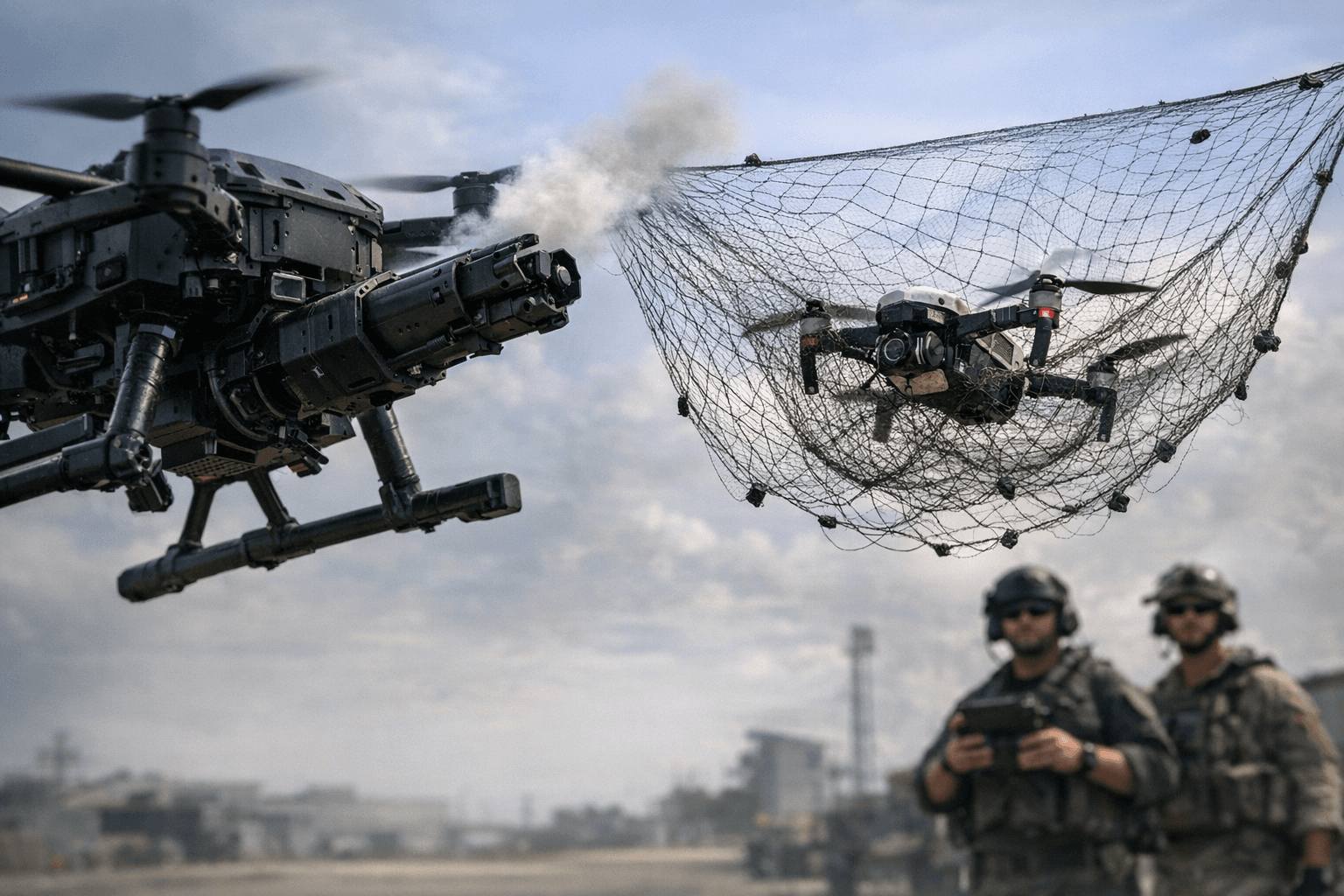
XTEND has logged more than 10,000 system deployments across 30-plus countries, giving the integrated package immediate credibility in defense and homeland security procurement conversations. Fortem Technologies' DroneHunter, which uses radar-guided autonomous drones to fire nets and can tow captured UAS to controlled landing zones, has already demonstrated the category works at scale. XTEND and ParaZero are competing in that same lane, but with an explicit multi-domain design: the Scorpio 1000 is built to operate across air, ground, and maritime environments, a specification aimed at coordinated multi-domain drone threat scenarios rather than isolated airspace incursions.
For FPV engineers watching from the racing side, the technical requirements driving reliable high-speed net intercept, specifically high-frame-rate detection sensors, sub-10-millisecond autonomy loops, and mechanically robust payload release under pursuit stresses, mirror the performance engineering demands of fast 5-inch race craft. The same sensor fusion and low-latency control architecture that enables a clean net capture at closing speed is what separates a gate-cutting champion from a wall. Race organizers and venue operators have reason to track this technology closely: a recoverable, no-debris intercept system has direct application for perimeter enforcement and post-incident evidence preservation at competitive events.
This article was produced by Prism’s automated news system from verified source data, official records, and press releases, then run through automated quality and moderation checks before publishing. The system is built and supervised by the people who set the standards it runs under. Read our full AI policy.
Did this article answer your question?