XTEND Wins U.S. Army Approval for FPV Drone Safety-and-Arming Software
XTEND becomes the first U.S. company cleared by the Army Fuze Safety Board for software-driven FPV arming logic, a military gate that has direct implications for racing safety standards and sponsor confidence.
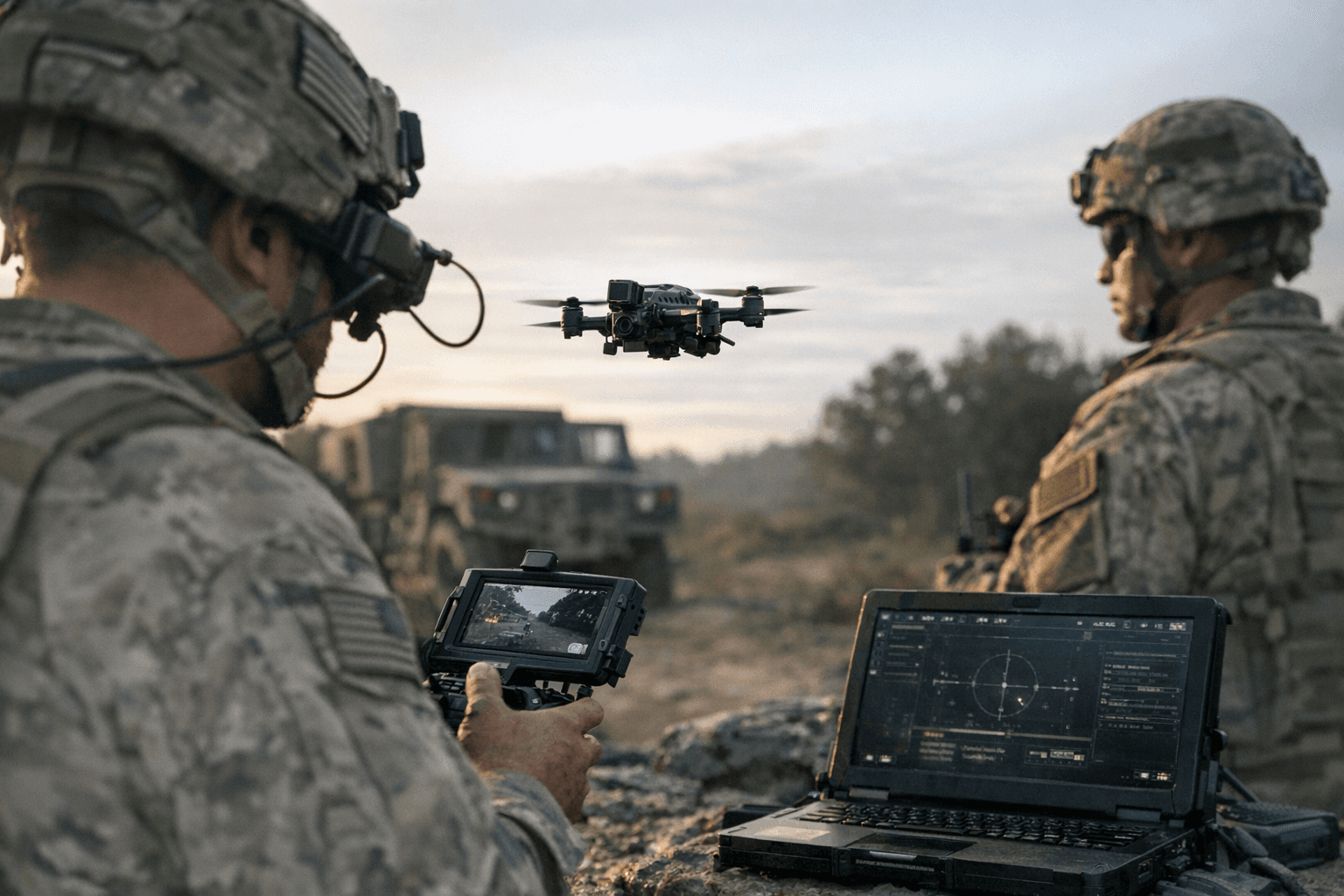
The U.S. Army just validated what racing's most safety-conscious event organizers have long argued but could never prove to an outside authority: software-defined arming logic is rigorous enough to satisfy a government safety board. XTEND, the AI robotics subsidiary of JFB Construction Holdings (Nasdaq: JFB), became the first U.S. company to receive a limited operational assessment approval from the Army's Fuze Safety Board for a high-voltage safety-and-arming software component designed for FPV attack drones. The March 30 announcement from Tampa carries implications that stretch well beyond the battlefield.
The Fuze Safety Board gate is not a procurement contract. It is something more consequential for the long-term health of the FPV ecosystem: an independent military regulatory body reviewed XTEND's architecture, which replaces discrete mechanical hardware interlocks with a validated software-controlled module, and cleared it as operationally sound. That distinction matters because the question of whether software alone can be trusted to manage FPV arming and safing has been the central unresolved credibility problem for the broader FPV category, in military procurement and in sport alike.
Current racing safety standards require pilots to configure an arming switch or sequence on their radio transmitter, verify failsafe programming before every flight, and demonstrate that their aircraft cannot spin up motors through accidental controller input. The FPV Freedom Coalition's published guidelines and b4uDrone event standards both make this explicit: failsafe must be set, arm/disarm must be verified, and every event carries mandatory liability and aviation insurance requirements. What neither standard includes is anything resembling board-level validation of the arming architecture itself. The safety configuration lives inside each pilot's Betaflight or Emuflight profile, tuned per quad, per season, per pilot preference. Organizers check it at the pilot briefing; no independent body certifies the underlying system.
XTEND's Fuze Safety Board approval does exactly that. The Army's process forced independent evaluation of the entire safety architecture, including how the high-voltage arming logic integrates with the software stack, how the system handles abnormal inputs, and whether the interlock philosophy is sound enough to be fielded at scale. CEO Aviv Shapira framed the result directly: "This approval validates both our technology and the market shift toward scalable, lower-cost strike systems." The same validation logic applies to sport.
Three elements of XTEND's approved architecture are realistically portable to racing standards and event permitting. The concept of a software module with defined, independently assessed safety behavior creates a template for flight controller manufacturers to seek comparable certification for racing-specific safety profiles. Betaflight and Emuflight have long offered configurable failsafe modes, but no independent body has evaluated whether the arming interlock logic in those systems meets any external safety standard. A military-validated philosophy for what constitutes a compliant software-driven interlock gives bodies like MultiGP a reference architecture to work from, rather than internally authored community guidelines.
The shift from hardware-dependent safing to software-controlled modules also aligns with how racing hardware has already evolved. The typical racing quad has no physical arming interlock beyond the pilot's transmitter switch. XTEND's approved system demonstrates that a software layer can satisfy a government safety board when designed with sufficient rigor. For event permitting at venues requiring FAA coordination or local authority signoff, citing a military-approved precedent for software-driven FPV safety is a materially stronger argument than pointing to community guidelines alone.
Most immediately relevant to the business side of the sport, the approval gives insurers and sponsors a new data point. General liability and aviation event coverage has remained the most stubborn operational friction for FPV racing promoters. Underwriters price FPV events conservatively because pilot-configured safety systems lack independent validation. A U.S. Army safety board clearing software-defined arming logic for FPV platforms does not automatically reprice racing event insurance, but it breaks the narrative that FPV safety is purely self-regulated. The institutional credibility gap between FPV and other motorsports has always been the specific friction point for blue-chip sponsors wary of association with a category that lacks third-party safety oversight. XTEND's approval is the first publicly documentable instance of a government body confirming the safety architecture works.
The market context behind the announcement reinforces how fast this segment is moving. Attritable and loitering systems already received more than $1.5 billion in fiscal year 2026 procurement and research funding, within a broader FPV strike market XTEND projects could exceed $100 billion annually. The company's Scorpio 1000 drone, operating through the XOS command platform, is the system at the center of this safety approval. XOS is designed to allow a single operator to coordinate multiple platforms, switching between control modes and autonomous behaviors, with AI-assisted automation subordinated to human decision authority. That architecture, where software manages safety boundaries while humans retain control authority, is structurally identical to what a well-designed racing safety framework should require.
XTEND already holds a contract with the Office of the Assistant Secretary of War for Special Operations to deliver its Affordable Close Quarter Modular Effects FPV Drone Kits. The Fuze Safety Board approval provides the safety credential that turns a contract into a deployable program. Whether other U.S. services, particularly Special Operations Command, publish solicitations that reference the approved architecture will define how broadly XTEND can market the component as a drop-in module across other small-UAS platforms and prime contractor programs.
For the racing industry, the near-term signal to monitor is whether a major event insurance provider publicly adjusts its FPV coverage model in response to the growing body of institutional safety validation in the category. That adjustment will do more to accelerate sponsor entry into FPV racing than any single race result or viewership milestone. XTEND's Army clearance just moved that timeline forward.
Know something we missed? Have a correction or additional information?
Submit a Tip