Chicago State Launches FCS Football Program, Targeting 2026 Debut in Northeast Conference
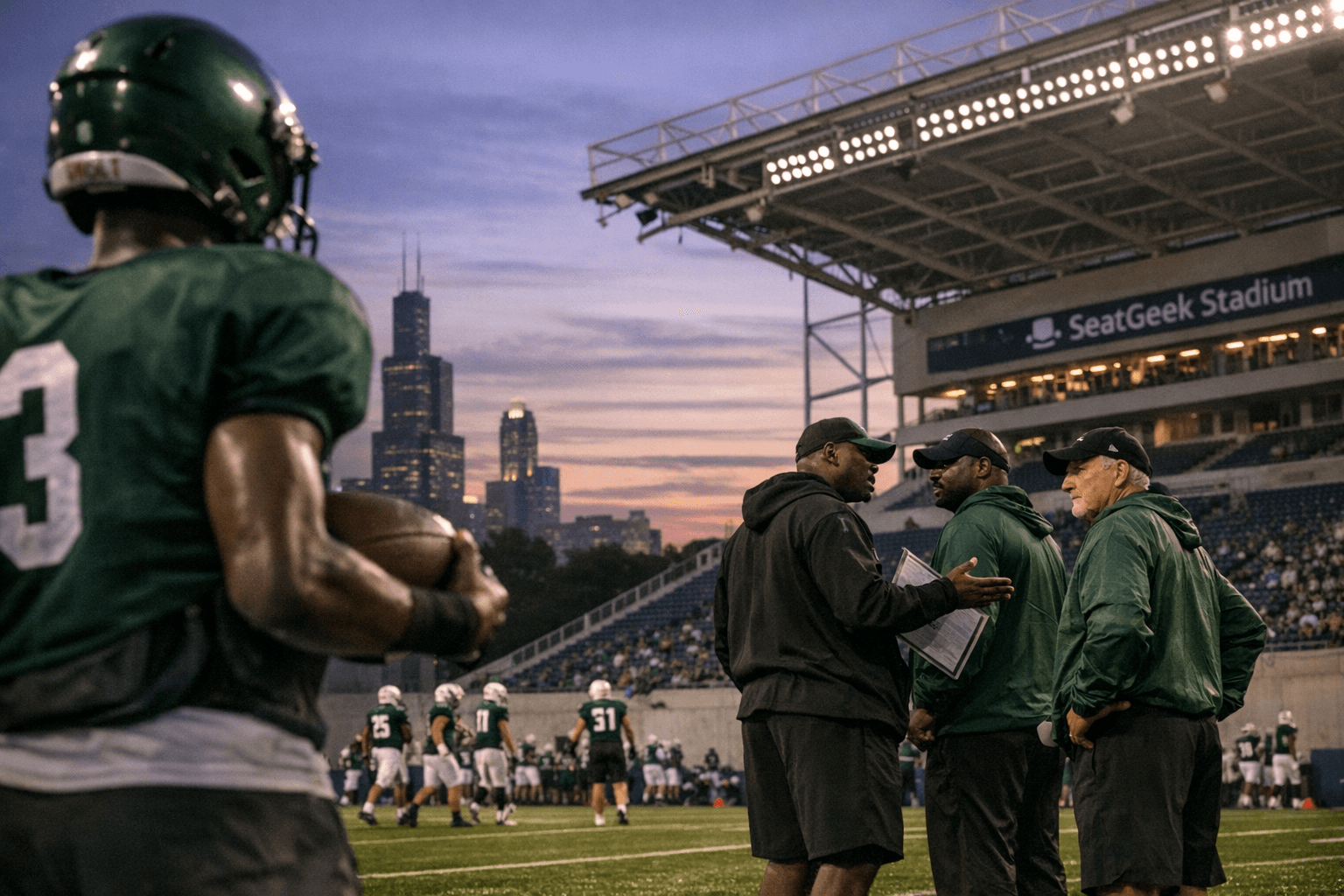
Chicago State assembled a 55-player inaugural roster for its Aug. 29 debut at SeatGeek Stadium, giving the city of Chicago its only NCAA Division I football program.
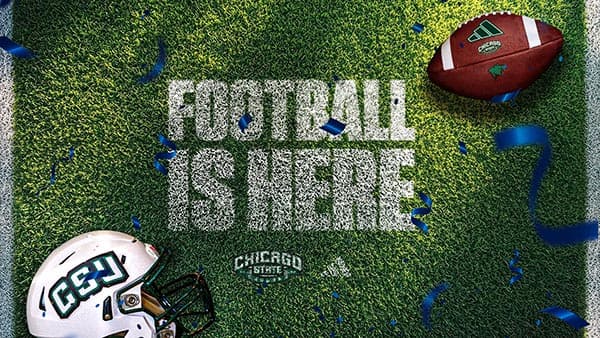
With a 55-player signing class, a coaching staff built from HBCU pipelines, and a first-year schedule that includes Norfolk State's Michael Vick coming to Bridgeview, Chicago State's football program has cleared the first critical hurdle of any FCS startup: arriving at camp with enough bodies, talent, and infrastructure to be credible.
The Cougars open August 29 at SeatGeek Stadium against Roosevelt University, launching what is the most significant FCS expansion into a major urban market in years. Chicago is home to more than 2.7 million people and produces elite high school football talent annually. Until now, it had never hosted an NCAA Division I program.
Head coach Bobby Rome II, hired in April 2025 after going 15-15-1 across three seasons at Florida Memorial, anchors the staff. Alongside him is defensive coordinator Le'Marcus Gibson, a former Hampton assistant, and James Hudgins III, a former Fayetteville State receiver coach who doubles as recruiting coordinator and quarterbacks coach. Both followed Rome to the South Side, bringing HBCU institutional knowledge that will be essential for navigating Year 1's overlapping demands.
The signing class Rome assembled reflects what a launch under a compressed timeline can realistically accomplish. Among the three-star prospects already committed: Indianapolis Decatur Central defensive back Mykul Campbell, a top-15 recruit in Indiana who drew MAC and Power Four interest; Washington D.C. defensive back Chris Palmer, who held Power Four offers; and Scottsdale Saguaro quarterback Ashton Pannell, a 6-foot-3, 190-pound prospect with offers from Indiana, California, and Arizona State. When the staff brought 14 recruits to campus for visits, 12 committed, a conversion rate that signals Chicago's recruiting footprint is already doing work.
Five decisions will define whether this program reaches sustainable footing by 2027 or spends three years firefighting. On facilities: SeatGeek Stadium in Bridgeview at 20,000 seats provides a functional home, but the university committed from the start to building an on-campus turfed practice field, and over 300 donors have already pledged toward that goal. That donor base is the real Year 1 marker to watch. If it holds and grows through the fall, it funds everything downstream.
On staffing, the coordinator hires are done. The pressure now shifts to position-group depth, particularly on the offensive line, where new programs historically struggle to sign enough experienced players before Year 2 recruiting cycles kick in. On recruiting footprint, Chicago's high school scene is a structural advantage that few FCS programs have ever enjoyed from Day 1, but converting that geography into signed letters requires a visible winning culture. Rome's staff needs to establish Chicago State as a genuine destination, not a fallback, by National Signing Day 2027.
On funding and NIL, the 300-donor base is a foundation, not a finish line. Sustainable FCS programs typically require consistent mid-six-figure NIL collectives within three years of launch to retain transfers and prevent roster atrophy. Conference fit, meanwhile, is the clearest long-term win already locked in: Chicago State will compete as an FCS Independent through the 2026 season, then join the Northeast Conference in 2027, a timeline that gives Rome a full year of scheduling flexibility before conference obligations arrive.
The 2026 schedule is built for realism with a share of ambition. After the Roosevelt opener, the Cougars travel to UT Martin and Butler before hosting Norfolk State and Vick on September 26, the program's first genuine marquee matchup. A road trip to Tarleton State follows, then a two-game HBCU series with North Carolina A&T, set for October 17 in Greensboro, with the return leg scheduled for the 2027 season. Finishing against Virginia-Lynchburg on November 21 closes out what is effectively a 10-game test of whether the roster depth Rome built will hold over a full FCS season.
Historical precedent across recent FCS launches suggests three to five years before consistent on-field results emerge. For Chicago State, the realistic Year 1 scorecard is narrower: finish healthy, hold the donor base, win two or three games, and leave fall camp with the NEC membership intact. The city has been waiting decades for Division I football. Whether it was worth the wait gets its first real answer on August 29.
This article was produced by Prism’s automated news system from verified source data, official records, and press releases, then run through automated quality and moderation checks before publishing. The system is built and supervised by the people who set the standards it runs under. Read our full AI policy.
Did this article answer your question?