FCS bluebloods define the subdivision’s enduring dynasty race
The subdivision's modern identity starts with a few bluebloods, from Delaware and Eastern Washington to Grambling State and Harvard, then hardens in the title factories they inspired.
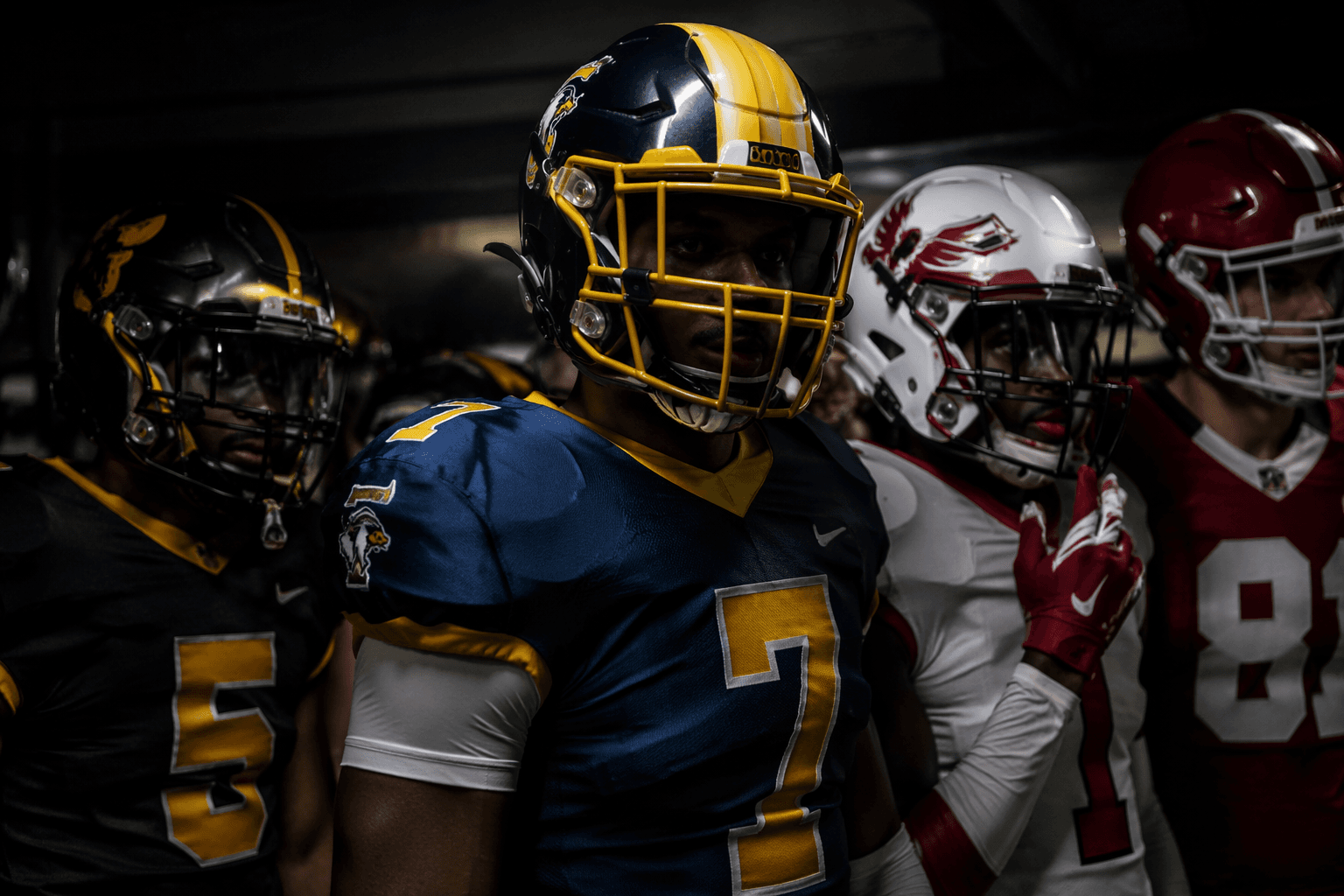
The FCS dynasty race begins with a simple fact: when Division I-AA was created at the 1978 NCAA Convention, the subdivision was built to reward repeat excellence. Florida A&M beat Massachusetts 35-28 in the first championship game in Wichita Falls, Texas, a four-team bracket televised by ABC, and that opening act set the tone for everything that followed. In FCS, greatness has never just meant one perfect season. It has meant building a program that can survive the bracket, the coaching carousel, and the weight of annual expectation.
The blueblood baseline
The NCAA’s blueblood explainer makes the key point that only FCS-era seasons count, and that framing changes the conversation immediately. Appalachian State and Georgia Southern belong in the story because they helped define the old standard, but they are not part of the subdivision anymore, which leaves the modern core to programs that still shape the bracket, the atmosphere, and the national image of the FCS. Delaware, Eastern Washington, Grambling State, and Harvard are the clearest anchors because each represents a different way of turning success into identity.
Delaware and the quarterback lineage
Delaware is the seventh-winningest program in FCS history and reached the playoffs 18 times from 1981 to 2022, a record that shows how often the Blue Hens were part of the bracket conversation even when they were not winning the whole thing. Their legacy is also built on quarterbacks, with Andy Hall, Rich Gannon, Matt Nagy, and Joe Flacco forming a lineage that gave the program far more national reach than a win-loss log alone can capture.
That matters in the FCS because star power is not just about trophies. Delaware became a program that produced recognizable names while staying tethered to playoff legitimacy, which is exactly the kind of dual identity that has helped the subdivision keep its profile high across eras. The Blue Hens proved a program could be a quarterback factory and a postseason regular at the same time.
Eastern Washington and the offensive brand
Eastern Washington built its place through style as much as results. The Eagles have won four Walter Payton Awards and two Buck Buchanan Awards, and the program’s modern reputation is tied to Cooper Kupp, high-scoring offenses, and the red turf that made its home field instantly recognizable.
That combination changed what fans expect from a top-tier FCS offense. Under Beau Baldwin, Eastern Washington made explosiveness part of its identity, and the program helped normalize the idea that an FCS contender could be nationally relevant because it was entertaining, not merely efficient. In a subdivision where style points often become part of the playoff story, Eastern Washington supplied a template.
Grambling State and the HBCU standard
Grambling State is the premier HBCU program in FCS history, and its case shows why the subdivision’s prestige is not confined to the playoff bracket. Since 1978, the Tigers have won 14 conference titles, and their 2016 Celebration Bowl win remains a defining marker in the modern HBCU championship conversation. Walter Dean also became the first HBCU player to win the Walter Payton Award in 1990, a milestone that says as much about visibility as it does about individual talent.
The bigger point is cultural. Grambling’s success sits inside a broader championship ecosystem where Celebration Bowl prominence and FCS playoff history overlap but do not fully merge. Florida A&M remains the only HBCU program to play in and win the I-AA or FCS national championship game, so Grambling’s standing comes from its own championship lane, its conference dominance, and its role in shaping how HBCU football is seen nationally.
Harvard and prestige outside the bracket
Harvard’s profile is different again. The Crimson have won 12 of 17 Ivy League titles as an FCS program, yet Ivy League rules keep the conference out of the FCS playoffs. That makes Harvard a blueblood in the purest sense of institutional prestige: the success is real, the brand is unmistakable, and the postseason path is blocked by policy rather than performance.
This is one of the subdivision’s most revealing contrasts. Harvard shows that FCS power does not always look like a playoff run, and it proves that a blueblood can build national cachet through conference dominance, historical resonance, and constant relevance inside its own lane. The Ivy League’s playoff prohibition only sharpens that point.
How dynasties set the championship standard
If the bluebloods provide the identity, the dynasties provide the scoreboard. The first championship field in 1978 had only four teams, then expanded to eight in 1981, 12 in 1982, and 16 in 1986 before eventually growing into the 24-team playoff that now defines the race. The title game has been held at a neutral site every season since 1997, and since the 2010 season it has been played in January, three weeks after the semifinals, which gave the final a bigger stage and a more national rhythm.
Georgia Southern and Youngstown State turned winning into a habit
Georgia Southern’s title years, 1985, 1986, 1989, 1990, 1999, and 2000, turned the Eagles into one of the original dynasty machines. The 1989 championship game drew a then-record 25,725 fans, proof that FCS football could command real event energy, and the coaching fingerprints of Jerry Moore, Paul Johnson, and Tim Stowers helped make Statesboro a place where winning was not an interruption. It was the expectation.
Youngstown State carried that standard into the 1990s with titles in 1991, 1993, 1994, and 1997. The 1991 championship also made Jim Tressel and his father, Lee Tressel, the only father-son combination to win NCAA football titles, a detail that captures how deeply coaching lineage runs through FCS history. The 1992 championship in Huntington, West Virginia, drew a then-record 31,304 fans, another reminder that the bracket’s best teams were not just winning games, they were building atmospheres.
The modern title map belongs to the Plains
The modern era is where the subdivision’s national perception hardened around North Dakota State, South Dakota State, James Madison, Montana, and Montana State. North Dakota State has 10 national titles through the 2024 season and a record 11 title-game appearances, the clearest benchmark for sustained dominance in the subdivision. South Dakota State became the most recent first-time national champion in 2022 and added back-to-back titles in 2022 and 2023, while Montana State won the 2025 crown.
That stretch reflects more than one program’s success. It shows how the title map shifted from Southern dynasties to Midwest and Plains powers, and how that shift changed the sport’s center of gravity. The North Dakota State run, built through Chris Klieman and Matt Entz, and the South Dakota State rise under John Stiegelmeier and Jimmy Rogers, made the playoff feel less like a regional event and more like a national standard.
Why this race still defines FCS football
The NCAA says 23 different schools have won the FCS championship since 1978, which is exactly why dynasties matter so much. In a subdivision with a 24-team playoff, a neutral-site title game, and a history that now stretches from Wichita Falls to Frisco, lasting power is what separates a brand from a flash. Delaware, Eastern Washington, Grambling State, Harvard, Georgia Southern, Youngstown State, and North Dakota State each show a different path to authority, but the rule is the same: in FCS football, the programs that endure are the ones that make winning look normal.
This article was produced by Prism’s automated news system from verified source data, official records, and press releases, then run through automated quality and moderation checks before publishing. The system is built and supervised by the people who set the standards it runs under. Read our full AI policy.
Did this article answer your question?