FCS football’s biggest stadiums range from NFL giants to historic bowls
FCS stadiums win games in different ways, from Franklin Field’s 1895 gravitas to Roos Field’s red turf and the UNI-Dome’s year-round 72-degree edge.
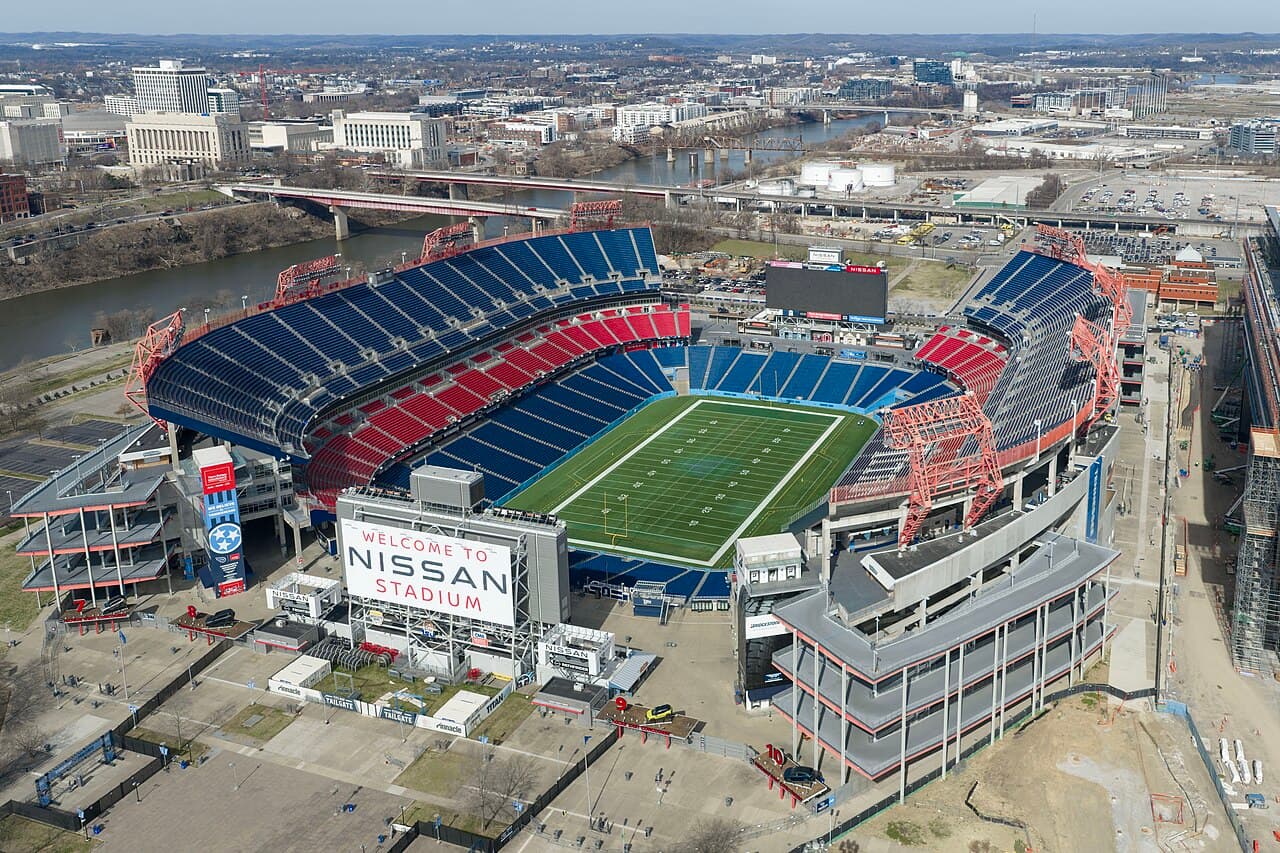
FCS football does not live in one kind of building. The subdivision’s biggest venues stretch from Tennessee State’s 69,143-seat home at Nissan Stadium to Yale Bowl at 64,269, Franklin Field at 52,958, Mississippi Memorial Stadium at 48,000 and Harvard Stadium at 30,323, and that range changes how Saturdays feel before the first snap is even taken. A road game in this world can mean NFL-scale sightlines, a century-old bowl, a tight campus crowd or an indoor edge that keeps weather out and noise in.
A subdivision built on different kinds of home-field advantage
The most revealing detail in NCAA’s list of the 25 biggest FCS football stadiums is not just that 25 venues hold at least 20,000. It is that FCS schools use stadium identity as part of the product itself. Some programs sell scale, some sell history and some sell a setting that makes every visit feel personal, which is why the same subdivision can contain Tennessee State in Nissan Stadium and Harvard in a fieldhouse of memory.
That variety matters on game day because it affects how opponents travel, how fans arrive and how a team carries its routine into the afternoon. A wide-open NFL building sends a different message than a bowl that has watched college football for more than a century, and a sealed dome removes an entire layer of uncertainty from the equation. In FCS, architecture is not background. It is part of the competitive setup.
Franklin Field turns history into atmosphere
Franklin Field is the clearest proof that a stadium can be a landmark and a football venue at the same time. The University of Pennsylvania says it opened on April 20, 1895, during the first annual Intercollegiate and Interscholastic Relay Races, now known as the Penn Relays, and describes it as the oldest college stadium in the country, the oldest continually used college stadium and the oldest two-tiered stadium in the nation. NCAA coverage also identifies it as the oldest stadium still hosting NCAA football.
That history is not ceremonial fluff. Franklin Field has hosted the Penn Relays, the Army-Navy Game, professional football, soccer, concerts and military functions during World War I, which makes it feel less like a single-purpose sports building and more like a civic monument in Philadelphia. ESPN’s College GameDay visited in 2002 for Penn vs. Harvard, a rare marker that tells you how strongly the venue still registers on the national sports map.
The Penn Relays add another layer to the field’s identity. They regularly draw more than 100,000 spectators and more than 15,000 entries each year, so Franklin Field belongs to a rhythm of crowds, elite competition and public ritual that reaches far beyond one football season. For visiting teams, that kind of space carries memory with it. For home fans, it is one of the few places where the stadium itself feels like part of the roster.
Roos Field shows how one detail can define a program
If Franklin Field is about continuity, Eastern Washington’s Roos Field is about instant recognition. The red turf, installed in 2010, turned the Cheney, Washington, venue into the Inferno and made it one of only five non-green playing surfaces in Division I football. The stadium opened in 1967 and normally seats 8,500, but it still produced a record crowd of 11,782 for a game against Montana, proof that identity can overpower size when a program has a look no one else can copy.
Eastern Washington’s own archive ties the first game on the red turf to the renaming of the venue in 2010, and that detail matters because the field is not just a branding trick. It is a visual declaration that the home environment is meant to be unmistakable on television, in person and in the minds of opponents. In a subdivision where exposure and memorability both matter, Roos Field sells an atmosphere before kickoff.
That is the competitive edge inside the Inferno: everyone in the building knows where they are the moment they step onto the surface. The color alone makes the stadium part of the game plan, because it gives Eastern Washington a home setting that is both local and nationally legible. FCS football thrives when a place can become part of a program’s identity, and few venues do that more aggressively than a red field in Cheney.
The UNI-Dome turns weather into an advantage
The UNI-Dome in Cedar Falls is the opposite kind of statement. It opened in February 1976 and maintains a 72-degree environment year-round, which turns weather into something teams do not have to manage. University of Northern Iowa football has used that control to build an all-time home record of 233–68–1 inside the building, one of the clearest signs in the subdivision that an indoor venue can function as a competitive system.
UNI reports the football capacity at approximately 12,500, a relatively intimate number compared with the giant bowls and NFL venues elsewhere in FCS, but the setting still produces real peaks. The school’s record football crowd in the Dome was 17,190 on Oct. 17, 2009, against Southern Illinois, a number that shows how hard a well-packed indoor stadium can feel when the game matters. The building also hosts concerts, expos, high school championships and university commencements, which keeps it embedded in daily life across Cedar Falls instead of being used only on fall Saturdays.
That mix of uses is part of the venue’s power. The Dome is not just a place where the Panthers play; it is a year-round civic room that keeps the program visible and familiar. On game day, that familiarity becomes an edge because the football setting feels owned, practiced and weatherproof.
Washington-Grizzly Stadium proves that crowd energy still scales up
Montana’s Washington-Grizzly Stadium adds another example of how FCS identity grows out of place. The Missoula venue seats 25,217 and has been the Grizzlies’ home since 1986, but its all-time attendance record pushed beyond capacity when 26,427 fans showed up for a 2015 win over North Dakota State. That kind of night tells the story of FCS at its loudest: a stadium that is not just full, but emotionally loaded.
The important part is not simply the number. It is that Washington-Grizzly Stadium connects architecture, long-term home use and a rivalry-quality opponent into a setting where the crowd helps define the result. In FCS football, the best stadiums do not merely hold fans. They shape how the game sounds, how it looks on television and how opponents feel the pressure before the first series settles in.
The subdivision’s biggest venues succeed for different reasons, but they all do the same essential job. Franklin Field makes history feel alive, Roos Field turns color into identity, the UNI-Dome controls climate and noise, and Washington-Grizzly Stadium shows what a packed western crowd can do when a title contender walks in. That is why FCS stadiums are more than places to play. They are part of how games are won.
This article was produced by Prism’s automated news system from verified source data, official records, and press releases, then run through automated quality and moderation checks before publishing. The system is built and supervised by the people who set the standards it runs under. Read our full AI policy.
Did this article answer your question?