FCS football’s championship path traces back to 1978 split
The FCS was built for a real bracket, and the 1978 split still decides who gets in, who gets seeded, and who gets the bye path to a title.
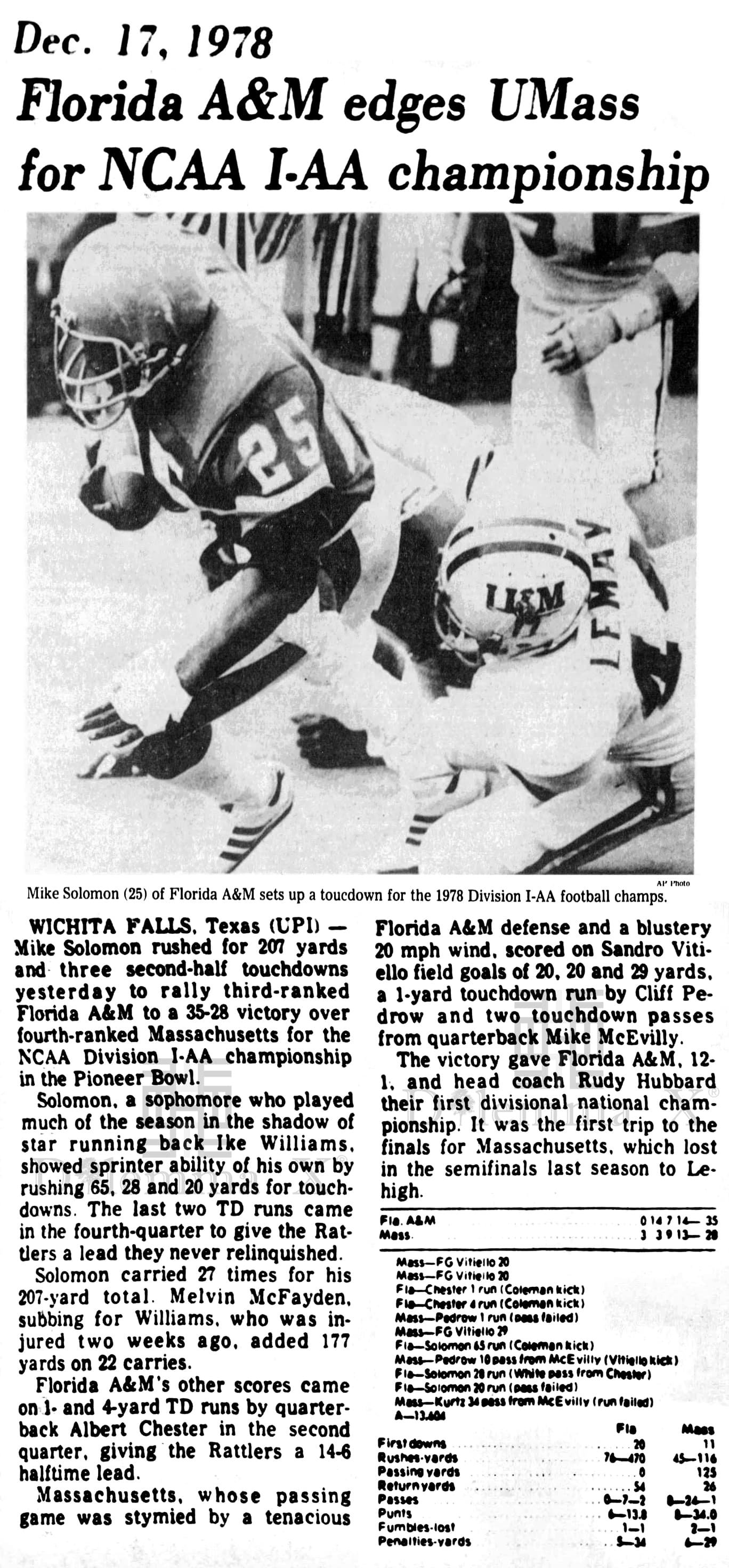
FCS football is not a smaller copy of FBS football. It is a postseason system built around the idea that a national champion should be decided in a bracket, and that idea goes back to the NCAA’s 1978 split of Division I football into I-A and I-AA after the broader reorganization into Divisions I, II and III in 1973.
How the split created the FCS identity
The first Division I-AA championship set the tone immediately: Florida A&M beat Massachusetts 35-28 in a four-team tournament, and that title game is the starting point for the championship lineage now associated with the FCS. The label changed in 2006, when Division I-AA became the Football Championship Subdivision and I-A became the Football Bowl Subdivision, but the core idea never changed. FCS teams chase a national title through a single-elimination path, not through a bowl calendar.
That structure gives the subdivision its own personality. The bracket is not an add-on to the season; it is the season’s payoff, and it turns conference races, rankings, and November finishing kicks into direct playoff pressure. Every Saturday matters because the road to the trophy is open, visible, and narrow at the same time.
Why the 24-team bracket matters now
The field did not arrive fully formed. It expanded from four teams to eight in 1981, 12 in 1982, 16 in 1986, 20 in 2010, and 24 in 2013, and that growth explains why the FCS feels both traditional and modern. The championship kept its knockout identity while widening the doorway enough for more programs to enter the race.
Today’s bracket is 24 teams, and the selection mix can vary as conference alignments shift. In the standard setup, the field is built around 10 automatic qualifiers and 14 at-large bids, while recent NCAA coverage has also described a field with 11 automatic bids and 13 at-large spots. The important point is unchanged: conference success still matters, but the committee also weighs national strength and full-season résumés.
Seeding adds another layer of stakes. The top 16 teams are seeded, and the top eight receive first-round byes. That means the best regular seasons do more than earn a place in the field; they change the entire route through it, from extra rest to a shorter path to the national championship game.
What the numbers say about competitive balance
FCS football is defined by both opportunity and constraint. NCAA materials note that FCS programs are capped at 63 scholarships, while FBS programs can offer 85, and that gap shapes how teams build depth, develop quarterbacks, and survive the late-season grind. In a subdivision where injuries and travel can swing a playoff race, those 22 scholarship spots matter in ways fans can see on special teams, in the rotation up front, and in the way coaches manage redshirts.
The scale of the subdivision also shows why its title path matters. The NCAA says 129 institutions sponsor FCS football, but only 123 are eligible to compete for the national championship, and those programs support about 13,000 football student-athletes. That is a large national footprint for a system built around a compact playoff, and it gives the bracket real geographic range without sacrificing the sense that every seed has to be earned.
Why November feels different in FCS
The FCS season carries a sharper edge because the sport is built on postseason access. A conference race is never just about pride; it can be the difference between a seeded path, a road-heavy opening round, or staying home entirely. Because the bracket is real and finite, a late touchdown or a head-to-head win can change a team’s entire month.
That is the biggest contrast with FBS football. FCS teams do not spend the fall trying to maneuver into a bowl invitation system; they are fighting for placement inside a national tournament with byes, seeds, and home games on the line. That is why the subdivision’s identity still feels distinct every November, even to fans who follow both levels closely.
The championship hierarchy still has clear benchmarks
The title chase also has its own historical yardstick. North Dakota holds the most all-time FCS football national championships with nine, a reminder that the subdivision has developed its own blueblood standard over time. That kind of history matters because the playoff is not just a chance to win once; it is a structure that lets dominant programs build legacies year after year.
That legacy circles back to the original split. The NCAA’s 1978 decision created a subdivision where postseason access was the defining feature, and every expansion since then has kept that principle intact. The modern FCS bracket still reflects that origin in the cleanest possible way: earn a seed, survive the bracket, and prove it on the field.
This article was produced by Prism’s automated news system from verified source data, official records, and press releases, then run through automated quality and moderation checks before publishing. The system is built and supervised by the people who set the standards it runs under. Read our full AI policy.
Did this article answer your question?