FCS playoff viewership surges as rights value debate intensifies
FCS playoff ratings are spiking, but the NCAA still captures most of the value, forcing a fight over whether the subdivision should sell its biggest asset on its own.

The ratings argument is already won
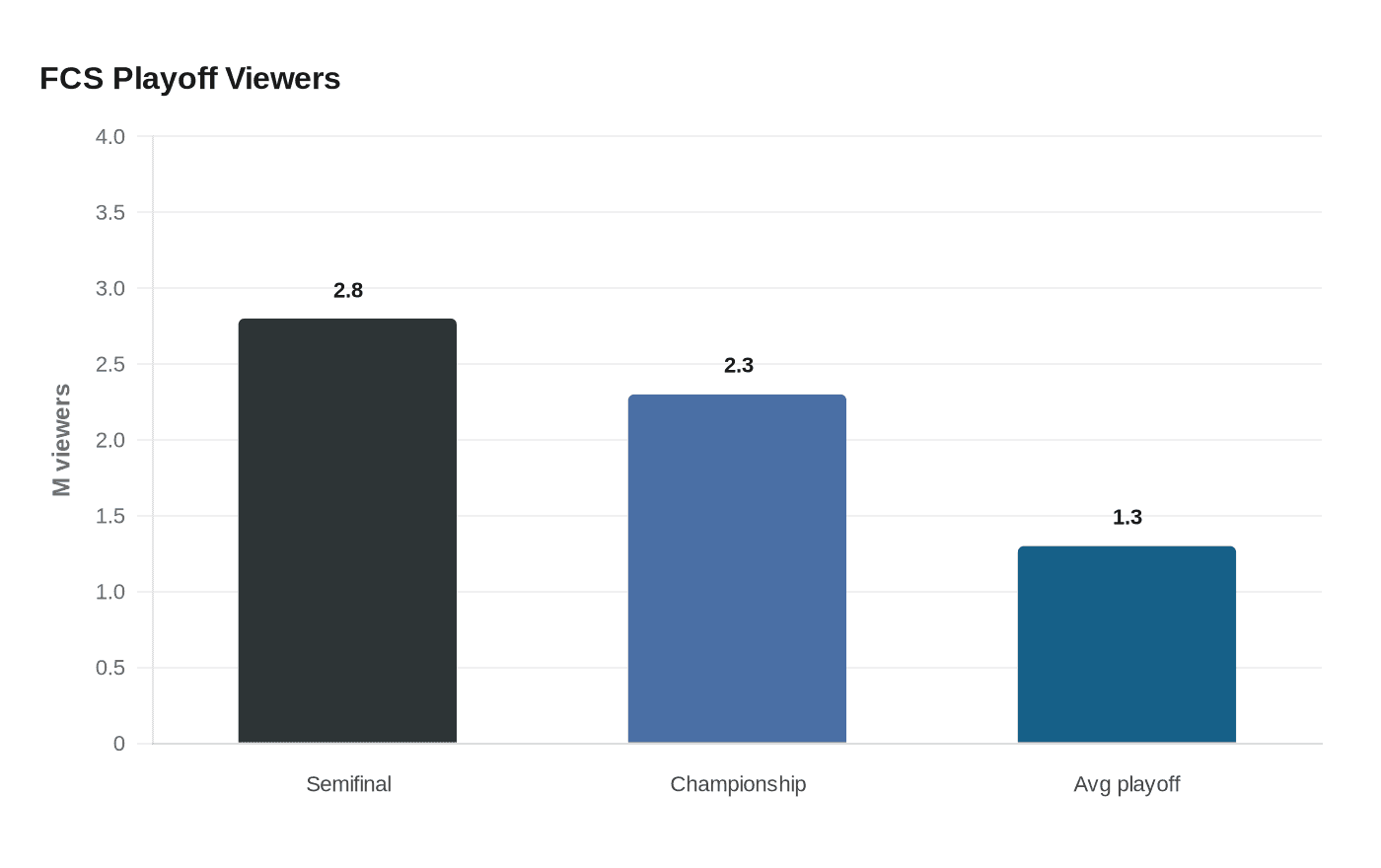
The FCS playoff is no longer a hidden winter property. Its semifinal round drew the biggest audience since 2009, and the Montana-Montana State showdown set an FCS playoff television record with 2.8 million viewers. The championship game followed with 2.3 million viewers, the third-highest total ever for the title game, and that kind of number changes the conversation fast.

For years, the question around FCS football was whether enough people cared to justify a more ambitious business model. The answer is now on the screen. When a semifinal can hit 2.8 million and the title game can still clear 2.3 million, the real issue is not demand, it is who owns the demand and who gets paid when it shows up.
The current deal leaves schools short
Right now, FCS playoff rights sit inside a broader NCAA championships package worth $115 million annually to ESPN. That deal is part of an eight-year agreement that began Sept. 1, 2024 and covers a record 40 NCAA championships, which means the subdivision’s most valuable football inventory is bundled with a much larger slate of properties.
That structure matters because the playoff money does not stop at television. Schools bid to host FCS playoff games, then return about 85 percent of ticket revenue to the NCAA. In practice, that can turn a home game into a financial squeeze, especially for programs that already stretch budgets to stage a postseason run. AP reporting said Montana State lost tens of thousands of dollars during its 2024 playoff run, and most of the 24 playoff teams reportedly lose money or break even.
A bracket built for a different era
The playoff itself has outgrown the framework built around it. The championship expanded to eight teams in 1981, 12 teams in 1982 and 16 teams in 1986 before growing into the current 24-team bracket. The NCAA says the Division I Football Championship Subdivision Oversight Committee manages the overall structure and oversight of the championship.
That history tells its own story. The format was built for a smaller media era, when the postseason was not producing the kind of audience it does now. AP reporting said the overall average viewership for FCS playoff games reached 1.3 million across ESPN platforms, the highest since 2009-10, which is another sign that the product has become more valuable than the system around it.
What a separate sale could change
Sequence Equity’s argument is that the FCS is being undervalued because it is sold as part of the NCAA bundle instead of as a standalone asset. That is the heart of the private-equity debate: if the playoff is generating real audience growth, then the subdivision should be able to negotiate from that growth directly instead of having it diluted inside a package built to serve 40 championships at once.
A standalone FCS deal would not just affect the size of the check. It could reshape revenue distribution, sharpen the incentives to host, and give the subdivision more control over how its most important games are presented on television. It could also matter for playoff access in a broader sense, because the more money that flows directly into FCS football, the more leverage schools and conferences would have when deciding how much postseason risk they can afford to take.
The biggest prize is control of the title game
The control question is every bit as important as the money question. The NCAA says the 2026 and 2027 Division I Football Championship games were awarded to Nashville and the Ohio Valley Conference, with FirstBank Stadium set as the site. The 2025-26 championship game was scheduled for Jan. 5, 2026 in Nashville, Tennessee, which underscores how valuable the final itself is as a piece of inventory.
The title game is not just the capstone of the bracket. It is the cleanest test of who owns the postseason brand. If the FCS ever moves toward a more independent commercial model, the championship game becomes the centerpiece of that shift, because the biggest event tells you who has the leverage, the NCAA, the conferences, or a new rights holder willing to price the product around its audience.
Why this matters for contenders, smaller leagues and fans
For contenders, a stronger rights model could mean better exposure, more stable postseason economics and less financial punishment for winning enough to host. For smaller conferences, the stakes are even sharper, because the current setup asks them to help create a national product without letting them keep much of the upside.
For fans, the payoff is straightforward. A better rights structure could mean more marquee games in better windows, a clearer national spotlight for rivalry matchups and a playoff treated like a major asset instead of a leftover piece of the NCAA calendar. The FCS has already proved it can pull millions. The next fight is whether the subdivision keeps operating inside the NCAA’s old bundle, or starts owning the value its biggest games are already creating.
This article was produced by Prism’s automated news system from verified source data, official records, and press releases, then run through automated quality and moderation checks before publishing. The system is built and supervised by the people who set the standards it runs under. Read our full AI policy.
Did this article answer your question?