How FCS Coaches Use Spring Practice to Build Depth Charts
Spring practice reps reveal more than any stat line: here's the film-room checklist FCS coaches and pro scouts use to sort starters from depth pieces every April.
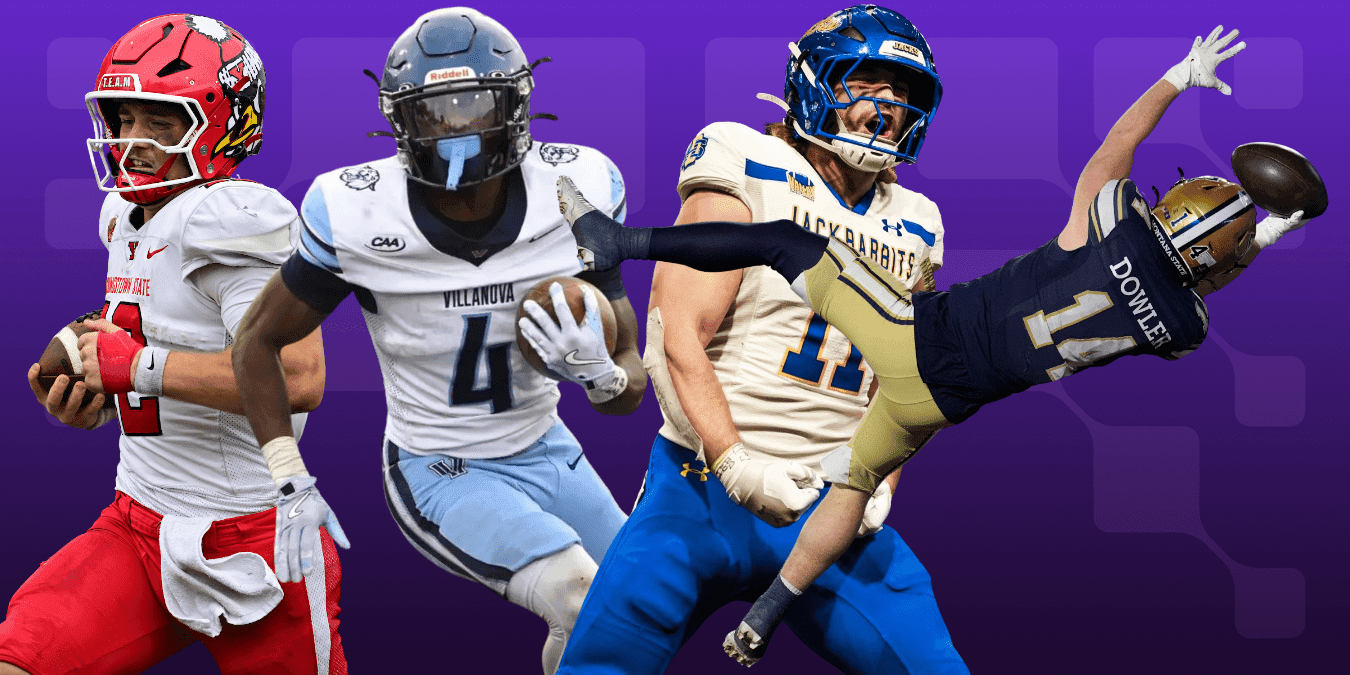
Rep Order: The Depth Chart's First Signal
Before a single spring game snap is televised, depth charts are being written in practice repetitions. FCS coaches track the percentage of first-team reps each player accrues during positional drills, team periods, and especially the two-minute and red-zone sessions at the end of practice. A player who consistently lines up with the first unit in those late-practice high-leverage windows is being trusted in a specific, measurable way. A player who gets the same volume of reps but only when the scout team is on the field is occupying a very different mental slot in the coaching staff's mind.
The tell is in the *type* of rep, not just the count. Red-zone snaps and two-minute-offense periods are limited in number and deliberately assigned, which makes them the closest equivalent to playoff minutes in a spring setting. Coaches running a clean two-deep will use those windows to compare players directly. If a wide receiver is seeing third-down route tree reps on Day 1 but moved to special-teams coverage by Day 8, that positional shift is often more informative than any scrimmage result.
Surprising data point to look up: In PFF's FCS snap-tracking, full-time starters typically log 550 to 750 snaps across a season, while package contributors land between 300 and 550. A spring-practice rep distribution that mirrors those proportions for a backup suggests a coach who's already planning that player's role rather than auditing it.
Competitive Consistency Across Practice Days
When an FCS coach says "I love the competitiveness in this room," it almost never means one player had a breakout day. It means positional battles are generating repeatable results across multiple practices. That distinction matters for predicting August depth charts, because a single standout performance in an April walkthrough is a poor forecast of what happens under pad-level pressure in fall camp. The player who executes the same blocking assignment or press-coverage technique correctly on Day 3, Day 7, and Day 12 of spring is the one who earns the trusted role.
For linemen, coaches look for finish-blocking consistency: getting to the second level, sustaining contact, and completing the assignment rather than simply initiating it. For receivers, it's route-to-footwork precision: whether the split-second foot placement at the top of a route matches the playbook alignment every time. For defensive backs, it's technique in press coverage, specifically whether the player can replicate the same release disruption against different body types. Scheme understanding accelerates all of this. A player who arrives in spring already knowing the coverage calls and blocking assignments burns fewer reps on installation and more on execution, which gives coaches a cleaner read on his fall upside.
Reading a Spring Game Stat Line
The scoreboard in a spring scrimmage does not mean what it would in October. A quarterback who goes 20-of-24 in an April controlled scrimmage has demonstrated timing, rapport with his receivers, and comfort within the scheme. He has not been tested against pressure packages, coverage disguises, or the physical speed that full-game conditions produce. That doesn't make the stat line worthless; it makes it directionally useful rather than conclusive.
Playing-time structure inside a spring game is the cleaner signal. Many FCS programs split rosters and rotate starters in controlled intervals. A skill-position player who finishes the spring game still accumulating reps at high volume is likely being positioned for a meaningful fall role. Conversely, a receiver who puts up big numbers exclusively against reserves in the fourth quarter of a controlled scrimmage has revealed less than his stat line suggests. Watch for which players are still getting first-unit reps when the coaching staff has run out of things to install: that's the group they're betting on.
Surprising data point to look up: Track contested-catch conversion rates in spring scrimmages separately from the overall completion percentage. A wide receiver who converts a high share of contested catches against first-team defensive backs in spring is showing a trait that correlates directly to the vertical and jump-ball roles NFL scouts evaluate at pro days.
Special Teams as a Depth-Chart Accelerator
In FCS roster construction, special teams are often where the depth chart's true shape is most visible. A player who earns a starting-unit role on kick coverage, punt return, or field-goal block in spring is being entrusted with one of the most rep-limited and consequential roles on the team. FCS coaching staffs generally don't throw developmental players onto starting special-teams units in spring if they're planning to use those players as backups on defense or offense. The assignment itself signals readiness.
For college-to-pro evaluation, special teams roles also carry a practical ceiling-mapping function. A linebacker or defensive back who excels in spring special-teams assignments, and particularly in the leverage angles and pursuit routes required for kick coverage, is demonstrating athleticism and football IQ in a live-contact context that pure drill work doesn't replicate. In the FCS-to-NFL pipeline, special teams contribution is often the bridge role that earns a player a training camp invite or a practice squad spot.

Surprising data point to look up: Pressure rate generated by edge players in spring scrimmages. An edge rusher who consistently creates pressure in limited live-fire snaps, even against first-team offensive lines, is providing scouts with the kind of pass-rush data that translates to 40-time validation rather than replacing it.
Scheme Fit vs. Raw Athletic Traits
Every spring the same tension appears on every FCS depth chart: the player who is physically exceptional but technically raw versus the player who immediately understands the scheme and executes it correctly. Spring practice is explicitly the setting where coaches measure both in sequence, and the results are often counterintuitive.
The athletically superior player with technique deficiencies frequently requires more coaching time per rep to produce consistent execution. That's not a disqualifier, but it creates a real timeline problem in a spring window that typically spans 15 practices. The player who demonstrates scheme fluency early, correct pre-snap alignment, proper coverage technique, right route combinations from the jump, earns an efficiency advantage that shows up in rep distribution by the second week. For FCS programs that play deep into January, the ability to execute under instruction without extensive reteaching is a meaningful predictor of who holds their role through a 16-game-plus schedule.
From an NFL evaluation standpoint, scheme fit at the FCS level is particularly interesting as a pro-traits indicator. A defensive back who can play multiple coverage responsibilities, zone and man, and execute the correct assignment in both tells scouts something about football intelligence that measurable testing cannot. Cole Payton of North Dakota State demonstrated this dual-track value, earning a 95.8 PFF offense grade in 2025 that reflected not just arm talent but consistent execution of a complex playbook, the kind of spring-to-fall continuity that scouts eventually cross-reference against live pro day testing.
Third-and-Long and Red Zone: The Situational Litmus Tests
Third-and-long packages and red-zone sets are the two situational environments coaches monitor most closely during spring because they are the most scheme-specific and the hardest to execute without real preparation. A quarterback who converts third-and-medium in a spring scrimmage against heavy man coverage isn't just completing a pass; he's telling the coaching staff that his protection reads, his hot routes, and his clock management are ahead of schedule. That data directly shapes where he sits in the depth chart entering summer.
The red zone is a particular litmus test for receivers and tight ends in FCS programs because it compresses the field and demands precise route running in a smaller window. Contested-catch situations become unavoidable. A player who wins in that environment against first-team defensive backs during spring carries a legitimate claim to early-season target share that no summer workout will override.
What Coaching Language Tells You
The words FCS coaches use in post-practice availability are a coded depth-chart briefing if you know how to read them. "We have a competition at that position" is the clearest signal an open battle exists. "We know who our starter is, and now we're working to build depth around him" means the depth chart there is locked, and the evaluation reps are going to players two and three on the roster. Neither framing is inherently better for a program; both tell you where to direct your attention when fall camp reporting begins.
The framing coaches apply to individual players matters equally. When a coach describes a player using language centered on accountability and process ("he does exactly what we ask every single day") rather than pure production ("he had a big spring game"), they're describing a player they trust in high-leverage situations. That trust is what converts spring performance into August starting roles, and in FCS programs with legitimate NFL pipelines, it's also what gets a player an invite to an FCS showcase or regional pro day before the draft cycle closes.
Spring is not the final verdict on any roster. It is, however, the most information-dense window of the offseason, and the programs that come out of it with a clear two-deep and defined situational packages tend to be the ones advancing deep into January. The reps don't lie; you just have to know which ones to watch.
This article was produced by Prism’s automated news system from verified source data, official records, and press releases, then run through automated quality and moderation checks before publishing. The system is built and supervised by the people who set the standards it runs under. Read our full AI policy.
Did this article answer your question?