Kaleb Proctor emerges as NFL draft prospect after dominant interior season
Kaleb Proctor’s interior pressure numbers are too loud to ignore. The FCS star is forcing NFL evaluators to look past the small-school label and the size questions.
Why Proctor is forcing a draft conversation
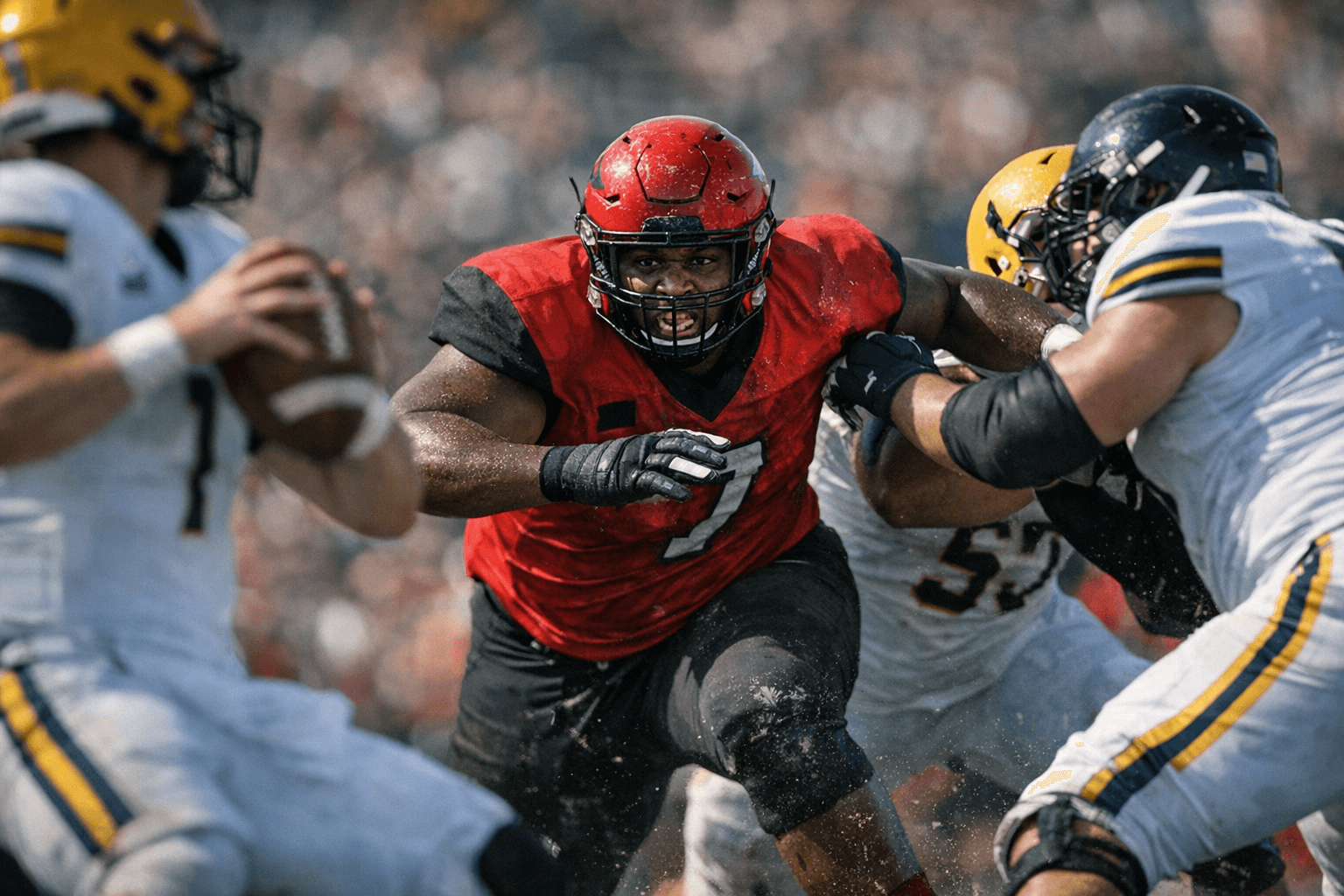
Kaleb Proctor is no longer just a productive FCS interior defender with a good story. He has built enough disruption from the middle of Southeastern Louisiana’s line that NFL evaluators are starting to treat him like a real draft commodity, not a courtesy mention for late rounds. HERO Sports projects him as a third- to fourth-round pick, and Draft Scout has him at No. 101 overall and the No. 11 defensive tackle in the class, a serious climb for a player who wins in one of the hardest places on the field to get noticed.
That matters because Proctor plays inside at the FCS level, where visibility is always thinner and the work is easier to miss. Edge rushers collect the obvious splash plays. Interior defenders have to overwhelm guards, flatten pockets, and turn steady pressure into something that shows up in the box score. Proctor has done that often enough that the old small-school skepticism is starting to crack.
The production that changed the evaluation
The numbers are the strongest part of the case. Proctor’s 2025 PFF overall defensive grade was 86.5, which ranked ninth among 887 qualified interior defensive linemen. His 90.4 pass-rush grade ranked third among that same group, and he finished the season with 39 total pressures, including nine sacks, 26 hurries and four hits. For an interior lineman, that is the kind of profile that forces teams to take a second look.
PFF’s draft-sleeper analysis pushed the point even further, saying Proctor led the 2026 draft class among interior defensive linemen with nine sacks. That kind of production is what separates a solid college lineman from a prospect who can enter an NFL conversation. He did not just flash in one game or one month. He sustained disruption across the season and did it from a spot on the field where production usually has to be earned the hard way.
Why the size question does not end the story
There is a reason evaluators still pause when they see an interior defender from an FCS program. The league wants size, length, and proof that a player can hold up against NFL power. Proctor does not fit the classic mold, at least not perfectly. PFF listed him at 6-foot-1 and 275 pounds in its sleeper analysis, while ESPN listed him as a senior defensive tackle at 6-3 and 280.
That range tells part of the story, but the more important point is how he wins. PFF’s sleeper piece described him as an explosive, penetrating lineman with a strong motor, good quickness and enough versatility to fit multiple fronts. His 74.2 run-defense grade was more modest than his pass-rush numbers, which suggests his best NFL path is as an upfield disruptor rather than a classic two-gap anchor. In other words, Proctor’s value is not about looking like the prototype. It is about making guards and centers deal with a player who arrives fast, stays active, and keeps the pocket from settling.
The season that built the draft case
The 2025 breakout did not happen in a vacuum. Southeastern Louisiana’s official roster bio shows that Proctor started all 12 games at defensive tackle in 2024 and recorded 49 tackles, 16 solo stops, six tackles for loss, 4.5 sacks and a fumble recovery. He produced impact outings against quality conference opposition too, including a two-sack game against East Texas A&M and a six-tackle, sack performance in the overtime win at Lamar.
Those details matter because they show a player who was already operating as a centerpiece before his draft stock began rising. He was not a rotational piece waiting for a larger role. He was the interior force Southeastern Louisiana leaned on every week, and he responded with volume production and game-changing moments. That is usually the combination NFL teams want when they start looking for mid-round defensive line value.
From Oak Grove linebacker to Southeastern Louisiana star
Proctor’s rise is also more compelling because of where he started. He played linebacker in high school before converting into a defensive lineman at Southeastern Louisiana, and he arrived in Hammond with relatively little fanfare. That background helps explain why his development feels so complete now. He was not handed a polished defensive tackle profile. He had to grow into one.
The arc from Oak Grove High School in Oak Grove, Louisiana, to Southland Conference Defensive Player of the Year status is exactly the kind of progression scouts like to believe in. It suggests a player who has not hit his ceiling yet, especially because his growth has come through production rather than hype. Each season has added a new layer, and the jump from linebacker to dominant interior defender gives his evaluation a developmental upside that is easy to overlook when the spotlight is smaller.
The awards and the program stakes
The broader honors back up the tape. Proctor was named a 2025 Buck Buchanan Award finalist, which put him among the 30 best FCS defensive players in the country, and he later earned first-team All-America recognition from FCS Football Central in December 2025. Those acknowledgments did not create the draft buzz, but they reinforced it by showing he was already being measured against the top defensive players at this level.
For Southeastern Louisiana, his rise carries extra weight because of the program’s long draft drought. Harlan Miller was the Lions’ last NFL draft pick before the Proctor conversation took over, going to the Arizona Cardinals with the 30th pick of the sixth round, No. 205 overall, in the 2016 NFL Draft. That gap gives Proctor’s ascent program-wide significance. If he keeps climbing, he will not only validate his own production. He will also give Southeastern Louisiana a draft reference point that matches the quality of the players it has been developing.
Proctor’s case is simple enough once the film and numbers line up: he is an undersized-looking interior defender who consistently wrecks passing plays, survives the physical grind, and keeps stacking proof that his level of football should not be held against him. For NFL teams hunting value, that combination is exactly how an FCS lineman stops being overlooked and starts getting drafted.
This article was produced by Prism’s automated news system from verified source data, official records, and press releases, then run through automated quality and moderation checks before publishing. The system is built and supervised by the people who set the standards it runs under. Read our full AI policy.
Did this article answer your question?