Lafayette-Lehigh rivalry defines FCS football’s enduring tradition
Lafayette-Lehigh turns one annual game into the clearest proof of FCS football’s value: place-based stakes, campus rituals, and memory that never resets.
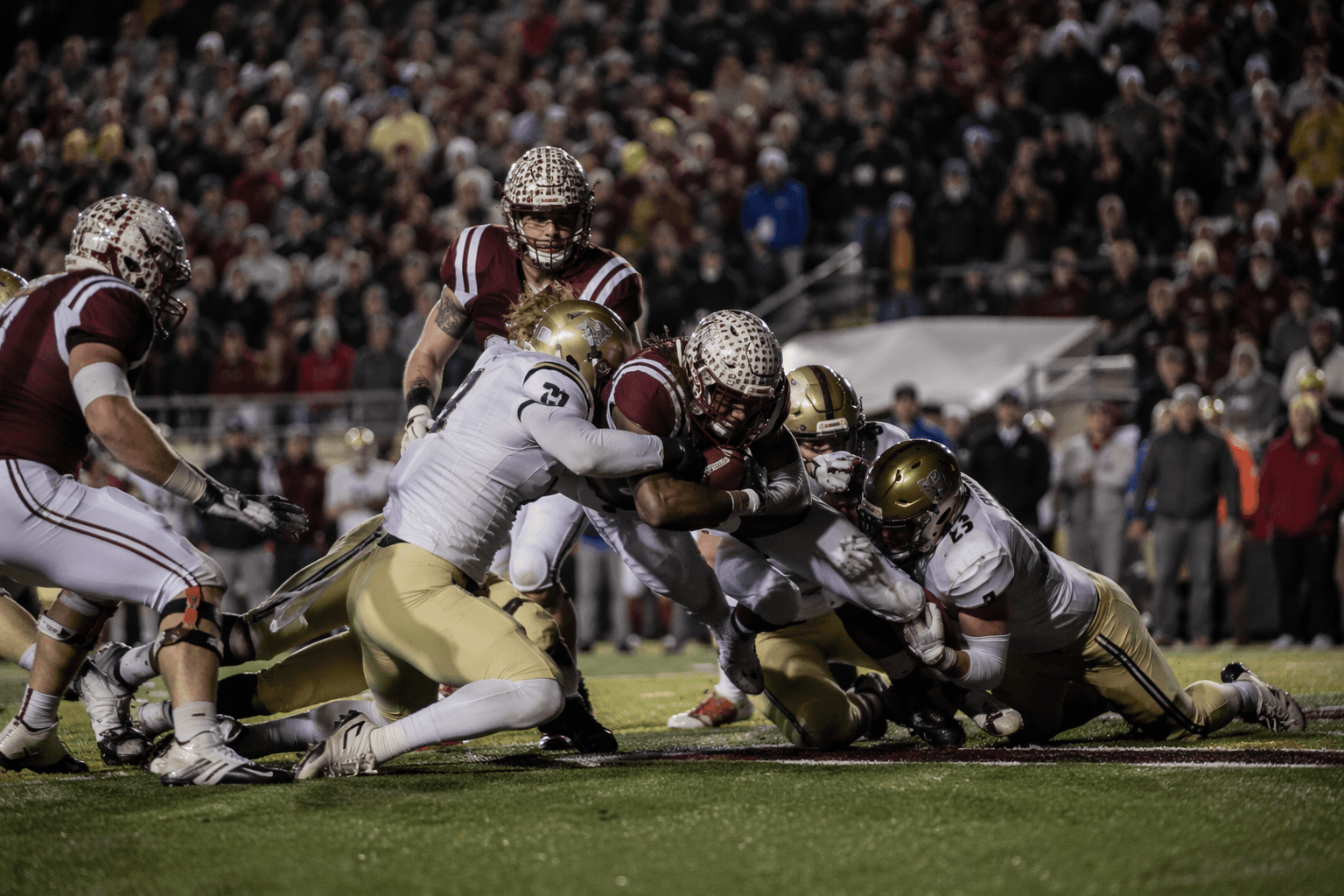
Lafayette and Lehigh have spent more than a century proving that one annual game can carry more weight than a postseason path. The NCAA calls The Rivalry the most played in college football, and by 2025 the series had reached 161 meetings, with only 1896 and the spring 2021 shift interrupting its yearly rhythm. That continuity is the point: in FCS football, the seasons that stick are often the ones tied to a place, a road trip, and a campus that refuses to let the calendar move on.
The permanence that FCS preserves
The Rivalry began in 1884, one year after standardized football rules were established, which makes it feel less like a modern branding exercise than a direct line back to the sport’s early shape. Lafayette won the first meeting 56-0, and the series has survived every major change the game has thrown at it, from rule shifts to conference realignment to the expansion of the national playoff. Lehigh says the matchup reached its 161st game in 2025, a number that matters less as a statistic than as proof that this is one of the few rivalries in college football where the annual appointment still feels untouchable.
That is why The Rivalry belongs at the center of any guide to FCS football. The subdivision’s best traditions are not always the biggest stages on television, but they are often the sharpest expressions of what college football was built to do: bind a school to a place, give students a date to circle, and hand alumni a reason to come back. Lafayette and Lehigh do that in eastern Pennsylvania every year, and they do it without needing a playoff seed to validate the occasion.
Why FCS rivalries hit differently
FCS rivalries matter because they can define a whole season even when the national title picture feels far away. A lot of programs in the subdivision live inside a small set of consequential Saturdays, and the rivalry game is often the one that decides whether a year is remembered for a trophy, a tiebreaker, or a campus that wakes up on Sunday with bragging rights intact. The Rivalry is the clearest example, but it sits in a larger FCS tradition that includes the Dakota Marker, the Brawl of the Wild, the Bayou Classic, and the Florida Classic, all of them annual markers that mean more than a line in a standings table.
The Bayou Classic shows how powerful that model can be. The first one was played in 1974 at Tulane Stadium before 76,753 fans, a crowd size that helped turn a rivalry into a regional event with its own cultural gravity. NCAA FCS coverage groups those games together for a reason: they are the subdivision’s signature proof that college football is still at its best when it belongs to a school, a city, and a specific date on the calendar.
What rivalry week looks like in Easton and Bethlehem
Lafayette makes the week feel like a campus-wide countdown. Rivalry Week includes a pep rally, class spirit competitions, concerts, and Midnight Breakfast, and the game itself sells out months in advance. That kind of demand says as much about fan buy-in as it does about football, because a packed house is not just a ticketing outcome, it is a sign that the rivalry has become part of the school’s identity.
Lehigh builds the same kind of pressure from a different angle. The Marching 97 moves through classrooms, dining halls, fraternities, sororities, and libraries during rivalry week, turning ordinary spaces into part of the build-up. Lehigh also says the tradition of decorating a wooden L for organizations began in 2018, which gives the rivalry a visible, modern campus ritual that students can touch and alumni can recognize. For recruits and new students, that matters: it shows that the school is not simply selling a game, it is selling a shared calendar of belonging.
The game’s location adds another layer. Lafayette’s rivalry coverage has framed the 161st meeting in Easton as the culmination of the week, and that geographic closeness is part of the appeal. The schools are separated by only a short drive, which helps make the matchup feel personal rather than abstract, a local contest with national historical weight.
How the rivalry became part of the schools’ memory
The football series sits on top of an older athletic history. Lehigh says the first athletic meetings between the schools came in baseball in 1869, long before football became the modern college sport most fans know. Another account Lehigh cites traces some of the emotional roots of the rivalry to an 1881 track-and-field loss and the taunting that followed in student journalism, which helps explain why the football version took on such outsized meaning when it arrived.
That memory has been preserved and retold in its own media archive. A documentary on the Lehigh-Lafayette legacy is narrated by Harry Kalas and uses game film dating back to 1947. Its highlights include the fog game in 1955, the 100th game in 1963, and the final matchup at Taylor Stadium in 1987, turning the rivalry into a visual history as much as a football one. Once a rivalry has its own archive, its own narration, and its own highlight reel, it stops being just a game on the schedule and becomes a permanent part of the schools’ identity.
Why The Rivalry still defines FCS football
Lafayette-Lehigh endures because it preserves the rarest thing in sports: a game that does not need a championship to matter. The schools keep finding ways to make the week feel bigger than the record, whether through sold-out stands, marching band invasions, wooden Ls, or a documentary that reaches back to 1947. That is the FCS lesson inside The Rivalry. In a sport often measured by television money, playoff access, and brand size, the most powerful tradition can still be the one that returns every year to the same two campuses and asks everyone there to care all over again.
This article was produced by Prism’s automated news system from verified source data, official records, and press releases, then run through automated quality and moderation checks before publishing. The system is built and supervised by the people who set the standards it runs under. Read our full AI policy.
Did this article answer your question?