Montana stars headline FCS returning player of the year lists
Montana and Montana State don’t just return stars, they return the kind that can flip seeding, not just survive the bracket. That’s why the FCS power map looks anything but settled.
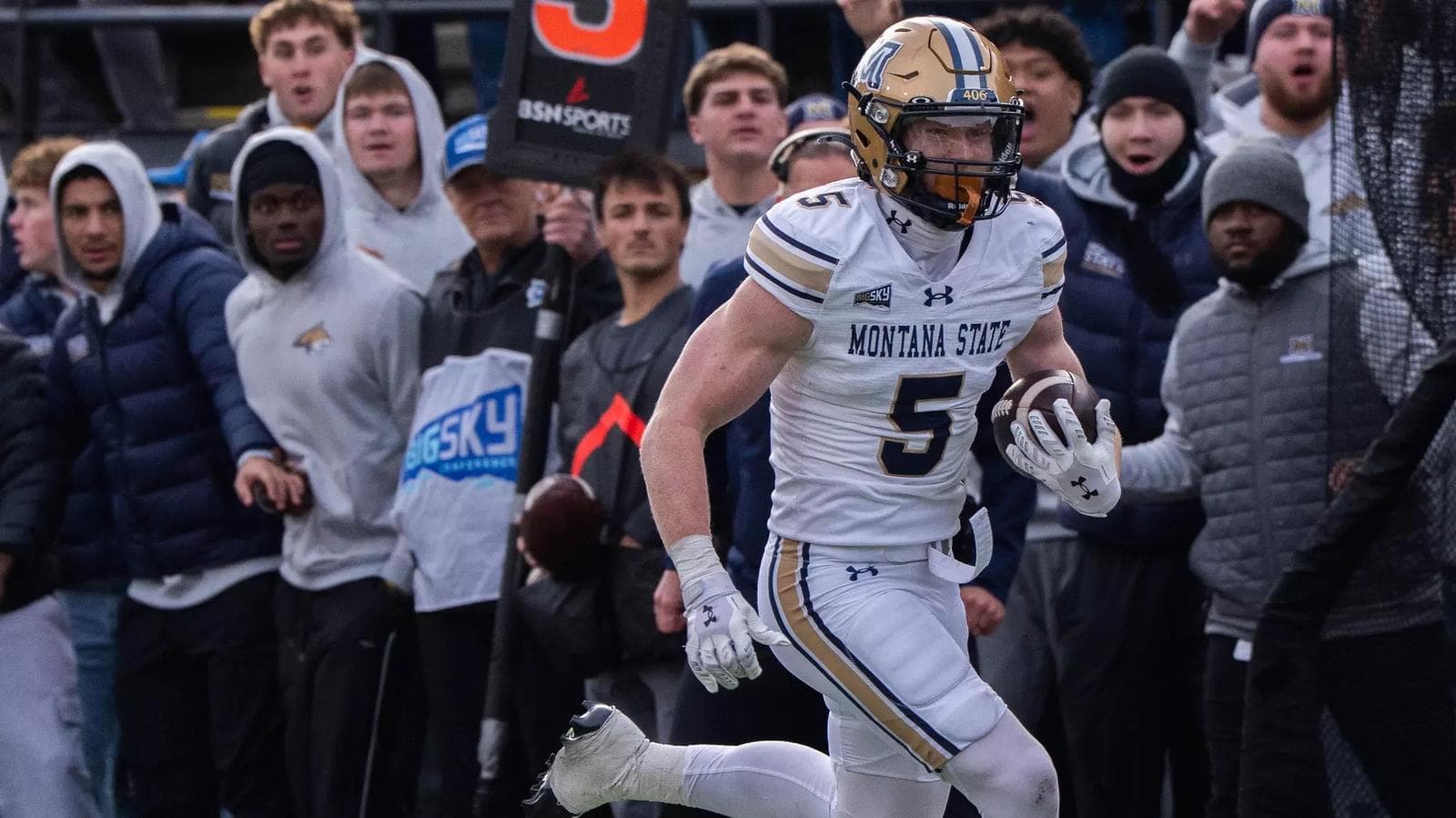
Montana and Montana State are forcing the conversation before a snap is played. Craig Haley’s returning player of the year lists land in a subdivision that already has its top end loaded, with Stats Perform’s preseason All-America team spanning all 13 FCS conferences, 53 schools and 101 players. When the defending national champion Bobcats and the Grizzlies both show up this early with real award candidates, the race for seeds and the race for the title start to blur.
Montana State still owns the standard
The Bobcats carry the most obvious trophy glow because they won the 2025 FCS national championship and did it by beating Illinois State in the first-ever overtime FCS Championship Game. That matters because teams coming off that kind of finish do not usually walk back into the next season on equal footing with everybody else. They come back with national credibility, a target on their backs and, in Montana State’s case, enough returning star power to keep the bracket conversation centered on Bozeman.
Big Sky stars already tilt the map
The Big Sky is once again where the national discussion feels heaviest, and that is no accident. Montana and Montana State were both heavily represented on preseason All-America lists, while the conference’s 2025 preseason honors were voted on by media throughout the league, a reminder that respect in the Big Sky is earned the hard way. When the top of the conference keeps stacking proven names, the championship race in the West becomes less about surprises and more about which heavyweight survives the autumn grind.
Eli Gillman and Keali’i Ah Yat give Montana a national pulse
Montana’s Eli Gillman is the cleanest example of why returning player of the year lists matter. The Grizzlies also put Gillman and quarterback Keali’i Ah Yat on the Walter Payton Award watch list on July 14, which pushes Montana straight into the national offensive award race before September. That is the kind of dual presence that changes how opponents game-plan the Grizzlies, because one award-caliber runner and one watch-list quarterback is no longer a nice story, it is a weekly problem.
Caden Dowler brings repeat-award gravity to the Bobcats
Caden Dowler is the Bobcat name that keeps showing up for a reason. Online chatter around the preseason All-America team zeroed in on Dowler’s first-team profile, with fans pointing out how unusual it felt to see him and another player land on the top unit. That kind of attention is not just message-board noise, it is a sign that Montana State is carrying a player with the profile to swing close games, and those are the players who turn a good conference team into a seed.
The Ivy League keeps Yale in the awards race
Yale’s Abu Kamara gives the Ivy League a different kind of leverage. The Ivy does not reshape the FCS playoff bracket the way the Big Sky or Missouri Valley can, but it still matters in the national awards ecosystem, and a returning player of the year candidate from Yale keeps the Bulldogs in that conversation. Kamara’s presence also reinforces a simple truth about the subdivision: the best talent is not confined to the playoff eligible leagues.
The Missouri Valley remains the barometer
The Missouri Valley Football Conference continues to operate like the league everyone else has to measure against. Its 2026 preseason All-America haul included 21 total selections, five of them on the first team, which tells you how much weekly talent lives in that league before you even get to the top-end award names. Add the returning-player conversation around the MVFC and names such as Justin Lamson and Timothy Rosario, and the league’s depth looks less like depth and more like a weekly stress test for playoff hopefuls.
Patriot League and Pioneer League returners widen the field
The Patriot League and Pioneer Football League do not drive the national title race the way the Big Sky or MVFC do, but they absolutely affect the national awards picture. The Patriot League announced eight players on the 2026 Stats Perform FCS preseason All-America team, and it is moving its preseason honors into an ESPN+ season preview show, which gives its stars a bigger platform than they have usually had. In leagues like these, a returning player of the year candidate can lift a program from respectable to dangerous, especially when the rest of the country starts noticing the same names.
All 13 conferences, 53 schools and 101 players tell the real story
The biggest thing about the preseason All-America list is not a single school, it is the spread. With all 13 conferences represented across 53 schools and 101 players, the talent is distributed widely enough that the playoff field should feel less predictable than the old blueblood model suggested. That is why returning award winners matter so much: in a subdivision this broad, one difference-maker can be the gap between a home playoff game and a first-round road trip.
Craig Haley sees a season that stays hot
Haley has covered FCS football since 1999, which is long enough to know when a season is setting up for chaos and when it is merely noisy. He framed the next chapter as one where conference title races stay red hot, and that is the right read after a 2025 finish that ended in Nashville with a national championship game that needed overtime. The list of returning players of the year is not a ceremonial update, it is the evidence that the contenders are coming back armed.
Why these returners matter more than portal noise
A lot of college football talk gets swallowed by transfers and roster churn, but the FCS is still decided by players who already know their systems and have already earned respect. Gillman, Ah Yat, Dowler and Kamara are not projection cases, they are proven names with award traction and preseason recognition already attached. That makes them more valuable than a depth chart headline because they are the players who can keep a team on schedule when everyone else is still figuring out who they are.
Repeat winners can become seeds, not just participants
This is where the line between playoff participant and playoff seed gets drawn. A returning player of the year candidate can change the whole math of a season by winning the November games that decide brackets, and that is especially true in conferences where one star can bend both the offense and the national perception. Montana and Montana State have the most obvious claim to that kind of jump, but the wider field of returning standouts is what keeps the 2026 race from becoming a two-team script.
The national storyline still runs through Montana
If there is a clean takeaway, it is this: the FCS enters the year with enough proven star power to keep the playoff field honest, and Montana sits right in the middle of it. The Bobcats have the championship banner and a first-team profile that travels; the Grizzlies have Gillman and Ah Yat on watch lists that carry real weight. In a subdivision where one elite returner can reshape a conference race, Montana’s stars are not just headliners, they are the players most likely to decide who gets remembered in January.
This article was produced by Prism’s automated news system from verified source data, official records, and press releases, then run through automated quality and moderation checks before publishing. The system is built and supervised by the people who set the standards it runs under. Read our full AI policy.
Did this article answer your question?