Montana State leads FCS preseason guide, dark horses and award watch list
Montana State still anchors the FCS race, but the bigger story is a narrow title tier, 25 coaching changes and the Payton Award chase.
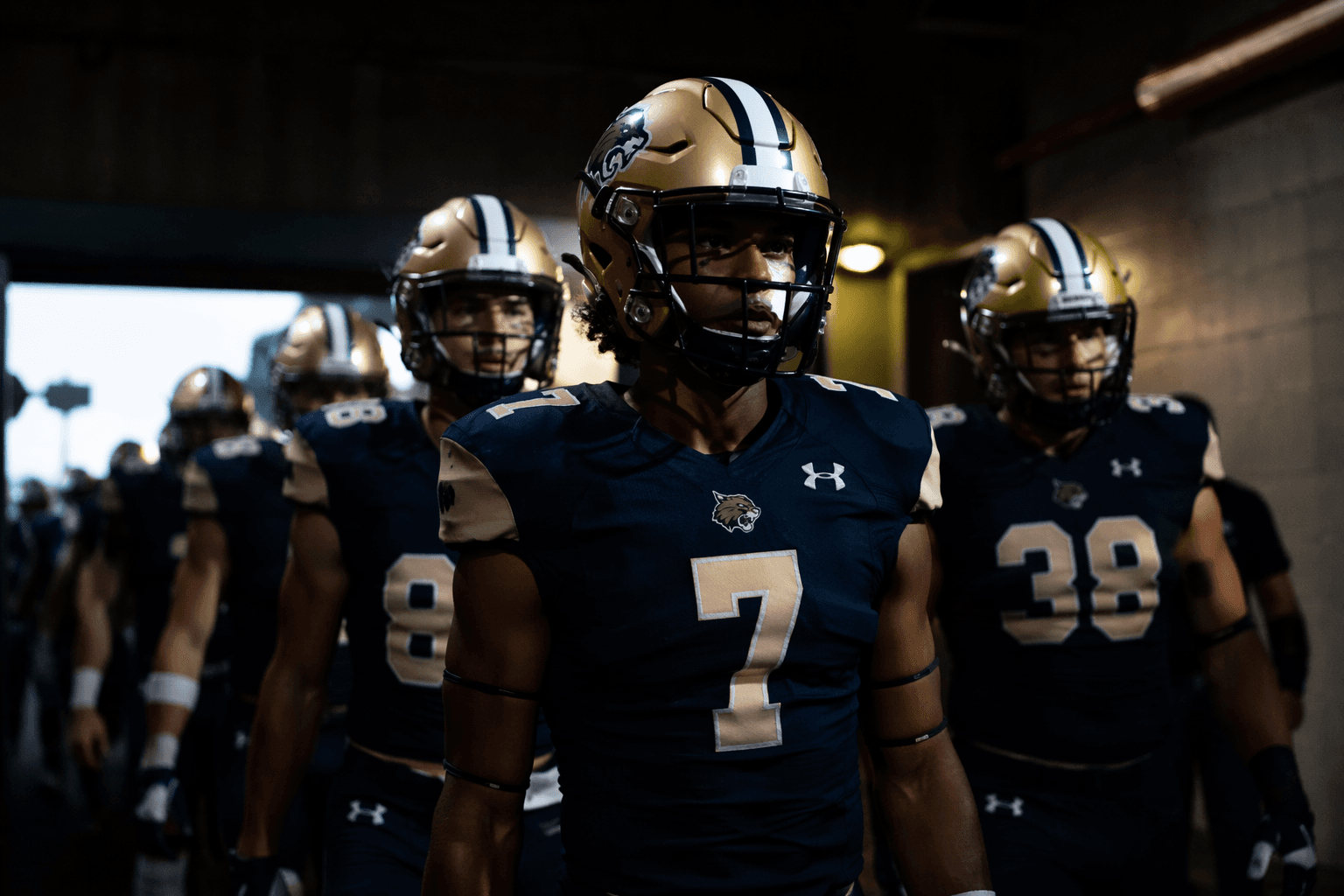
Montana State enters the 2026 FCS conversation as the standard, not just the favorite. The Bobcats are coming off a 35-34 overtime win over Illinois State in the national championship game, the first FCS title game ever decided in overtime, and they return quarterback Justin Lamson, running back Adam Jones, wide receiver Taco Dowler and offensive lineman Titan Fleischmann. That kind of continuity turns the preseason map into a question of who can keep up with Bozeman, not who is trying to rebuild from scratch.
Montana State sets the pace
The clearest signal in the early preseason picture is that Montana State is still being treated as the team to beat. Opta Analyst’s spring preview framed the Bobcats as the benchmark for the 2026 season, while NCAA.com labeled them the defending national champion in its own early top 25. That matters because the Bobcats are not just defending a trophy, they are defending the top line of the subdivision’s power structure.
The return of Lamson, Jones, Dowler and Fleischmann gives Montana State a rare preseason luxury: proof at quarterback, production at running back and receiver, and a veteran anchor up front. In a subdivision where one or two roster losses can alter the entire playoff path, that type of core keeps Montana State from looking like a typical champion forced to reassemble on the fly.
The title chase is still a small club
The national-title race remains crowded only at the margins. Opta Analyst’s preseason view said the legitimate contenders are still a customary small group, and the cleanest names in that tier are Montana and South Dakota State. That is the real FCS picture every August: the field is wide, but the line between contender and pretender is drawn quickly.
The Big Sky and Missouri Valley still concentrate much of the top-end power, which is why the preseason guide works best as a competitive map rather than a simple list. Montana State may sit at the front, but the programs most likely to alter the bracket usually come from the same neighborhood, where recruiting, playoff history and returning talent keep the margin thin. The “dark horse” lane in FCS is rarely a complete outsider; more often it is a familiar power that has enough pieces to catch the favorite in November.
Dark horses rise through continuity, not noise
That is why the preseason guide matters beyond the top spot. It introduces the season as a set of pressure points: which teams are stable enough to protect their ranking, which ones have enough offensive firepower to break into the contender class, and which coaching staffs can turn a modest offseason into a playoff run. The guide is useful because it shows that the gap between the top tier and the rest is real, but not immovable.
This is also where roster retention becomes a separator. Montana State’s returning offensive core is the kind of detail that gives a team a head start in September, while other programs have to prove they can survive the churn of transfers, injuries and new terminology. In FCS football, the difference between a respected dark horse and a one-year flash often comes down to whether a staff can keep its identity intact long enough to matter in late-season conference play.
The coaching carousel can redraw the board
The offseason brought 25 FCS head-coaching changes, a figure that says as much about volatility as it does about opportunity. A coaching change does not just replace a voice in the headset. It can alter tempo, roster retention, transfer decisions and the way a team is evaluated before it plays a snap.
That matters in a subdivision where preseason ranking is already compressed at the top. When so many programs change leadership at once, the difference between a team that looks like a top-10 candidate in July and one that falls off by October can be as simple as how quickly the new staff settles its quarterback plan and defines its depth chart. The coaching tracker underscores why preseason FCS guides spend so much time on staff turnover: it is one of the fastest ways the pecking order changes.
The Payton Award keeps the offensive race tight
The Walter Payton Award remains the most important individual prize on the offensive side of FCS football. NCAA.com traces the award’s debut to 1987, and it was changed in 1995 to recognize only the subdivision’s top offensive player after the Buck Buchanan Award was introduced for defense. Opta Analyst notes that it is often called the Heisman of the FCS, and that label fits because the race tends to center on production that can carry a team deep into November.
The structure of the watch list matters too. Opta Analyst says preseason Payton lists typically feature 35 players, though its 2025 preseason watch list included 30 offensive standouts. That tighter field reflects how quickly the race can narrow once the season starts. Lamson, Jones and Dowler already give Montana State a strong offensive foundation, which is exactly the kind of starting point that puts a team on both the national-title track and the individual-award radar.
What the preseason guide means now
Road to CFB’s preseason guide is built as an entry point for new fans, but its real value is that it shows how the subdivision actually works: a small elite tier drives the title race, the biggest conferences keep producing most of the pressure, and the coaching carousel can upend assumptions before September ends. The 2026 season is the 49th year of FCS football, and the storyline is already clear enough to follow.
Montana State starts with the crown and the most complete early case to keep it. The challengers are few, the staff changes are many, and the Payton Award race will begin the same way most FCS seasons do: with a short list of offenses good enough to shape everything that follows.
This article was produced by Prism’s automated news system from verified source data, official records, and press releases, then run through automated quality and moderation checks before publishing. The system is built and supervised by the people who set the standards it runs under. Read our full AI policy.
Did this article answer your question?