NCAA committees shape FCS football season, rules and championship timing
FCS football is run on a committee clock, where 2025 governance changes, spring rules, and championship deadlines now shape the season before kickoff.
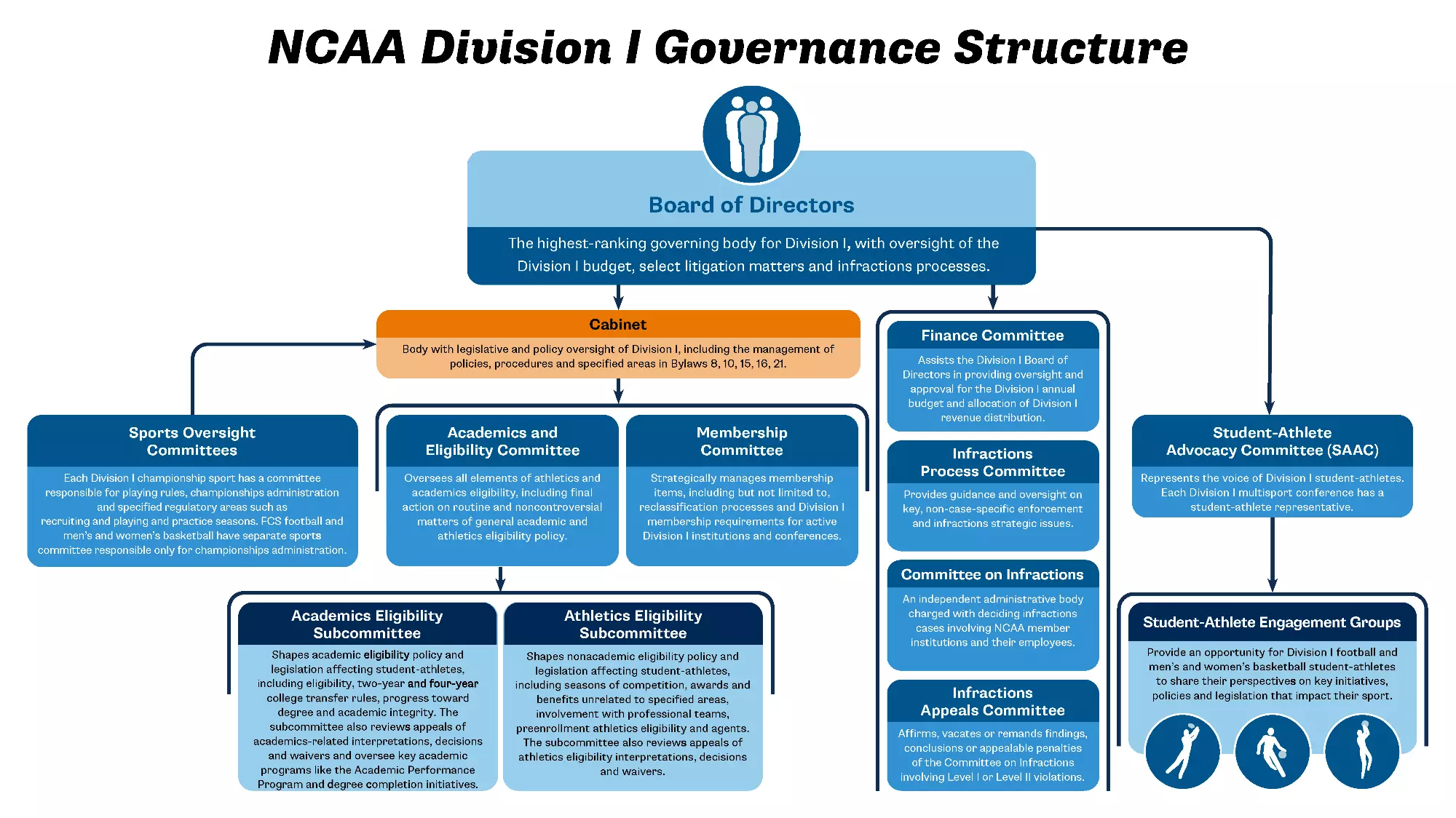
FCS football is not just a fall schedule, it is a chain of NCAA decisions that begins in committee rooms and ends with the playoff bracket. The 2025 governance reset shrank Division I from 44 committees to 30, left the structure with just over 480 members, and more than doubled student-athlete representation, which gave sport-specific groups more room to shape the rules that govern the subdivision.
Who actually makes FCS decisions
The NCAA’s FCS Oversight Committee sits at the center of that structure. Its job is to manage the overall oversight of FCS football, guide championship administration, playing rules and policies affecting FCS programs and student-athletes, and weigh health, safety and competitive issues so the subdivision is represented inside the larger Division I system.
Those committees are not made up of one type of administrator. Division I groups include presidents, chancellors, athletics directors, faculty athletics representatives, student-athletes, coaches and other members of the NCAA membership. That matters because the people deciding FCS policy are not only postseason administrators, but also campus leaders who have to balance competitive access, academic calendars and football operations.
The Division I Board of Directors and the Division I Council remain above the sport-specific committees, but the new model gives the football people more authority over the details that shape the season. The Board has also said national standards for season start and end dates and championship administration remain in place, even as other regulatory areas are pushed lower into sport-specific oversight.
Why the calendar is part of the rulebook
The first contest date is not a soft guideline in FCS football. Current legislation says a school may not play its first contest before the Thursday that is 13 weeks before the Thursday preceding the FCS championship selection date. That rule ties the opening of the season directly to the playoff calendar, which means kickoff dates are built around bracket timing, not just campus preference.
There is also a narrow pre-Labor Day exception for nationally televised nonconference games. It is limited to one institution per conference per year, and the same institution cannot use it in consecutive years. That exception has given a small number of programs an early national stage, but it has also added another layer of planning for conferences trying to manage exposure, rest and travel.
In May 2025, the FCS Oversight Committee recommended eliminating those first-contest exceptions altogether and standardizing the start date for all FCS programs beginning with the 2026 season. NCAA reporting on that proposal said the new calendar would allow a start as early as Thursday, Aug. 27, 2026, because the bracket is released the Saturday before Thanksgiving. That is the clearest example of how one committee recommendation can reach all the way from August camp schedules to November selection night.
How the number of games is really decided
FCS teams do not simply decide on 11 or 12 games by preference. Current legislation allows 12 regular-season contests only in years with 14 Saturdays from the first permissible playing date through the last playing date in November. In every other year, the limit is 11 regular-season games.
That detail is easy to miss if you only follow wins and losses, but it changes how schools build their slates. A calendar with one extra Saturday can alter nonconference inventory, travel budgets and how much margin a team has before conference play starts. Under the proposed 2026 standard start date, NCAA reporting said FCS teams could play 12 regular-season contests each year, which would simplify scheduling and remove the uneven year-to-year variation now created by the Saturday count.
That is why the FCS schedule is a policy story as much as a football story. The start date, the number of games and the playoff selection date all sit in the same chain of authority.
The rules agenda is broader than kickoff dates
The FCS Oversight Committee has not limited itself to calendar questions. In March 2025, it discussed coach-to-player helmet communication, injury timeouts, overtime timeouts, scrimmage-kick formations and the use of a “T” signal during kickoffs. In December 2024, it discussed a blanket waiver for unlimited official visits in FCS during a limited window.
Those topics show the committee is operating where the sport changes in real time. Helmet communication affects in-game control, timeout rules affect safety and strategy, scrimmage-kick definitions affect special teams formation issues, and recruiting visit policy affects how smaller-program programs compete for talent. None of those subjects looks glamorous from the outside, but each one influences how a roster is built and how a game is coached.
In June 2026, the committee introduced a broader proposal that would replace current spring practice and summer-access rules with two out-of-season practice periods totaling 21 on-field practices. If adopted, that change would take effect on Jan. 1, 2027. The proposal also would shorten preseason, which means the shape of spring and summer work could be rewritten before the next full cycle of FCS preparation arrives.
Why championship access still drives everything
The NCAA Division I Football Championship remains a 16-team single-elimination bracket, and that format still defines the race. The field has grown over time from four teams in 1978 to eight in 1981, 12 in 1982 and 16 in 1986, which is part of why conference titles and at-large positioning matter so much in FCS football.
Behind that bracket is a heavy stack of championship paperwork. The NCAA football page lists preliminary-round bid checklists, power-verification forms, participant manuals, host-operations manuals and instant-replay manuals among the current championship materials. Those documents are the invisible infrastructure of the postseason, the things that tell schools how to bid, how to host, how to verify and how to operate when the bracket arrives.
Division I governance has also said revenue-distribution formulas and automatic qualification for postseason championships will not change under the new structure. That keeps conference championships central to FCS strategy, because automatic bids still shape how teams think about September, October and November.
What Nashville means for the next two title games
The 2026 and 2027 FCS championship games were awarded to Nashville, Tennessee, and the Ohio Valley Conference, and both games will be played at Vanderbilt’s FirstBank Stadium. The 2026 championship is scheduled for Monday, Jan. 5, 2026, and Nashville becomes the 11th city to host the FCS title game since 1978.
It also marks the first Tennessee host since Chattanooga handled the championship from 1997 to 2009. That continuity matters because the title game is no longer just a neutral-site event on the calendar, it is part of a broader championship week built to showcase the subdivision.
During championship week in Nashville, the NCAA, the American Football Coaches Association and the NFL will host an FCS Showcase for about 50 draft-eligible players. That gives the playoff’s biggest stage a second layer of value: not only the trophy chase, but also an evaluation window for players trying to move from FCS postseason football into pro conversations.
The real lesson for the 2026 season
The practical power map is simple once you follow the dates. The FCS Oversight Committee shapes the football rules and the season frame, the Division I Board keeps national standards in place, and championship documents translate those decisions into bids, hosting and bracket operations. By the time the first snap is taken, the biggest questions in FCS football have usually already been settled by committees, bylaw language and manual deadlines.
This article was produced by Prism’s automated news system from verified source data, official records, and press releases, then run through automated quality and moderation checks before publishing. The system is built and supervised by the people who set the standards it runs under. Read our full AI policy.
Did this article answer your question?