NCAA explains FCS realignment ripple effects as NDSU, Sacramento State move
NDSU and Sacramento State are redrawing the FCS map, giving contenders clearer paths, heavier travel loads and a more open playoff race.

North Dakota State and Sacramento State are not just changing conferences, they are changing the shape of Saturdays across the FCS. The Bison’s jump to the Mountain West and the Hornets’ football-only landing in the MAC take two high-profile programs out of the subdivision’s weekly bloodstream, and that immediately alters who has the clearest route to playoff positioning, who absorbs the hardest travel, and which leagues now have to prove they can survive without marquee gravity.
The biggest winners and losers on Saturdays
North Dakota State’s move hits hardest at the top of the FCS ladder. The Bison have won 10 of the last 15 FCS national titles, which means every contender has spent years measuring itself against Fargo as the standard. Once that program leaves the subdivision, the FCS loses its most intimidating reference point, and every title hopeful gets a little more space to build a résumé without the annual shadow of the sport’s dominant brand.
The Mountain West, meanwhile, gains more than a football-only member. It gains a program attached to a championship identity, and league commissioner Gloria Nevarez framed the addition around that reputation, saying North Dakota State brings a “championship mindset” and a “bold vision for growth.” That is the kind of move that changes perception as much as it changes scheduling, because it tells recruits, viewers and peers that a league is willing to buy into pedigree, not just geography.
Sacramento State’s move is different, but the ripple effect is just as real. The Hornets are not only changing opponents, they are stepping out of the FCS playoff conversation by joining the MAC as a football-only affiliate for a five-year term beginning July 1, 2026. For the MAC, that creates another western outpost and another football brand with clear ambition. For the Big Sky football race, it removes a visible contender and changes the way the league’s upper tier will look when the season tightens in October and November.
Why the realignment picture feels bigger than two moves
The NCAA’s broader framing matters because the subdivision is still large, with 128 teams across 13 conferences, but it is not static. When one or two flagship programs move, the effects show up everywhere: schedule balance, travel budgets, nonconference planning, rivalry continuity and the level of proof required to secure a playoff spot. The realignment story is no longer just about where a school lands. It is about how the rest of the field has to react.
That is why these moves resonate beyond simple conference swaps. A program that has dominated the top of the FCS, or one that has spent years trying to force its way into a higher tier, leaves behind more than a vacancy. It changes the competitive math for everyone who stays. Coaches now map their seasons with fewer automatic losses against elite opposition, but also with less certainty about who will emerge as the measuring stick in the bracket.
North Dakota State leaves, and the title race opens up
North Dakota State officially accepted a football-only invitation from the Mountain West on February 9, 2026, and the league said the Bison will begin play there on July 1, 2026. The school will remain in the Summit League for other sports, which keeps the broader athletic department intact while football moves into a different national lane. That split is important because it shows the change is strategic, not symbolic. The football program gets the new stage; the rest of the department stays where it has been.
For the FCS, the immediate effect is simple: the benchmark is gone. That matters in a playoff system where perception, schedule strength and week-to-week dominance all shape the seeding picture. Without North Dakota State sitting in the middle of the conversation, other contenders get a cleaner path to the top lines of the bracket and a little less pressure from the sport’s most decorated program.
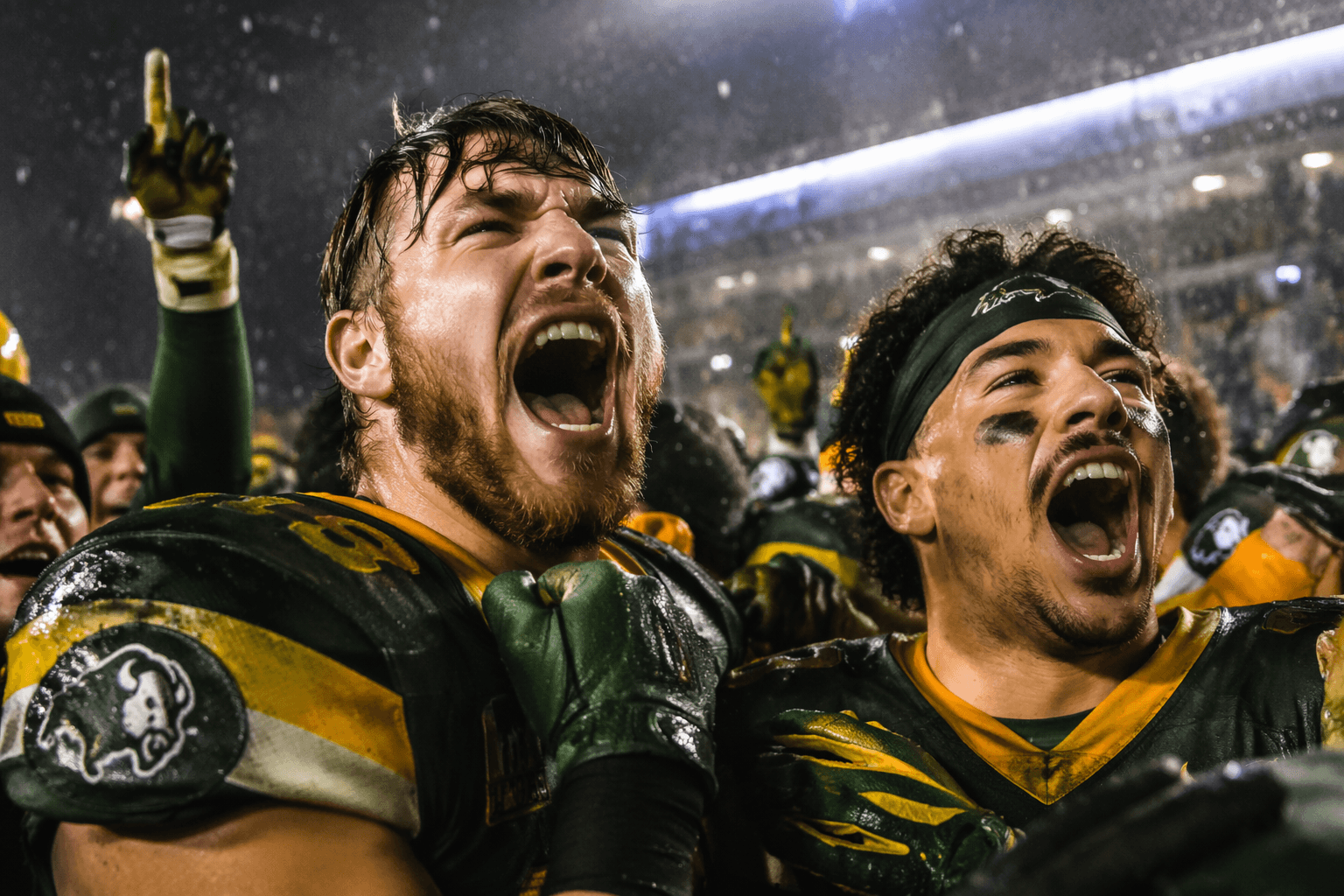
The Bison’s departure also changes the emotional architecture of the season. For years, winning the FCS has meant proving you could survive a path that might eventually run through North Dakota State. Now the road still looks hard, but it is less centered on one dynasty. That is a gain for parity, even if it is a loss for the sport’s marquee power.
Sacramento State’s route was set long before the MAC announcement
Sacramento State’s move should be read as the end of a long decision tree, not a sudden pivot. In June 2025, the school said it would go independent for FCS football in 2026 if it did not receive approval to move up to the FBS as an independent. NCAA football oversight officials later recommended denying that waiver request, and the Division I Council rejected it, clearing the way for the Hornets to settle into a different football future.
That history matters because it explains the urgency behind the MAC deal. This was not a school casually shopping for a new badge. It was a program trying to find a stable competitive home after its FBS push stalled. Luke Wood described the shift as “bigger than football,” calling it transformative for the university, city and region, and that language tracks with the scale of what Sacramento State was trying to accomplish.
The MAC announcement on February 16, 2026, added the financial context that usually gets buried beneath the football rhetoric. Sacramento State will not receive a revenue distribution during the initial five-year term, and it will cover opponents’ air travel costs. That is a steep price, but it tells you how much the school values a more durable place on the national map. Stability, access and long-term brand positioning can be worth more than short-term checks when a program believes it is trying to climb.
What fans will feel first
The first thing fans will notice is the calendar. North Dakota State’s move removes one of the sport’s most recognizable weekly brands from FCS Saturdays, while Sacramento State’s departure from the Big Sky football race changes the shape of the western schedule. That affects road trips, rematches, and the number of Saturdays when a league has to plan around one of its strongest draws.
The second thing fans will feel is the bracket. The FCS playoff field still has to sort through 128 teams, but the road to the top becomes a little less crowded when one dynasty exits and another upper-tier program shifts out of the league structure. That does not make the road easy. It makes it more open, which is exactly why the next one or two seasons could feel more volatile than the last.
The realignment wave is not just about geography, and it is not just about business. It is about which programs get to claim the strongest position when the standings tighten, which leagues can keep their identity after losing a headliner, and which Saturdays still feel like they are being played under the shadow of a giant. In that sense, the FCS is not collapsing under the weight of change. It is being forced to redefine who gets to set the standard.
This article was produced by Prism’s automated news system from verified source data, official records, and press releases, then run through automated quality and moderation checks before publishing. The system is built and supervised by the people who set the standards it runs under. Read our full AI policy.
Did this article answer your question?