North Dakota State leads FCS programs still feeding the NFL pipeline
North Dakota State and South Dakota State still set the FCS standard, but the bigger question is which programs can keep NFL talent flowing.
The pipeline still runs through Fargo and Brookings. North Dakota State and South Dakota State do not just stack wins in Frisco, they keep placing bodies on NFL rosters, and that is the kind of proof recruits, transfers and title contenders notice. In an FCS landscape where credibility is measured by development as much as by trophies, roster presence tells you which programs still build for Sundays.
The benchmark still starts in Fargo
North Dakota State led all FCS programs in the 2025 NFL snapshot with 15 players in NFL organizations, a list that blended active-roster talent and practice-squad depth. The names read like a program that has turned continuity into a competitive weapon: Chris Board, Jake Kubas, Trey Lance, Hunter Luepke, Cody Mauch, Cam Miller, Mason Miller, Jayden Price, Dillon Radunz, Easton Stick, Jalen Sundell, Cordell Volson, Christian Watson, Carson Wentz and Grey Zabel.

That footprint is not an accident or a one-year spike. North Dakota State had led all FCS programs in NFL players for five consecutive seasons, and by the time the 2025 season opened it had won 10 of the last 14 FCS national championships. That combination of trophies and pro development is why the Bison remain the subdivision’s standard, not just its brand name.
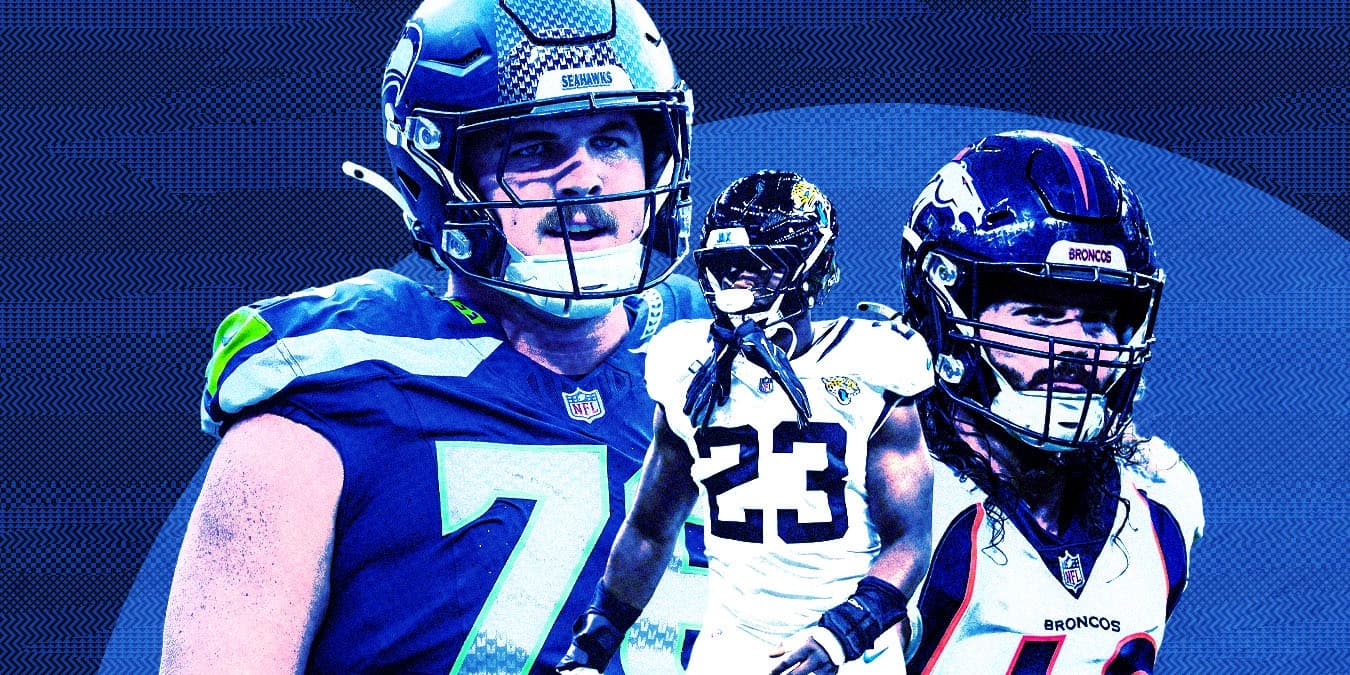
The lineage matters too. Carson Wentz remains the highest-drafted player in FCS history, going No. 2 overall in the 2016 NFL Draft, while Grey Zabel’s No. 18 selection by the Seattle Seahawks in 2025 made him the highest-drafted offensive lineman in FCS history. North Dakota State was also the only FCS school with multiple draftees in 2025, which reinforces the point that the Bison pipeline is not limited to depth pieces. It still produces premium draft capital.
Brookings keeps the chase real
South Dakota State sat right behind its Dakota rival with eight players in NFL organizations in the 2025 snapshot, a group that included Dalys Beanum, Isaiah Davis, Dallas Goedert, Tucker Kraft, Mason McCormick, Christian Rozeboom, Isaiah Stalbird and Pierre Strong Jr. That is a roster footprint that stretches from skill positions to the line, and it explains why the Jackrabbits remain one of the FCS’ most reliable talent pipelines.
The bigger story is how stable that pipeline has become. South Dakota State joined the FCS in 2004, has qualified for the playoffs every season since 2012, reached at least the semifinal round seven times in an eight-season span from 2017 through 2024, and won two FCS national championships. That track record tells recruits something simple: you can come to Brookings, win at a high level, and still leave with a legitimate NFL path.
For programs trying to close the gap, that is the business case as much as the football case. South Dakota State has built a reputation that now sits alongside North Dakota State’s, and the two programs together shape how the rest of the subdivision is judged. When a prospect weighs offers, the question is no longer only who can get him to the playoff bracket. It is who can turn him into the next Dallas Goedert, Tucker Kraft or Mason McCormick.
The rest of the subdivision still has real NFL weight
North Dakota State and South Dakota State lead the conversation, but the snapshot also showed that the FCS pipeline is broader than the usual bluebloods. Yale ranked third with six players in NFL organizations, while Illinois State, Montana State and Northern Iowa each had five. That spread matters because it shows the subdivision’s professional footprint still reaches multiple conferences and recruiting footprints, not only the Dakotas.
The larger league context is sobering but useful. The NFL had 1,696 players across 32 teams, and FBS players made up 92.7% of that total, according to NCAA.com. Even so, 214 universities had at least one player on 2025 NFL rosters. The FCS is a small slice of the sport’s talent economy, but its best programs still carve out a visible share of that economy, and that keeps their development reputation alive in a crowded marketplace.
That matters socially too. In an offseason where the subdivision continues to face questions about resources, exposure and competitive balance, NFL roster presence becomes a public argument for relevance. If a program can keep exporting players to active rosters and practice squads, it is harder to dismiss its championship credentials as regional or routine.
The 2025 cutdown snapshot tells the bigger story
After the Aug. 26, 2025 roster-cut deadline at 4 p.m. ET, about 200 former FCS players were on NFL season-opening rosters and practice squads. That number is the cleanest snapshot of the subdivision’s reach, because it captures both the stars on active rosters and the developmental players still trying to break through.
North Dakota State’s Week 1 count pushed that even further. The program said it had 18 former players in the league by the opening week of the 2025 season, with 10 on active rosters, six on practice squads and two on reserve. The Bison also had alumni appearing on coaching staffs, a reminder that the pipeline is not just about players leaving campus for the league but about program knowledge spreading through the sport.
South Dakota’s broader NFL footprint also stayed strong. One report counted 20 players with South Dakota ties and 12 on active rosters when the season opened, underlining how the state’s best programs still place athletes into the league at a meaningful rate. That is the real power-ranking story here: not who had the flashiest preseason hype, but which programs keep turning development into NFL representation.
The 2025 draft class sharpened that point. NCAA.com noted that eight former FCS players were selected in the 2025 NFL Draft, while Opta’s draft review highlighted 15 total FCS draftees and names such as Grey Zabel, Cam Miller, Charles Grant, Jackson Slater and Tommy Mellott. That is the difference between a program that merely churns out fringe depth and one that still earns premium draft capital.
North Dakota State remains the benchmark because it keeps winning and keeps sending players to the league. South Dakota State remains the closest challenger because it has built a sustained playoff machine with NFL-ready talent at every level. Together, they show exactly why NFL roster presence still signals who is best built to reload, stay in the title chase and matter when the FCS calendar turns from August hope to December pressure.
This article was produced by Prism’s automated news system from verified source data, official records, and press releases, then run through automated quality and moderation checks before publishing. The system is built and supervised by the people who set the standards it runs under. Read our full AI policy.
Did this article answer your question?