OVC race opens up after Tennessee Tech's departure to SoCon
Tennessee Tech’s move to the SoCon strips the OVC of a recent co-champion and opens the 2026 race for UT Martin, Southeast Missouri and Gardner-Webb.
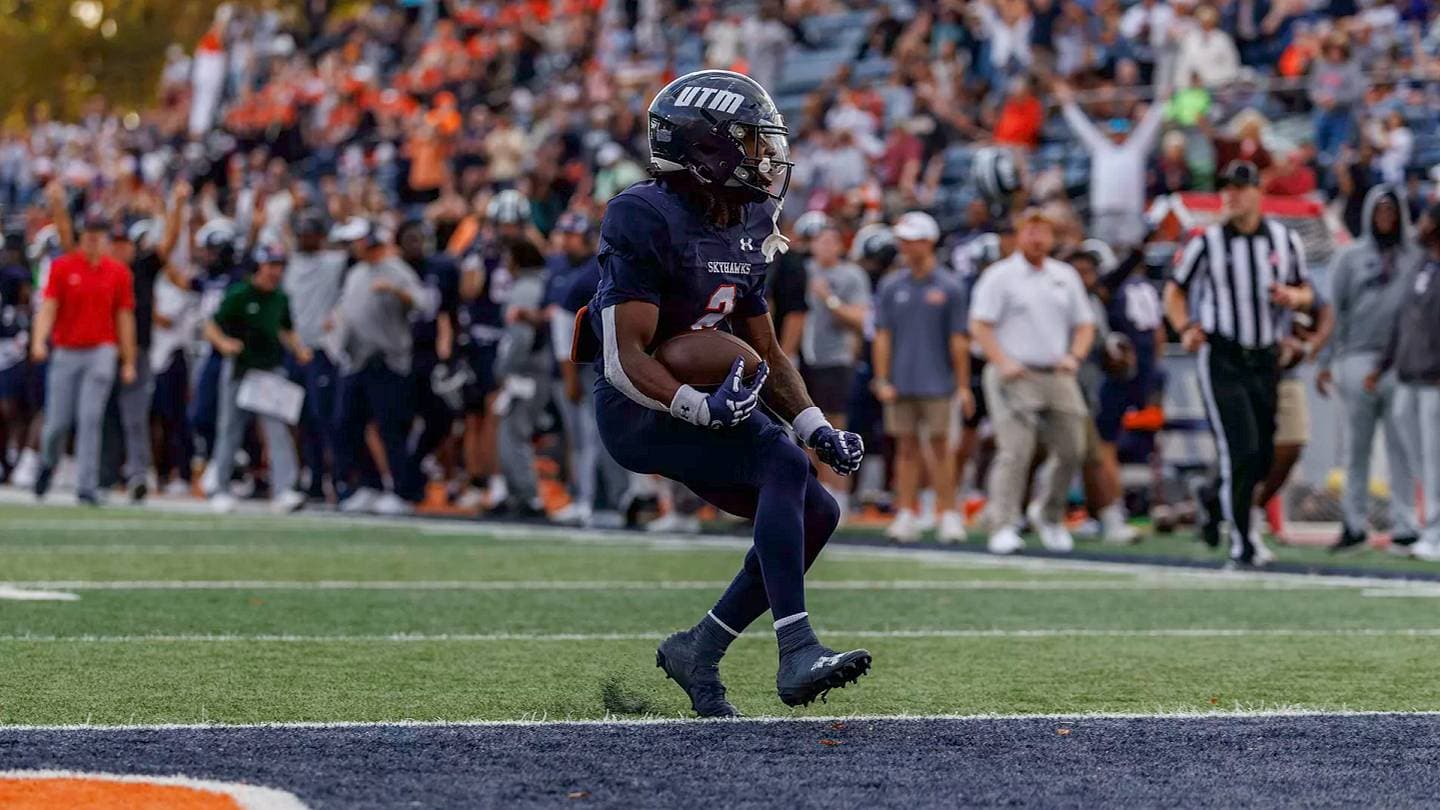
Tennessee Tech’s exit to the Southern Conference does more than shuffle a membership list. It removes a recent co-champion from the Ohio Valley race, and it leaves the 2026 title chase looking flatter at the top and wider in the middle. UT Martin, Southeast Missouri and Gardner-Webb now sit in the clearest contender lane, while Lindenwood and Western Illinois suddenly have a real path to crash the front of the league.
A departure that resets the league
Tennessee Tech is leaving the OVC after 76 years, with the move becoming effective July 1, 2026. That matters because the Golden Eagles were not some decorative member at the edge of the standings. They shared the 2024 OVC-Big South title and entered the move with preseason Top 25 recognition, which gave the league a proven benchmark to chase.
The Southern Conference framed the addition as a fit for geography, rivalries, scheduling and budgets, and it will become an 11-team league once Tennessee Tech arrives. That is a clean win for the SoCon, but it also forces the OVC to answer a harder question: who actually owns the room now? The conference cannot lean on a recent champion that has already walked out the door.
The OVC and Big South built their football association in February 2022, then launched play in the 2023 NCAA Division I season. For 2026, the league has returned to traditional OVC football branding, a move that restores an identity with nearly 80 years of history behind it, including national championship teams, All-Americans, National Players of the Year and NFL draft picks. The eight-team setup now includes Charleston Southern, Eastern Illinois, Gardner-Webb, Lindenwood, Southeast Missouri, Tennessee State, UT Martin and Western Illinois.
Who inherits the top of the table
The sharpest read on the 2026 race is simple: the old hierarchy is gone, but no single team has replaced it yet. That is why UT Martin, Southeast Missouri and Gardner-Webb are the teams most likely to reclaim the throne. They bring the cleanest combination of returning production, recent relevance and enough track record to justify favorite status without pretending the race is settled.
The more interesting layer is the next tier. Lindenwood and Western Illinois look positioned to move from spoiler status into the kind of teams that can force a title race into November. In a league this small, that jump matters fast. One hot stretch, one road win in the right week, and a team that looked like a middle-class program in August can be sitting on the inside track by Halloween.

That is what makes Tennessee Tech’s departure so disruptive. It does not just remove a name from the schedule. It removes a program that helped define the standard, and it creates a league where more teams can plausibly sell themselves as contenders on the same slide deck. The path to the crown is less crowded at the top, but it is also less predictable from one Saturday to the next.
The swing games that will decide the race
The 2026 schedule already gives the league a few games with immediate title weight, and the most obvious one is UT Martin at Southeast Missouri. That is the kind of matchup that can flatten the middle of the standings before the calendar turns to November. Gardner-Webb at UT Martin also looms large, because it pits one of the teams expected to sit near the top against a program trying to force its way into that first tier.
In a six- or seven-team race, those games would be important. In this version of the OVC, they are the difference between clarity and congestion. The league has spent years trying to define its own center of gravity after the OVC-Big South partnership launched, and now the schedule itself is going to tell everyone who can actually control the race instead of just surviving it.
That is why the volatility is not a bug. It is the point. A conference with this much turnover, this many believable contenders and no runaway favorite is much harder to forecast, but it is also much easier to follow from week to week because every swing game can reshuffle the table.
Charleston Southern shows how the league is being built now
Charleston Southern is the best snapshot of how these teams are trying to climb. The Buccaneers finished 5-7 overall and 4-4 in league play, and Gabe Giardina enters his fourth season with a 10-25 record. The roster split tells the story of where the foundation is strongest: 14 significant returning contributors on defense and eight on offense, using the preview’s 200-plus snap threshold as the marker for meaningful retention.
That defensive core matters because it has real production attached to it. Linebacker Steve Zayachkowsky piled up 109 total tackles, added 4.5 tackles for loss, half a sack, an interception, a forced fumble and a fumble recovery. Cornerback Anthony Paulk posted 33 tackles, 2.5 tackles for loss, an interception, seven pass breakups and two forced fumbles, while Jayden Hancock added two interceptions and eight pass breakups.
The offense has less certainty, but it is not empty. Mekhi Campfield gives Charleston Southern continuity at wide receiver, and Hakeem Watts does the same at running back. The offseason additions, including KD Dorsey from Georgia Southern, Dylan Mullins from Liberty, Joshua Modupe from Benedict, Dwayne Wright from Newberry, Jackson Moseley from Lenoir-Rhyne and Kordell Lewis from Glenville State, show how aggressively these programs are trying to plug gaps with transfer help and keep pace with the teams that already have more structure in place.
The snap-based approach is what makes the preview useful. It does not confuse experience with impact. A player who crossed 200 snaps actually changed the field, and that is the kind of filter that gives the league’s roster turnover real meaning instead of preseason noise.
Why this OVC is more watchable now
The OVC has lost a recent champion, but it has gained something better for the neutral observer and the hard-core fan alike: uncertainty with shape. UT Martin, Southeast Missouri and Gardner-Webb now have the cleanest path to the top, Lindenwood and Western Illinois can credibly move into the favorite tier, and the rest of the league has enough returning talent to pull off weekly damage.
That makes 2026 less stable than the league wanted and more compelling than it looked a year ago. Tennessee Tech’s departure changed the temperature of the race, and the first month of the OVC schedule will show whether the league has a true top or just a series of teams waiting for somebody else to blink.
This article was produced by Prism’s automated news system from verified source data, official records, and press releases, then run through automated quality and moderation checks before publishing. The system is built and supervised by the people who set the standards it runs under. Read our full AI policy.
Did this article answer your question?