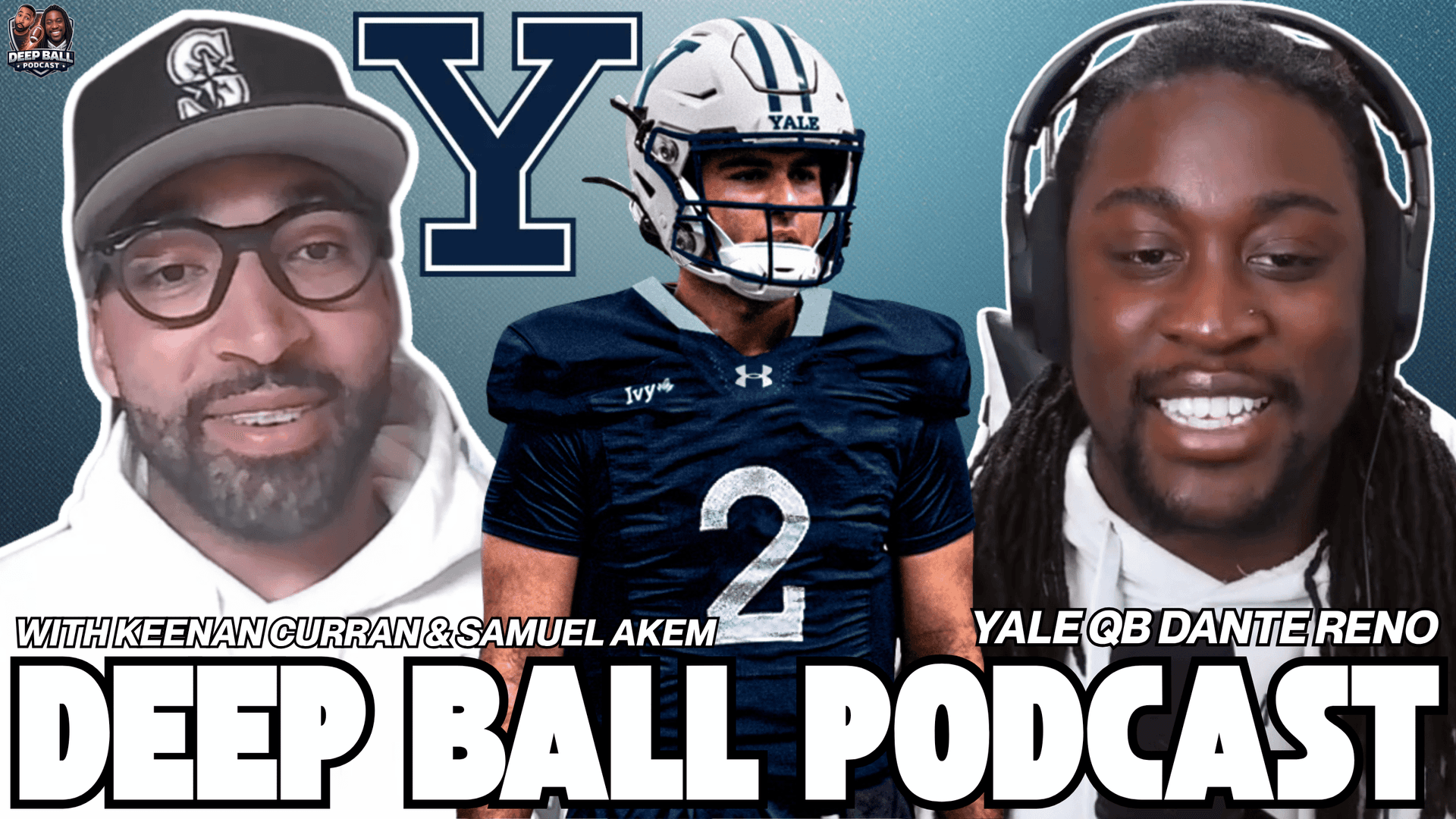
Sam Herder breaks down HERO Sports top returning FCS linebackers for 2026
Herder’s linebacker board is a playoff map, with Montana State, Rhode Island and South Dakota State leaning on returners who can tilt conference races.

1. No. 1: The standard setter
Herder’s top linebacker is the one who best fits his full rubric, production, postseason accolades, PFF grades and system context. The 16:44 podcast gives him room to explain that logic across Apple Podcasts, Spotify, iHeart and Spreaker, and his long FCS résumé since 2012 makes the top of the board feel more like scouting than commentary.
2. No. 2: The race-shifter
The second spot belongs to the kind of linebacker who can swing a conference race before the calendar turns cold, because this is the position where one player can stabilize a defense that is losing pieces elsewhere. Herder’s ranking also excludes 2026 FBS-to-FCS and non-D1-to-FCS transfers, which keeps the focus on returners already embedded in their systems.
3. No. 3: The NFL-visibility lever
The No. 3 returner is the defender whose impact travels beyond one box score, since elite linebacker play is still one of the cleanest ways for an FCS program to gain national attention. That is the business side of this ranking: one breakout linebacker can sharpen draft conversation, raise a team’s profile and make a title chase feel bigger on Saturdays.
4. Rohan Davy, Rhode Island
Davy is the loudest breakout name in the group because he stacked 101 tackles with 13 tackles for loss, seven sacks and five quarterback hurries in 2025. He also showed up in a measuring-stick game against Western Michigan with 12 tackles and two TFLs, then finished the season with FCS Football Central All-America third-team recognition.
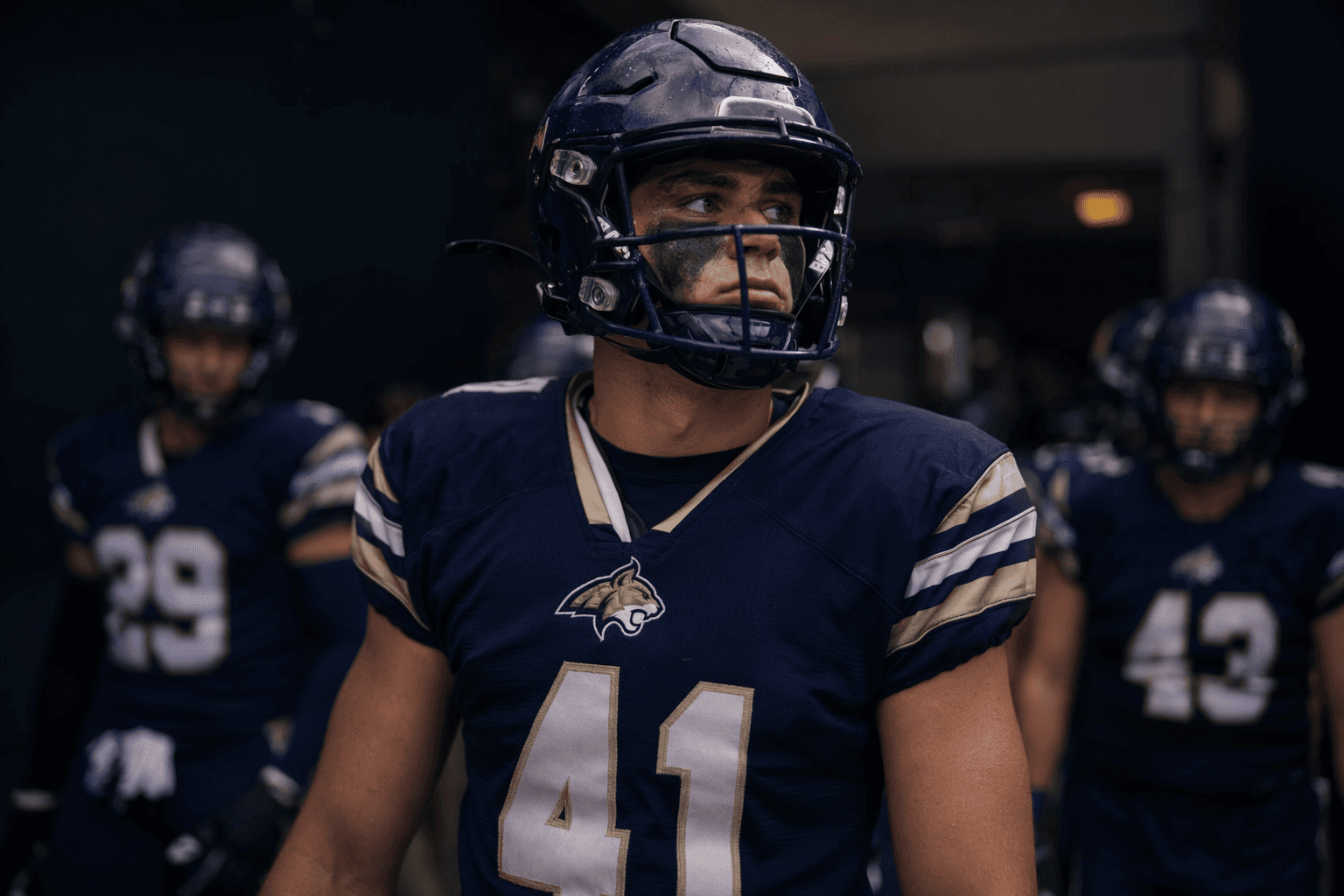
5. Cole Taylor, Montana State
Taylor turned a starting opportunity into a national-title defensive presence for Montana State, then backed it up with 107 tackles, 7.5 tackles for loss, three QB hurries and two interceptions. At 6-foot-3 and 230 pounds, he led the Bobcats in tackles and earned All-Big Sky second-team honors, which is exactly the kind of profile that keeps a champion in the title mix.
6. Sean Line, Harvard
Line gives Harvard a linebacker whose resume already carries real weight, including a single-season school record of 149 tackles in his prep career. That kind of background helps explain why he sits so high on a list shaped by production and projection, and why the Ivy League still has a real shot at national respect when its defense is right.
7. Carter Glassmyer, Richmond
Glassmyer is the kind of second-level defender that keeps Richmond in the playoff conversation, especially after 82 tackles, five tackles for loss and three sacks in 2025. His second-team All-Patriot League nod and team-captain role underline why he matters when one stop in conference play can decide seeding.
8. Porter Connors, UC Davis
Connors gives UC Davis a top-10 linebacker and a defense that can hold up when the Aggies are trying to keep pace in a crowded playoff picture. A ranking this high says Herder sees a player with enough consistency and playmaking value to matter every week.
9. Kenny Olson, Cal Poly
Olson’s place in the top 10 matters because Cal Poly needs difference-makers who can force offenses out of rhythm early. In a ranking built on film and production, that kind of recognition points to a linebacker who can anchor the middle and keep the Mustangs relevant in tighter games.
10. Steve Zayachkowsky, Charleston Southern
Zayachkowsky’s top-10 placement is a strong sign that Charleston Southern has a legitimate defensive building block. For a program trying to turn close games into wins, a linebacker this well regarded can change the math on third down.
11. Jake Dalmado, Southeastern
Dalmado enters the board as one of the more interesting transfer notes, coming from Nicholls and landing in the top seven. That kind of ranking tells you Herder sees immediate value, not just depth, which is the sort of linebacker move that can pay off fast in a new defensive home.
12. Brodie Carroll, Elon
Carroll gives Elon a mid-board linebacker whose value is steady enough to matter in conference play. A No. 12 ranking says he is more than a support piece, and that kind of stability often becomes the difference between surviving a league schedule and fading in it.
13. Anthony Ferrelli, Stony Brook
Ferrelli keeps Stony Brook in the conversation as a team with a linebacker who can help define the tone of a defense. Landing in the middle of the top half on Herder’s list suggests he has the blend of production and trust that coaches build around.
14. Chase Van Tol, South Dakota State
Van Tol is part of the reason South Dakota State looks linebacker-rich again, with three Jackrabbits showing up in the top 24. In the Missouri Valley, that kind of depth is not just nice to have, it is often what separates a contender from a team trying to keep up.
15. Moses Meus, Rhode Island
Meus gives Rhode Island another linebacker presence in a defense already powered by Davy’s star turn. His Third-Team All-CAA honor last season shows the Rams are not leaning on one inside defender, they are building around multiple pieces that can change a game.
16. Jaiden Haygood, UTRGV
Haygood adds to the case that UTRGV is building real linebacker depth, especially since he and Spencer Rich paced the defense with 11 tackles each in a win at Prairie View A&M. A top-20 placement makes him more than a stat line, it makes him part of the Vaqueros’ identity.
17. Kyree Anderson, East Texas A&M
Anderson’s ranking says East Texas A&M has a linebacker who can give the defense credibility even as the rest of the roster keeps trying to climb. Players in this range are often the ones who turn a few drives a week from damaging to manageable.
18. Cullen McShane, South Dakota State
McShane helps make South Dakota State’s linebacking picture look even deeper, which is a dangerous development for the rest of the Missouri Valley. When one program can place multiple middle-of-the-defense anchors this high, every opponent has to plan around more than one problem.
19. Phoenix Grant, Yale
Grant keeps Yale in the national discussion as a program with a linebacker room that can still matter in December conversations. The ranking places him in the top 20 for a reason: dependable linebacker play still carries a lot of weight when the schedule tightens.
20. Danarius Hilliard, Arkansas-Pine Bluff
Hilliard gives Arkansas-Pine Bluff a linebacker name worth circling, and his spot helps show how widely distributed impact defenders are across the subdivision. That matters in a preseason board, because the strongest linebacker groups do not all live in the same neighborhood.
21. Zion Rutledge, Chattanooga
Rutledge keeps Chattanooga on the radar in the SoCon, where defense still decides a lot of the most meaningful Saturdays. A No. 21 ranking says he is not just part of the depth chart, he is part of the reason the Mocs can stay in the league race.
22. Gabriel Hardman, South Dakota
Hardman is another reason South Dakota looks dangerous in the middle of the field, and that matters in a league where one missed tackle can swing a playoff path. His ranking keeps the Coyotes in the conversation as a defense that can travel.
23. Zyion Freer-Brown, The Citadel
Freer-Brown arrives with the added wrinkle of a transfer from Dartmouth, and that mix of backgrounds fits the broader tension in this ranking. Herder’s rules keep 2026 transfer additions out of the board, so Freer-Brown’s placement stands out as a case where the returner itself remains the story.
24. Joe Ollman, South Dakota State
Ollman’s 2025 season was all about impact, with 101 tackles, three forced fumbles and an interception, and his 6-foot-1, 230-pound frame gives South Dakota State another physical presence in the middle. The Missouri Valley Commissioner's Academic Excellence Award and MVFC Honor Roll add to a profile that looks as complete off the field as it does on it.
25. Jordan Franklin, South Carolina State
Franklin’s spot gives South Carolina State a linebacker worth mentioning in the same breath as many of the subdivision’s better returners. Being inside the top 25 signals a player who should shape game plans, not just survive them.
26. Chase Christopher, Princeton
Christopher keeps Princeton in the mix as an Ivy program with a linebacker capable of making weekly opponents work for every yard. A top-26 ranking still carries meaning here, because the difference between a good defense and a playoff defense often lives at linebacker.
27. Ja’Wuan Nickson, Eastern Illinois
Nickson’s inclusion is a reminder that the FCS linebacker map runs deep, reaching into programs that do not always dominate the headline cycle. In a ranking built on production and system knowledge, a spot like this says the returner can still matter to a defense that wants to punch above its weight.
28. Jacob Waller, Lindenwood
Waller gives Lindenwood a defensive name that belongs in the national returning-player conversation. That matters for a newer FCS program, because one credible linebacker can speed up respect more than a long offseason of optimism ever will.
29. Geno Calgaro, Stony Brook
Calgaro is one of the transfer names on the board, coming from Saint Francis, and his placement adds another layer to Stony Brook’s linebacker depth. Herder’s transfer filter keeps the ranking focused on true returners, so Calgaro’s inclusion still reflects how much experience the Seawolves can bring into 2026.
30. Spencer Rich, UTRGV
Rich opens the ranking at No. 30, and his 2025 line shows why UTRGV can claim real linebacker depth: he ranked third in the FCS in fumble recoveries with three and averaged 8.2 tackles per game. That is the point of Herder’s board, because even the last name on it can hint at a program that is beginning to matter in the playoff conversation.
This article was produced by Prism’s automated news system from verified source data, official records, and press releases, then run through automated quality and moderation checks before publishing. The system is built and supervised by the people who set the standards it runs under. Read our full AI policy.
Did this article answer your question?