SDSU rushing legacy rolls on, Jackrabbits stack historic tailbacks ahead of 2026
SDSU has turned running back into a signature, with Ranek, Zenner and Davis each stacking massive totals before the next Jackrabbit inherits the load.
A pipeline built on carries, not coincidence
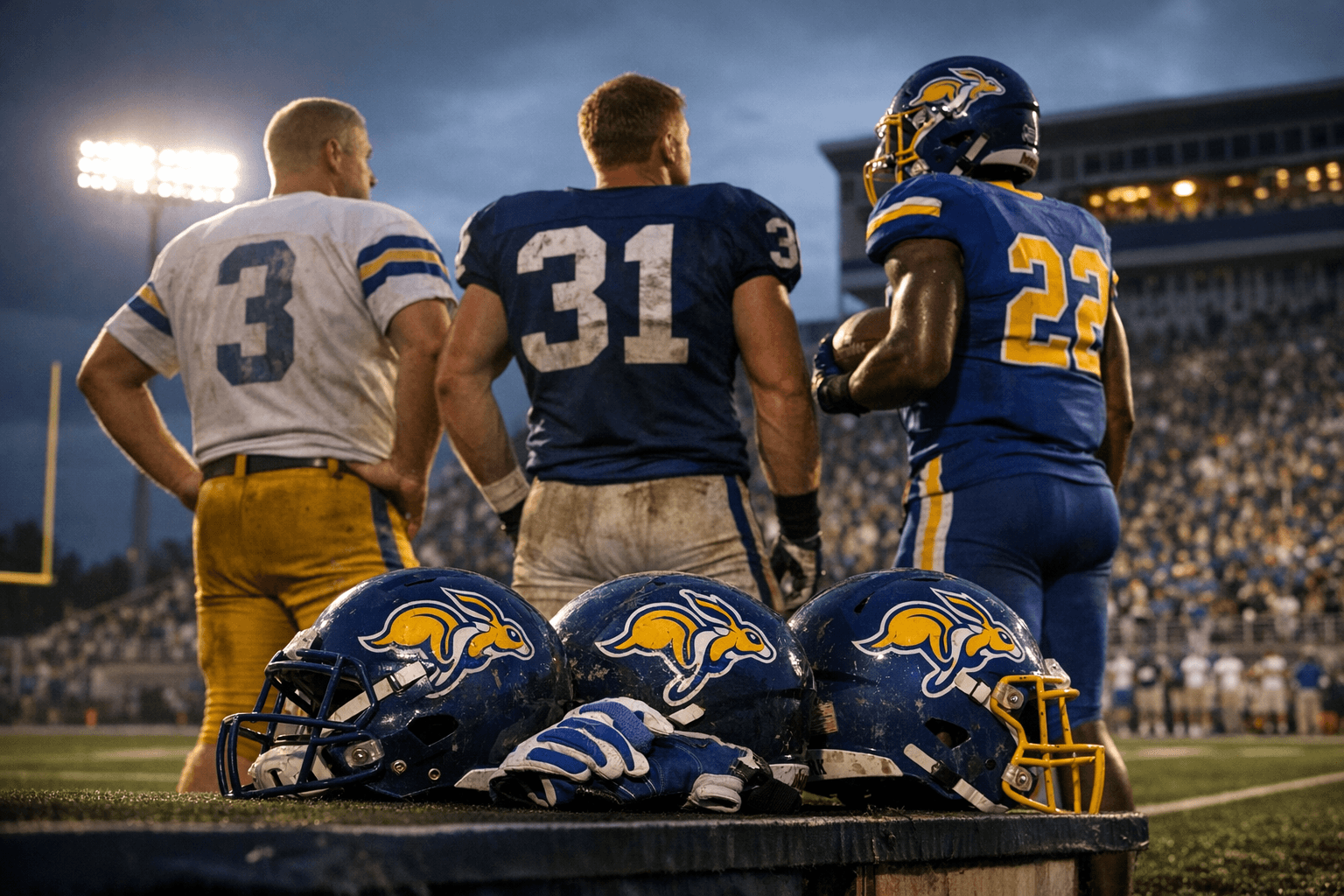
Bryan Gauvin’s look at South Dakota State’s all-time rushing board reads like a program identity chart: Josh Ranek, Zach Zenner and Isaiah Davis have each turned Brookings into a stop on the FCS running-back map. The numbers are so large they feel disconnected from one another, yet together they tell the same story: South Dakota State has not merely produced good backs, it has repeatedly produced the kind of tailbacks who define a season, a stadium and, in Davis’ case, an NFL draft class.
The Jackrabbits’ football archives help explain why this lineage feels so rooted. South Dakota State documents statistics from 1950 to the present, and its historical materials stretch back to the 1890s, a depth that turns the running-back tradition into more than a highlight reel. This is a program with enough history to compare eras, and the comparison keeps pointing back to the same conclusion: the backfield has been a place where the standard is passed forward, not reset.
Ranek set the original modern benchmark
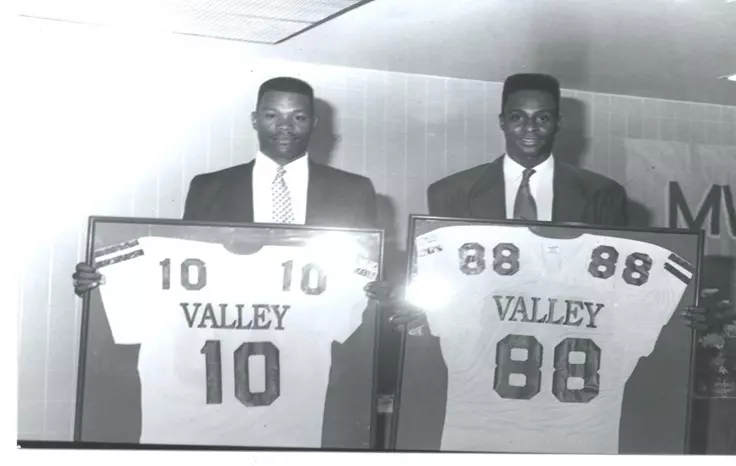
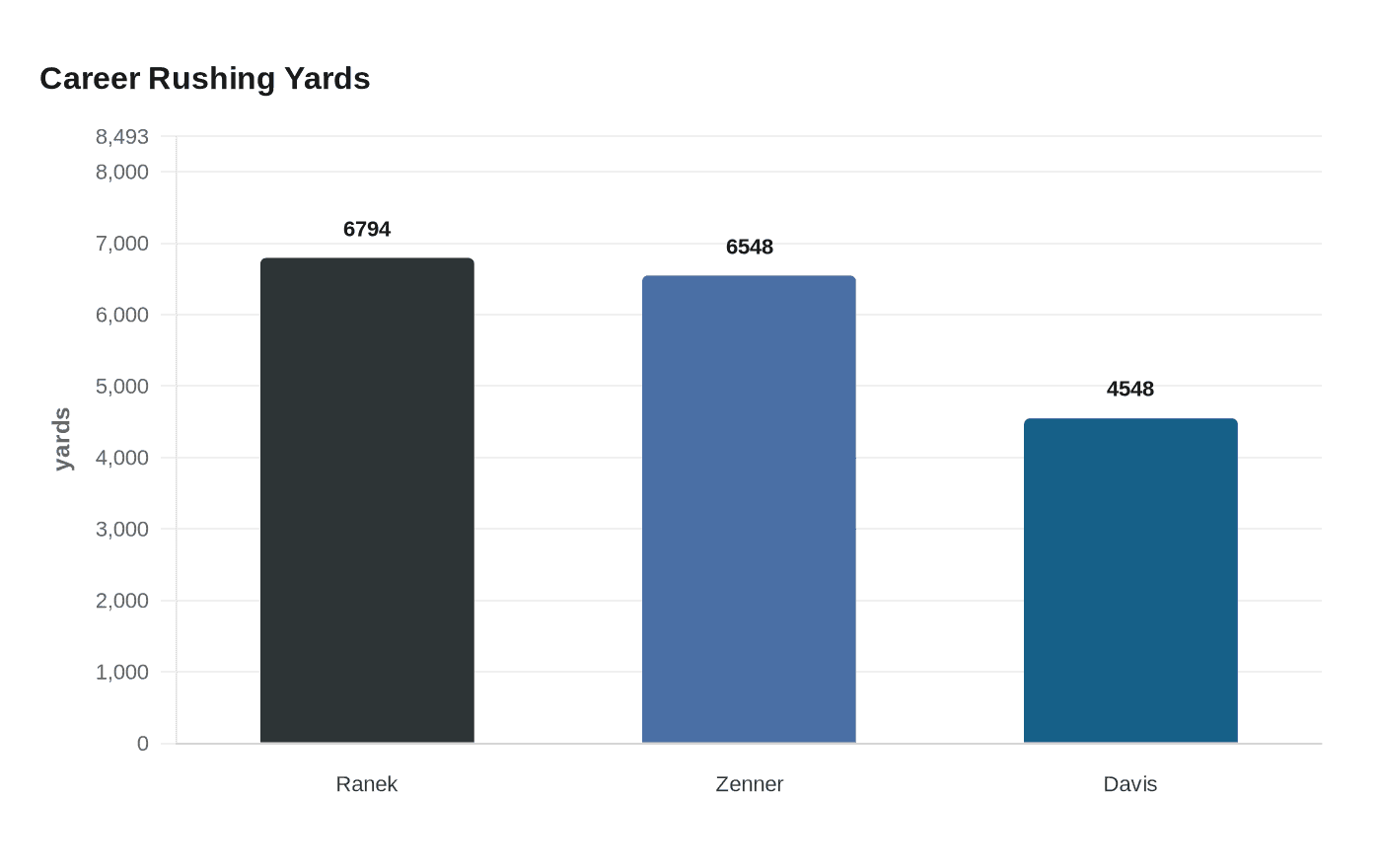
Josh Ranek remains the foundational name in the Jackrabbit rushing story. South Dakota State Hall of Fame materials list him at a school-record 6,794 career rushing yards in 44 games from 1997 to 2001, and he more than doubled the previous Jackrabbit career mark. He topped 100 rushing yards 30 times, posted 13 games of 200-plus yards and averaged 154.4 rushing yards per game, a workload that explains how he finished with 69 total touchdowns.
Ranek’s résumé is also a reminder that the program’s backfield success has long been tied to performance against elite competition. He earned All-America honors in 1998, 1999 and 2001, and he led the North Central Conference in rushing in each of those seasons. That combination of volume, consistency and conference dominance established the template that every later Jackrabbit star has chased.
Zenner turned the template into a national standard
If Ranek set the baseline, Zach Zenner pushed it into a different category altogether. South Dakota State lists him as a three-time consensus All-American from 2012 through 2014 and a three-time Walter Payton Award finalist, but his most eye-popping accomplishment may be the one that travels best beyond FCS circles: he became the first player in Division I football history to rush for 2,000 yards in three consecutive seasons.
Zenner finished his career with 6,548 rushing yards, third all-time in FCS history according to the Jackrabbits’ Hall of Fame materials, and his production stretched beyond the rushing category. South Dakota State says he set Missouri Valley Football Conference career records for rushing yards, all-purpose yards at 8,211, rushing touchdowns at 61 and total touchdowns at 69. He also tied the SDSU single-game rushing record twice with 295-yard performances, including a playoff game against Eastern Illinois in 2012 and a 2013 game at North Dakota.
That matters because it shows the Jackrabbits did not just find a star back. They kept finding a back who could carry a national spotlight while staying in the same offensive ecosystem. Zenner’s numbers were not a fluke of one magical stretch. They were the product of a program that knew how to keep feeding a runner and how to keep the rest of the offense pointed in the same direction.
Davis carried the lineage into the NFL era
Isaiah Davis gave the story its latest chapter and, in many ways, its most modern one. In 46 career games at South Dakota State, he totaled 4,548 rushing yards and 50 rushing touchdowns, finishing No. 3 all-time in school history for both categories. He earned back-to-back FCS All-America honors, was a 2023 Walter Payton Award finalist and was one of only four FCS prospects invited to the 2024 Senior Bowl in Mobile, Alabama.
The New York Jets then took him in the fifth round of the 2024 NFL Draft with the 173rd overall pick, making him the second Jackrabbit selected in that draft. That matters not just as a pro-football footnote, but as a proof point for the program’s current credibility. Davis was not simply a productive college runner; he was viewed as an NFL-caliber back in a year when only a handful of FCS players reached that Senior Bowl stage.
Why South Dakota State keeps producing elite backs
The common thread across Ranek, Zenner and Davis is not just talent. It is fit. South Dakota State has built a profile that consistently turns regional recruiting wins into national production. Ranek came out of Tyndall, South Dakota. Zenner arrived from Eagan, Minnesota. Davis was a Joplin, Missouri product. Different hometowns, same result: a backfield environment that rewards patience, durability and the ability to handle real volume.
That is where the program’s offensive identity shows up most clearly. Elite rushing totals do not happen without a scheme that keeps the ball in the hands of the best runner, and they do not happen without line play that can sustain it over 44 games, 46 games and entire playoff runs. South Dakota State’s track record suggests a model built on repetition and development, where backs are expected to grow into heavy usage rather than be protected from it. The Jackrabbits have not needed to chase the flashiest profile; they have repeatedly identified runners who fit a physical, forward-moving system and then developed them into record-setters.
The standard the next Jackrabbit inherits
That is the real weight of the 2026 conversation. The next South Dakota State tailback does not need to invent an identity. The identity is already there, engraved in 6,794 yards from Ranek, 6,548 from Zenner and 4,548 from Davis, with a line of All-America honors, conference awards, playoff performances and NFL attention behind them.
South Dakota State has spent decades proving that its running backs can be more than productive. They can become the face of the program, the reason the box score matters and the reason NFL scouts keep circling Brookings. The next runner in line will not just be asked to contribute. He will be asked to keep the Jackrabbit factory moving.
This article was produced by Prism’s automated news system from verified source data, official records, and press releases, then run through automated quality and moderation checks before publishing. The system is built and supervised by the people who set the standards it runs under. Read our full AI policy.
Did this article answer your question?