Tarleton State, Tennessee Tech headline FCS portal acquisition rankings for 2026
Tarleton State and Tennessee Tech set the pace, but the real test is whether portal hauls built on proven production can survive the grind to November.
1. Tarleton State
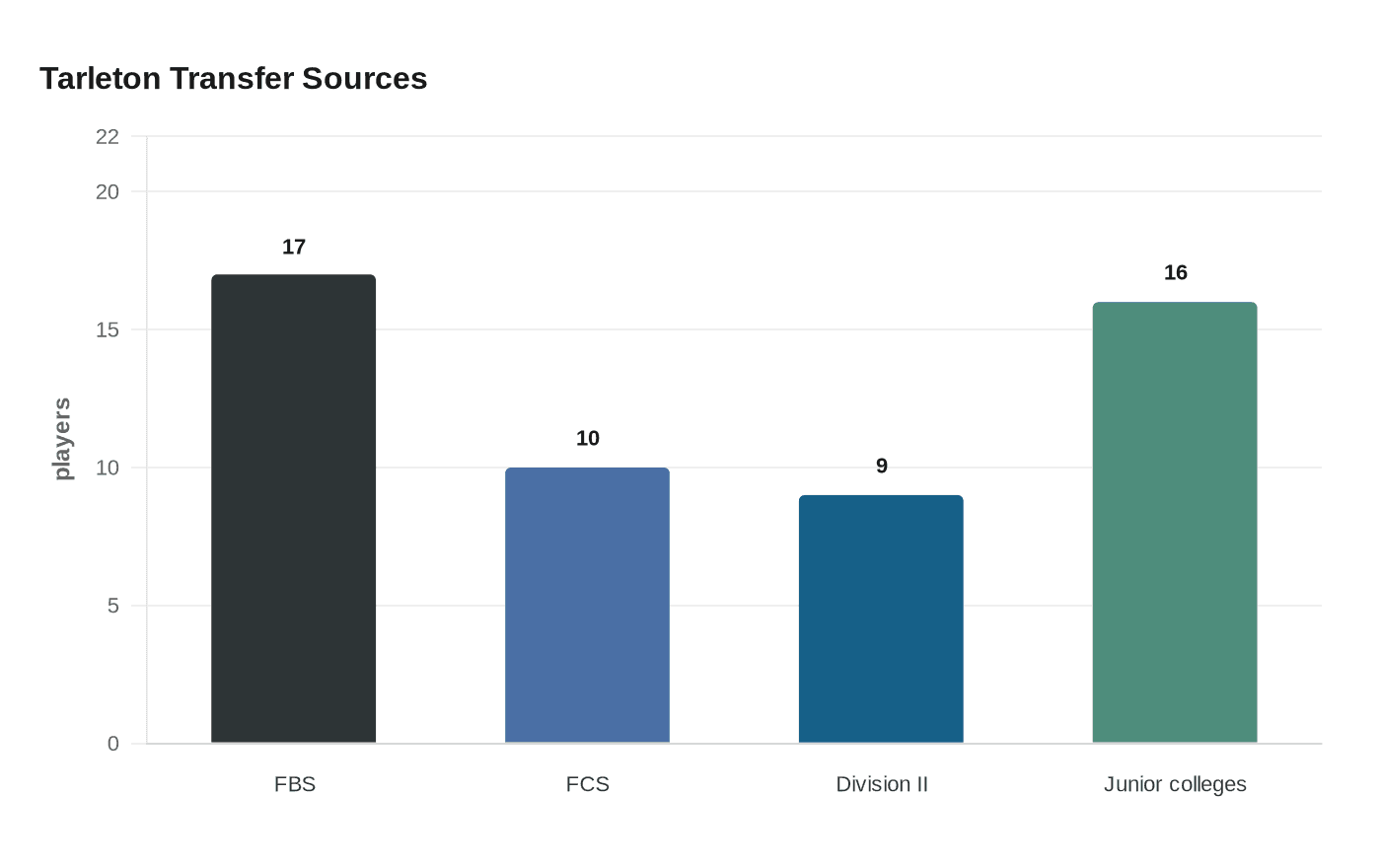
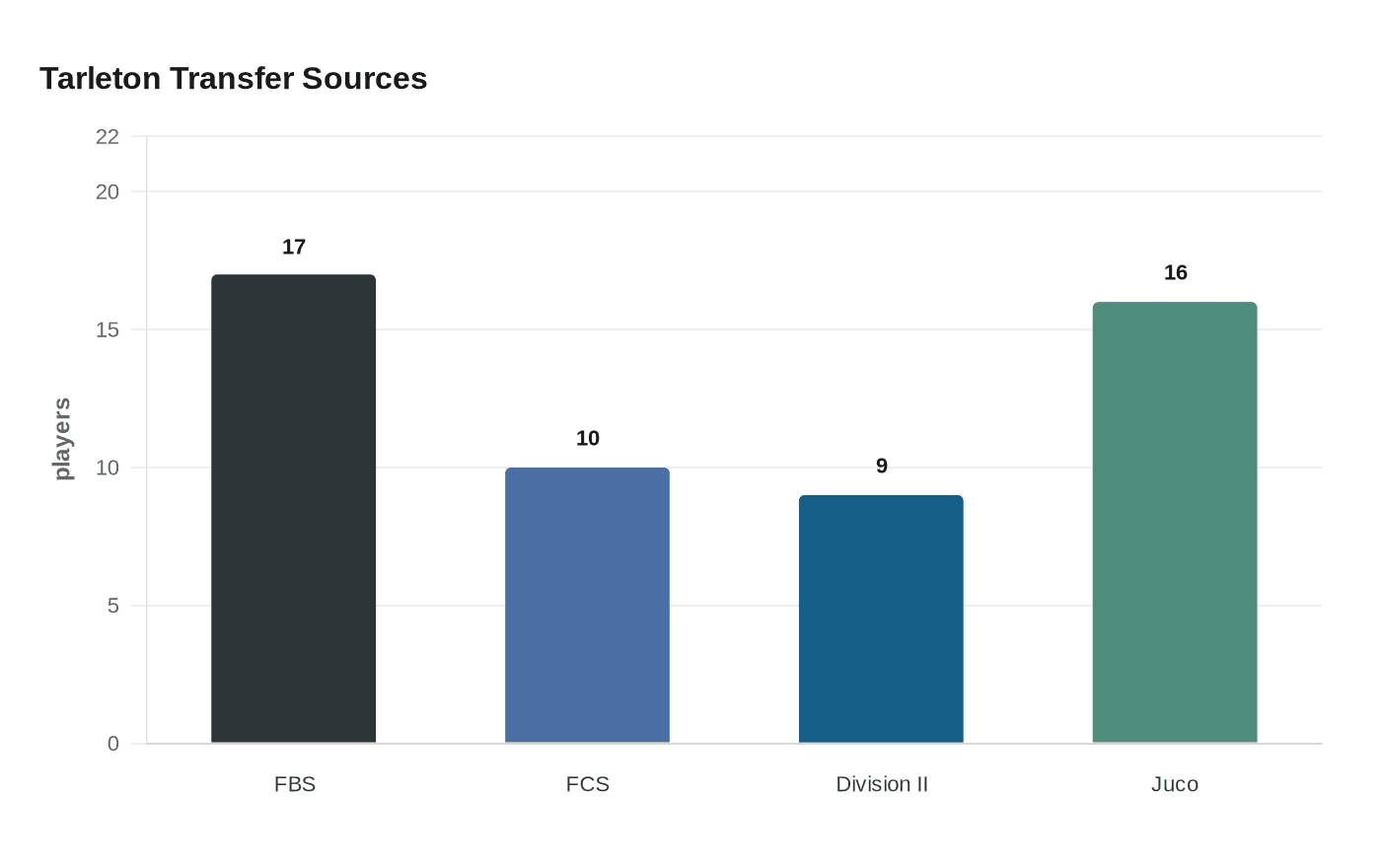
The Texans looked like the most complete portal operation in the FCS because they attacked every layer of the roster at once. Tarleton said it signed 63 new players for 2026, including 54 transfers, with 17 from FBS programs, 10 from other FCS schools, nine from Division II and 16 from junior colleges.
2. Tennessee Tech
The Golden Eagles bring a different kind of case study, one built on stability as much as volume. Tennessee Tech said its 2026 signing class included the No. 1-ranked transfer portal class by 247Sports, and the program entered the year as the defending conference champion under Bobby Wilder.
3. Monmouth
Monmouth landed in the honorable-mention group, which tells you how crowded the middle of the FCS portal market became. A program can make a strong case and still get squeezed out when rankings place extra value on proven production.
4. Gardner-Webb
Gardner-Webb also missed the top 30, another sign that the bubble was brutal for programs trying to build around the portal. In a year when roster movement was massive, even useful additions could get buried by teams with more experienced transfers.
5. SEMO
SEMO’s honorable mention status shows how much the rankings rewarded players who could step in quickly. The Redhawks were part of a second tier that looked strong enough to matter, even if it did not quite break into the top group.
6. Towson
Towson’s place just outside the cut reflects a familiar portal truth: depth wins arguments, but proven depth wins rankings. In a cycle this busy, the teams that collected multiple playable pieces had the clearest path to standing out.
7. Mercer
Mercer’s near miss reinforces how narrow the margin became once the evaluation leaned on experience. The Bears were part of a cluster of programs that likely improved, but not enough to outrun the biggest-volume classes.
8. North Carolina Central
North Carolina Central adds another layer to the story because the FCS portal market was not just about the traditional powers. Programs with strong brand identity had to compete with deeper, louder hauls from teams that could stack transfers at multiple positions.
9. Southern Illinois
Southern Illinois shows how hard it was to separate a good portal class from a great one. The Salukis were in the honorable-mention group, which suggests the roster work was real but not quite as forceful as the classes at the very top.
10. Alabama A&M
Alabama A&M’s appearance near the bottom of the rankings illustrates how wide the portal wave spread across the subdivision. The schools that survived this cycle were the ones that turned movement into usable depth, not just headlines.
11. Texas Southern
Texas Southern rounds out the honorable mentions and underscores the breadth of the market. Even programs outside the national spotlight were fishing in the same crowded pool, trying to turn transfers into immediate snaps.
12. Proven experience mattered most
The biggest clue in the rankings is the weighting itself, because proven experience was valued more than raw upside. That means a transfer with snaps already on tape carried more weight than an FBS name with little or no playing time.
13. No spring portal window changed the race
With no spring transfer portal window in 2026, most players had already found homes by the time these rankings were compiled. That compressed timeline made early, decisive recruiting even more important for staffs trying to finish the roster.
14. The portal cycle was enormous
More than 10,000 college football players entered the portal that offseason, which gives the FCS rankings real scale. A list like this was never just about talent acquisition, it was about survival inside a national roster shuffle.
15. FCS-to-FCS movement mattered too
HERO Sports estimated that more than 445 FCS players were moving to other FCS schools for 2026, and that matters because it is the purest form of conference-level competition. Those are the transfers most likely to hit the field fast, which is exactly what makes them so valuable.
16. Some signings were still hidden
SI said it considered all known FCS portal signings, while also warning that some players might not yet have been added to rosters or made public. That caveat matters because these rankings reward information as much as evaluation, and the final picture can still shift.
17. The ranking was built like a scorecard
Each transfer was assigned a numerical value, then rolled into a team score, with positional rankings from earlier in the offseason feeding the result. That kind of system favors programs that can stack several credible additions instead of leaning on one splashy name.
18. Star power alone was not enough
The methodology punished empty hype, especially when an FBS transfer had little actual game action. That is why the best portal class is not always the one with the biggest brand names, but the one with the most usable snaps.
19. Immediate depth holes are the hidden edge
The classes that plug obvious roster gaps tend to age better by November. When injuries pile up, a class built to start or rotate right away is usually more valuable than a group assembled only for future upside.
20. Undervalued FBS transfers can still swing a class
Discounting low-production FBS transfers does not mean FBS talent lacks value. It means the staff has to identify the one with a role, because fit and readiness matter more than the logo on the jersey.
21. FCS transfers can be the safest bets
Moving from one FCS program to another often gives coaches the cleanest read on what they are getting. Those players already know the subdivision, and that familiarity can shorten the adjustment period once camp starts.
22. Tarleton’s mix shows the appeal of volume
Tarleton’s breakdown, 17 FBS, 10 FCS, nine Division II and 16 junior college transfers, is the strongest argument for casting a wide net. It was not a one-note class, and that diversity is exactly why it looked so dangerous.
23. Tennessee Tech sold continuity with its portal class
Tennessee Tech did not just announce a transfer haul, it wrapped that haul in the language of a champion. Being the defending conference winner under Bobby Wilder gave the Golden Eagles a built-in pitch that many portal shoppers could not match.
24. Winning programs can use stability as recruiting currency
A champion with a returning coaching structure can present the portal as a shortcut to contention instead of a rescue mission. That matters in a market where transfers are choosing between opportunity, role and the chance to win fast.
25. Junior college talent still belongs in the conversation
Tarleton’s 16 junior college additions are a reminder that the portal is only one part of roster building. In the FCS, juco players can still provide old-school immediate help when staffs need bodies who can handle snaps now.
26. Division II transfers remain a useful middle-market play
Nine of Tarleton’s transfers came from Division II, which signals that programs are still mining levels below the subdivision for value. Those players may not create the loudest headlines, but they can strengthen the two-deep in a hurry.
27. The middle of FCS football got deeper
The honorable mentions show that the gap between the top classes and the next tier was not huge. That is the most interesting part of the rankings, because it suggests a lot of programs improved enough to make life harder for everyone else.
28. The reaction proved the list hit a nerve
The ranking drew more than 150 likes and 60 reposts, which says the portal has become part of the weekly conversation around FCS football. Fans and staffers alike know these classes shape expectations long before kickoff.
29. The best classes are the ones that hold up under attrition
A strong portal haul is not just a March story, it has to survive the first wave of injuries and role changes. That is where proven experience, not just volume, becomes the separator.
30. Tarleton State and Tennessee Tech set the standard
Taken together, the two headliners show the two most convincing portal models in the subdivision: Tarleton’s broad roster overhaul and Tennessee Tech’s champion-backed efficiency. The classes most likely to last into November will be the ones that blend playable depth, trustworthy experience and enough upside to keep winning when the calendar turns.
This article was produced by Prism’s automated news system from verified source data, official records, and press releases, then run through automated quality and moderation checks before publishing. The system is built and supervised by the people who set the standards it runs under. Read our full AI policy.
Did this article answer your question?