eFoil vs jet ski and kitesurfing: which ride fits you best
eFoils win on quiet, predictable sessions, but jet skis and kitesurfing solve different problems. The right pick comes down to water, wind, effort, and how you want to ride.

The wrong way to choose a water sport is to ask which one is best in a vacuum. The better question is simpler: what problem are you trying to solve, and what kind of session do you actually want to have? eFoils, jet skis, and kitesurfing all get you on the water, but they do it with very different trade-offs in learning curve, access, cost, physical demand, safety, and how reliable the ride is when the conditions are only so-so.
What an eFoil is really buying you
Start with the machine itself. An eFoil is an electric hydrofoil board powered by a quiet motor mounted below the board, and the underwater wing creates lift so the rider can glide above the surface. That setup changes the entire experience: instead of chasing waves or waiting on wind, you can cruise on flat water, lakes, bays, and coastal stretches with a ride that is nearly silent.
That silence and independence are the point. For a rider who wants solo sessions, predictable learning, and less setup than kitesurfing, the eFoil is hard to beat. It is not just about novelty or the futuristic look of hovering over the water. It is about removing the bottlenecks that usually kill a session before it starts: no wave dependence, no need for wind, and no tow power to coordinate.
Why the learning curve matters more than the headline feature
A lot of buyers get distracted by the coolest-looking option. That is a mistake. The real issue is how quickly you can turn a purchase into usable water time, and eFoil has a strong case there because the rider is controlling a powered board rather than juggling wind window theory or tow logistics. The learning path is more direct, which is a big deal if you want sessions that feel repeatable instead of random.
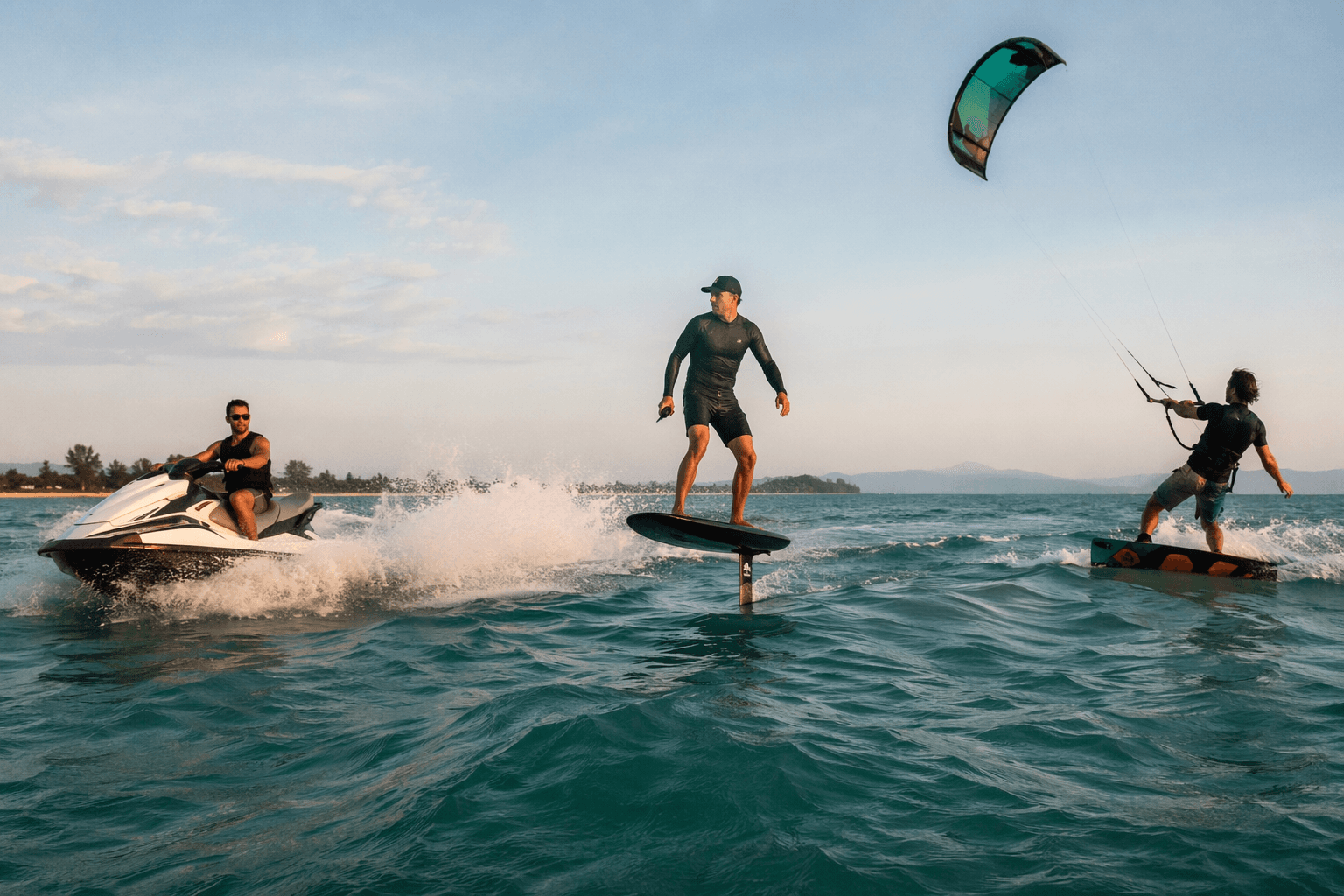
Kitesurfing is the opposite kind of challenge. It offers its own thrill and efficiency, but it demands wind, more skill, and more gear management. That makes it a better fit for riders who want the kite-powered experience and are willing to earn it. If you want the sport to teach you patience before it teaches you speed, kitesurfing will do that. If you want a more forgiving entry into foil surfing, eFoil gives you a cleaner runway.
Jet ski utility is real, but it comes with a different bill
Jet skis belong in this conversation because they solve a different problem well: brute force and range. If the goal is to cover water fast and carry the kind of power that opens up bigger-use sessions, the jet ski has a clear edge. It is the general-purpose play machine in this group, the one that can serve a lot of jobs if you are willing to accept the trade-offs.
Those trade-offs are not small. The noise alone changes the mood of the session, and the size of the machine adds a logistics burden that a rider feels before the engine even starts. Compared with the compact feel of an eFoil setup, a jet ski is more cumbersome to move, stage, and manage. That matters if your local water access is tight, your storage is limited, or you care about the kind of session that feels clean instead of complicated.
Access is the hidden stat in the comparison
This is where the decision gets practical. An eFoil works on flat water and does not ask for wind or surf, which instantly widens the number of days and places you can ride. Lakes, bays, and coastal stretches all become usable water, and that makes the board especially valuable in places where conditions are usually mediocre rather than ideal.
Kitesurfing has a narrower access window because it needs wind. That does not make it inferior, but it does make it less flexible when the forecast is weak or inconsistent. Jet skis do not depend on wind or waves in the same way, but they introduce their own access friction through size, noise, and the logistics of getting the machine to the water and back. If your local spot rewards simplicity, eFoil is often the cleanest answer.
Operating cost and maintenance are part of the ride, not an afterthought
Riders love to talk about sensation and forget the ongoing burden. That is usually where the expensive mistakes happen. The article’s framing is smart because it pushes buyers to think about maintenance as part of the decision, not a separate chore after the purchase.
An eFoil’s appeal is that it offers less setup than kitesurfing and avoids the full machinery of a jet ski. Kitesurfing brings more gear management, which is its own ongoing tax on time and attention. Jet skis bring a heavier logistics burden by design. The lesson is straightforward: the cheapest-looking purchase is not always the easiest one to live with if your sessions depend on frequent transport, setup, and cleanup.
Physical demands and safety shape the experience
These three rides ask different things of the body and the brain. Kitesurfing is the most demanding in terms of skill and gear management, and that complexity is part of its identity. Jet skiing is less technical on the rider side, but the scale and speed of the machine change the safety picture in a different way.
eFoil sits in the middle in a way that many riders find appealing. It gives you powered glide without the full windcraft of kitesurfing and without the noise and bulk of a jet ski. That does not make it risk-free, but it does make the session feel more controlled and more personal. For riders who want to focus on balance, line choice, and the sensation of hovering above the water, that controlled feel is a major selling point.
The best choice depends on your local water and your goal
This is not a beauty contest, and it should not be treated like one. If your goal is quiet, solo, repeatable sessions on flat water, lakes, bays, or calm coastal stretches, eFoil is the most elegant fit in this group. If your goal is pure range and brute force, jet ski makes more sense. If your goal is wind-powered speed and you are willing to accept more skill and more gear management, kitesurfing is the sharper tool.
The smartest buyers do not ask which ride is universally superior. They ask which one matches their water, their storage, their tolerance for setup, and the sensation they actually want when they leave shore. In that framework, eFoil is not hype. It is a very specific answer to a very specific set of problems, and that is exactly why it works.
This article was produced by Prism’s automated news system from verified source data, official records, and press releases, then run through automated quality and moderation checks before publishing. The system is built and supervised by the people who set the standards it runs under. Read our full AI policy.
Know something we missed? Have a correction or additional information?
Submit a Tip