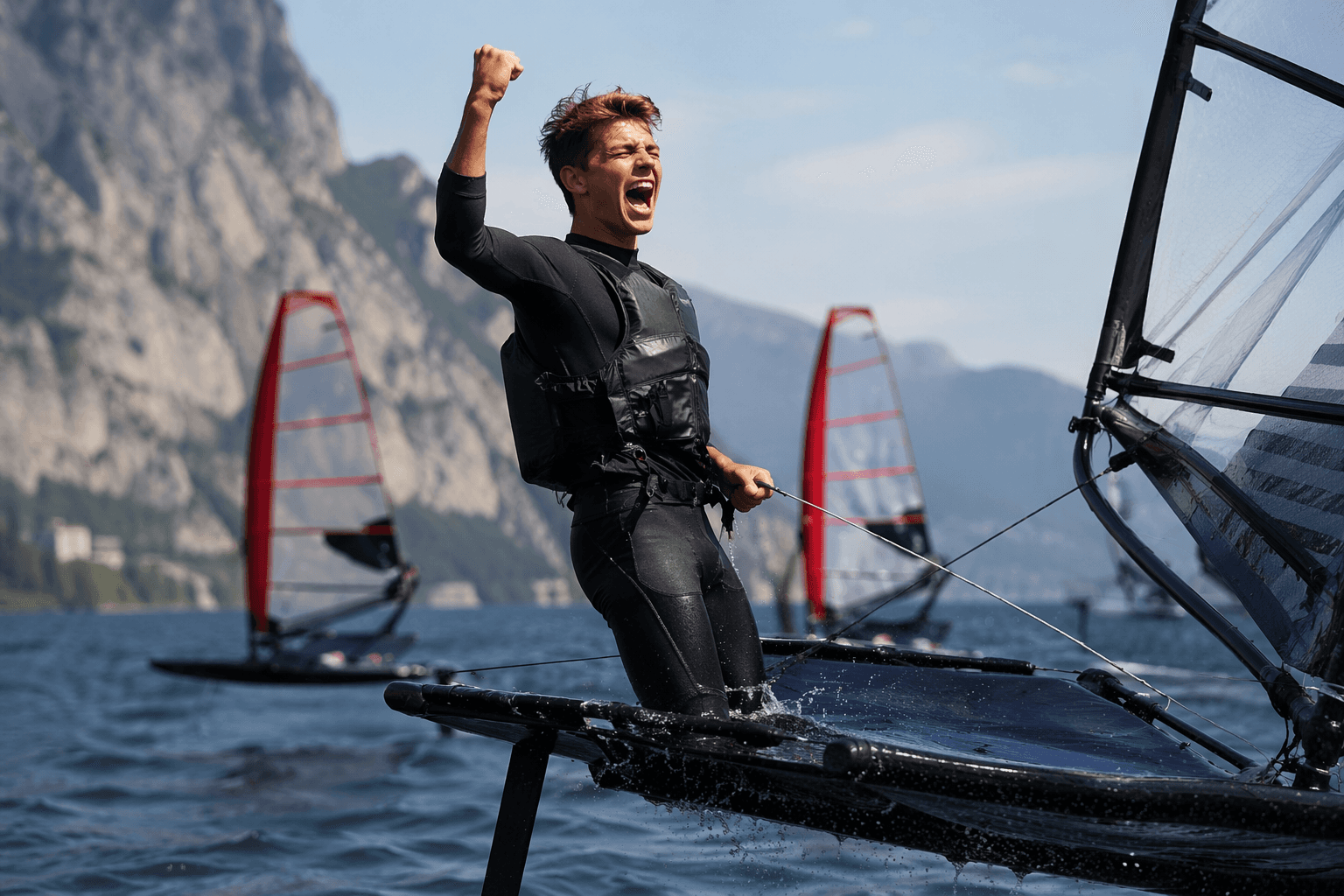
eFoil vs jet ski: Glyde Watersports weighs speed, access, and ownership
Glyde Watersports turns the eFoil-versus-jet-ski call into a real buying decision: speed and passenger room against quiet access, cleaner ownership, and ride feel.

The real fork in the water
Glyde Watersports treats this as more than a novelty debate. If you want to carry two passengers and go as fast as possible, the jet ski still owns that lane; if you are buying for yourself and want the quieter, cleaner, more specialized kind of session, the eFoil starts to make the stronger case.
That is the practical split underneath the whole comparison. One craft is built on raw power and familiar PWC utility. The other is built around a very different promise: flying low over the water, making less noise, and fitting a rider who cares as much about the experience as the top speed.
Where each machine fits on the water
Launch access is one of the first real-world filters, because the best machine is useless if the place you ride does not suit it. The eFoil’s appeal is that it does not rely on fuel, does not throw the same shoreline wake, and feels more discreet on crowded or sensitive stretches of water. That makes it the more practical choice when you care about keeping the session cleaner and less disruptive.
Jet skis still have the edge when you want broad versatility. They remain the standard personal watercraft for a lot of traditional use cases, especially when multiple riders are part of the plan. If your idea of a day on the water is sharing one craft, blasting around with a passenger, and treating speed as the main event, the jet ski is still the simpler answer.
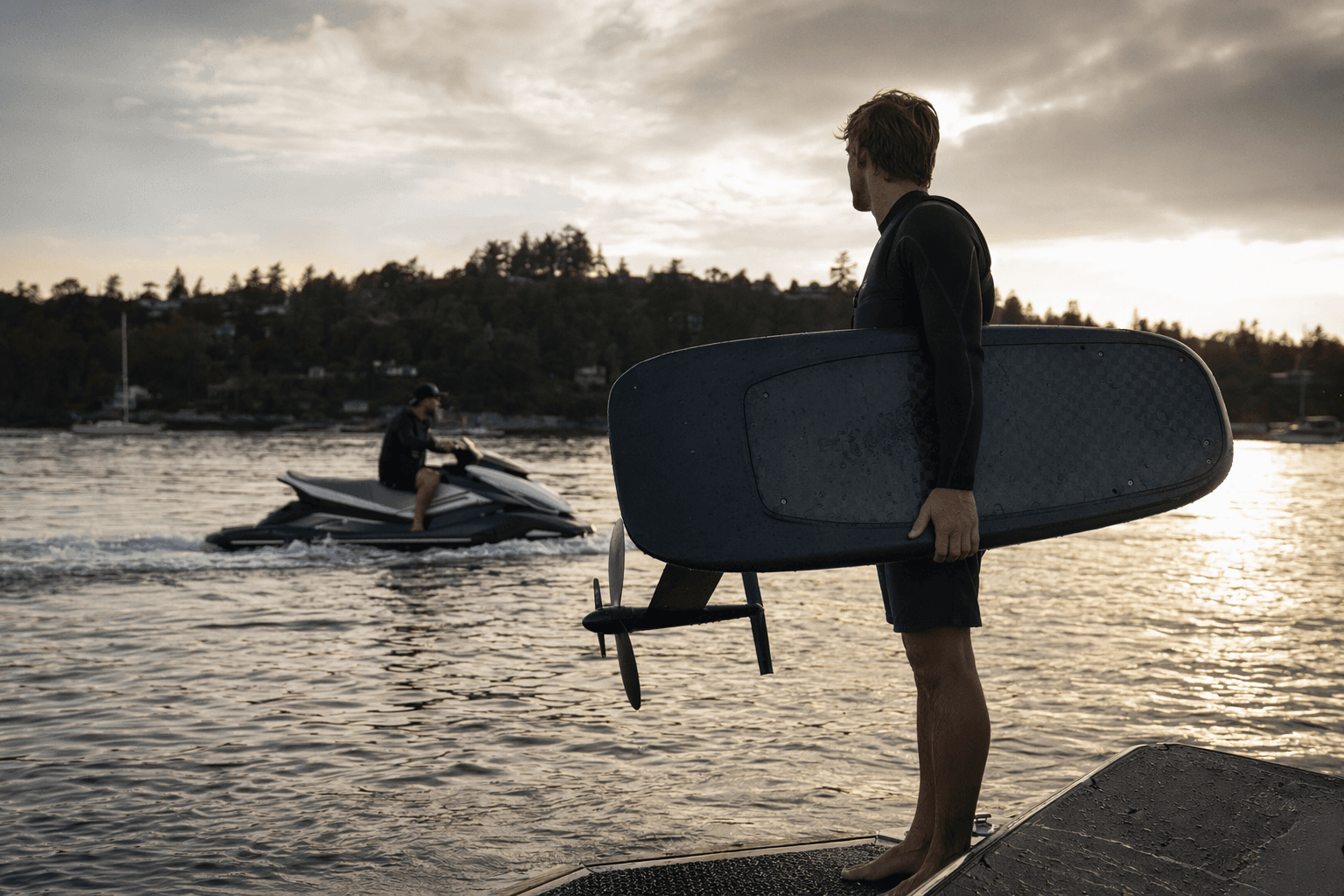
What ownership really costs you
The ownership question is where the comparison gets sharper. Glyde Watersports makes the case that the eFoil can start to look better by the second year, not because it is cheaper in every line item, but because the use case is so specific and so satisfying for the right rider. When a machine becomes a personal performance toy rather than a shared passenger craft, the value proposition changes fast.
Running cost follows that same logic. An eFoil does not burn fuel at the point of use, which is part of why it reads as the cleaner option and part of why the long-term math can tilt in its favor. A jet ski, by contrast, lives in the gasoline-powered world, and that means fuel remains part of the equation every time you take it out.
Storage and upkeep also reward honesty about how you actually ride. A jet ski is built for the established PWC lifestyle, while the eFoil is a more specialized piece of equipment, one that makes sense when you are buying a distinct experience instead of a general-purpose water toy. If your sessions are frequent and solo, the eFoil’s tighter identity can justify the spend; if you need a machine that serves more people and more purposes, the jet ski keeps its advantage.
The ride feel is not a small detail
This comparison is not only about cost and compliance. It is also about what the water feels like under you, and here the two machines could hardly be farther apart. The eFoil is sold as a quieter, cleaner kind of flight, with a ride that feels elevated and unusually personal. The jet ski is louder, faster, and more direct, the classic push of a gasoline-powered craft with immediate throttle and broad familiarity.

That difference matters because it shapes how often you use the thing once it is yours. A craft that feels special every time it leaves the dock can justify ownership in a way that pure horsepower sometimes cannot. For riders who want the sensation of hovering rather than hammering across the surface, the eFoil is not a substitute for a jet ski. It is a different answer entirely.
- Choose the jet ski if you want:
- two-passenger use
- maximum speed
- a familiar PWC format
- a machine that fits broad traditional watersports use
- Choose the eFoil if you want:
- quieter sessions
- no fuel at the point of use
- less shoreline wake
- a more specialized, flying-style ride
- an ownership case built around personal use
Why the rules around both craft matter
This is where the story moves from lifestyle to regulation. The U.S. Coast Guard says mechanically propelled personal hydrofoils, including eFoils, and mechanically propelled surfboards are vessels, which means they are subject to the laws and regulations that apply to recreational vessels propelled by machinery. In its August 26, 2022 policy letter, the Coast Guard said these devices are not traditional recreational vessel designs because they lack a steering system, gunwales, and have limited freeboard.
That same letter noted that the devices can exceed 35 miles per hour. The Coast Guard then issued a change letter on October 5, 2022, updating terminology and policy for mechanically propelled personal hydrofoils and surfboards, with input from NASBLA’s Vessel Identification Registration and Titling committee. For buyers, that matters because the eFoil is not a loophole or a novelty category. It sits inside the boating rulebook.

The federal boating requirements are part of that reality too. The Coast Guard’s recreational boating guide covers registration and documentation, casualty and accident reporting, engine cut-off switches, personal flotation devices, and pollution regulations. In other words, whether you are drawn to the hydrofoil or the PWC, ownership still brings compliance, safety gear, and paperwork with it.
The bigger industry backdrop
The comparison also sits inside a long history of personal watercraft culture. Kawasaki introduced the original Jet Ski in 1973, and the name became synonymous with the broader PWC category. Lift Foils says it invented the eFoil category, which places the electric hydrofoil in a much newer, premium lane alongside that older, mass-market gasoline tradition.
The environmental picture pushes the same way. EPA exhaust-emission standards in part 1045 apply to outboard and personal watercraft engines, including standards tied to the 2010 model year and beyond. Because the eFoil does not burn fuel at the point of use, it sidesteps the exhaust side of that equation and reinforces its cleaner ownership pitch.
Safety data adds another layer. The Coast Guard’s 2024 boating statistics showed 556 boating fatalities, the fewest in more than 50 years, but personal watercraft were among the vessel types most involved in reported incidents. That does not make a jet ski wrong for every rider, but it does explain why buyers are paying closer attention to quieter, simpler, more specialized electric craft. The choice is no longer just about speed. It is about access, rules, upkeep, and whether the ride you own is the ride you actually want to keep using.
This article was produced by Prism’s automated news system from verified source data, official records, and press releases, then run through automated quality and moderation checks before publishing. The system is built and supervised by the people who set the standards it runs under. Read our full AI policy.
Did this article answer your question?