F-One 2026 foil range adds stiffer Titan 2 connection, easier tuning
F-One’s 2026 updates are about feel, not flash: the new T2 connection and UHM mast sharpen response, while SK8 V3 and Eagle V2 add cleaner tuning.
F-One’s 2026 range is a stiffness play first, a tuning story second
The biggest change in F-One’s 2026 foil lineup is not a new silhouette or a flashy redesign. It is the tighter, more rigid feel created by the Titan 2, or T2, connection, paired with Ultra High Modulus mast options that are built to reduce flex and improve efficiency through the water. On the water, that means faster response, cleaner energy transfer through turns, and a more locked-in sensation underfoot, especially when chop, pumping, and acceleration all start to load the system.
That matters because the riders most likely to notice the difference are not beginners still learning basic takeoff timing. It is the current F-One owner who already knows how the brand feels and wants the next step up in precision without abandoning the same ecosystem. If your board, mast, fuselage, and wing already work well together but you keep wishing the foil would snap into turns more cleanly or carry speed with less wasted motion, this is the update aimed squarely at you.
What the new T2 connection changes on the water
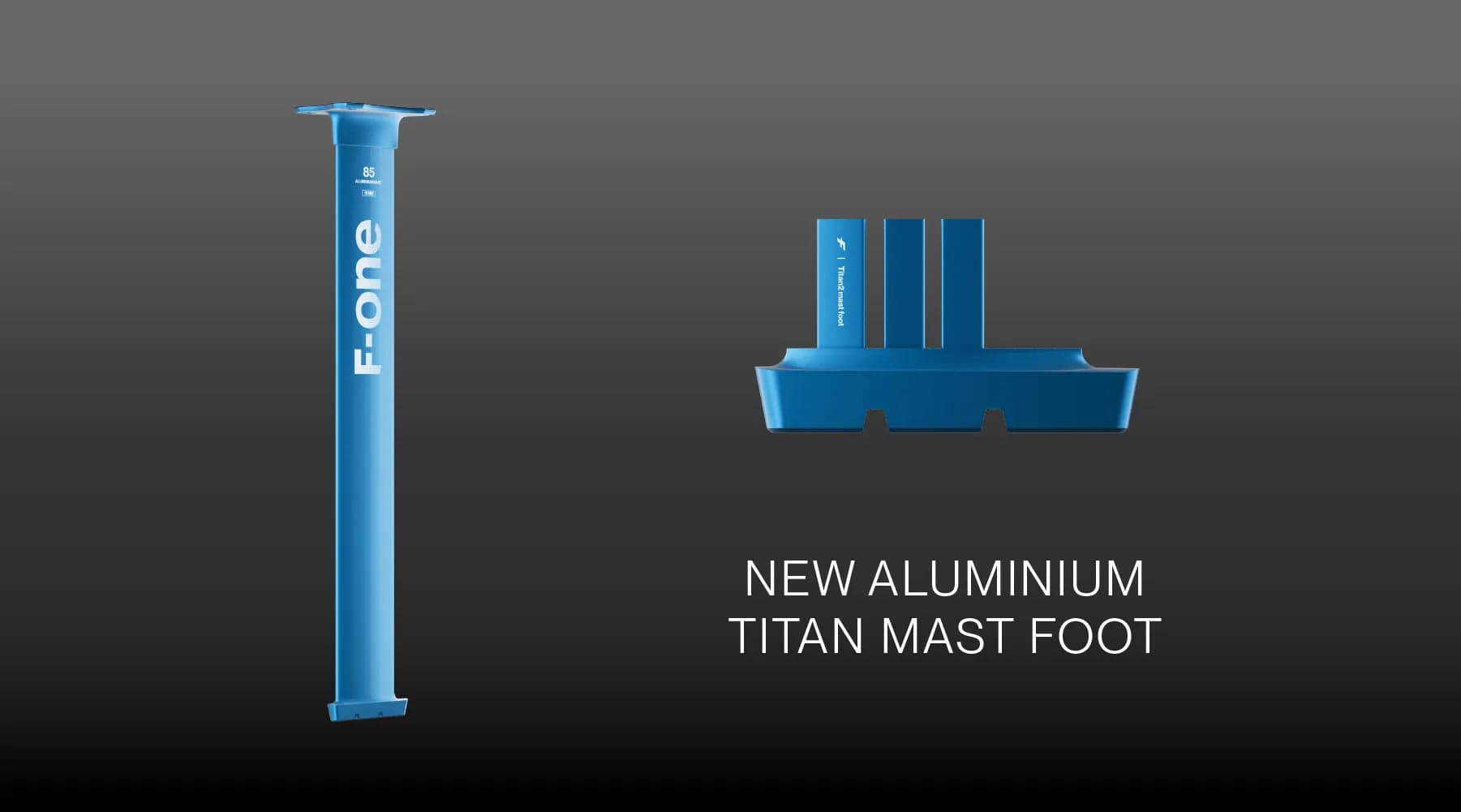
The Titan 2 connection is the backbone of the update, and its job is straightforward: tighten the mast-to-fuselage interface so the whole foil flexes less under load. In practical terms, that should make the foil feel more connected when you pump onto foil, drive through a carving arc, or hold a line through rough water. Less flex usually means less delay between what your feet ask for and what the foil actually does, and that is exactly the kind of gain experienced riders tend to feel immediately.
That rigidity boost is most relevant in surf-style carving and downwind glides, where small losses in energy can compound quickly. A looser setup can feel alive in the wrong way, especially when you are linking turns, accelerating out of a pocket, or trying to keep cadence over distance. By tightening the interface, F-One is aiming for more efficient tracking and a more precise connection between rider input and foil response.
Why the Ultra High Modulus mast matters, especially the new 12mm option
F-One is also adding Ultra High Modulus carbon mast options, including a new 12mm mast, for riders who want maximum stiffness and better efficiency through the water. The appeal here is not abstract. A stiffer mast can translate into a cleaner, more direct ride when speed builds and load increases, which is exactly when flex becomes most noticeable.
For riders who have already optimized their board stance and foil size, the mast is one of the highest-impact parts to upgrade. The new 12mm UHM mast is aimed at people chasing the most rigid feel possible, and that makes it especially relevant for heavier riders, aggressive carvers, or anyone riding in conditions where the foil is constantly being pushed and released. If your current setup already feels stable enough and you are not bothered by softness in the connection, the upgrade will be more about refinement than reinvention.
SK8 V3: the carve-focused wing gets a cleaner shape
On the wing side, the SK8 V3 arrives with a redesigned profile and shape, and that suggests F-One is polishing the wing for more usable performance rather than reinventing its role. The SK8 line has always been associated with carving, and a revised profile should help it feel more balanced, more efficient, and easier to place in a turn. For riders who spend their sessions linking waves or redirecting often, small changes in outline and section can be felt immediately in how smoothly the wing exits a maneuver.
This is the kind of update that matters if you already like the SK8 feel but want a more refined version of it. Riders who are happy cruising in a straight line may not feel a dramatic transformation, but the people who surf the wing, work transitions hard, or chase a more responsive ride are likely to notice the difference. In that sense, SK8 V3 looks like an evolution for riders who want the same character with sharper execution.
Eagle V2 returns with more maneuverability after five years
The Eagle V2 is back after five years, and the headline is more maneuverability. That return matters because it suggests F-One sees room to modernize a known platform rather than simply replace it with something entirely new. A wing that comes back after that kind of gap usually carries a clear job description, and here the brief is easier turning and a more agile feel on the water.
For riders who prioritize glide but still want the foil to bank and redirect with less effort, the Eagle V2 could be the most interesting part of the update. It sits in the sweet spot between efficiency and agility, which makes it useful for long open-water runs as well as more active surf and crossover sessions. If your current foil feels efficient but a little reluctant in tighter maneuvers, this is the piece of the range most likely to justify attention.
Carving tails, board mounting, and the tuning advantage
F-One is not stopping at the front end of the foil. The carving tail line is also being refined, with new sizes and better overall performance, which should make setup more adaptable across conditions and rider preferences. Tail choice is often where a foil begins to feel sorted or frustrating, so extra sizing options matter because they let you tune pitch, stability, and turning feel more precisely.
The other practical change is the keyhole board mounting system, which should simplify beach assembly. That is not the kind of feature that makes marketing headlines on its own, but it matters every time you set up in wind, sand, or a race-day rush. Faster assembly and fewer awkward steps can be the difference between getting on the water quickly and spending your first ten minutes fighting hardware.
Who should upgrade now, and who can keep riding what they have
If your current F-One setup already feels solid and you mostly cruise, you can keep riding it with confidence. The 2026 changes are substantial, but they are aimed at riders who can feel the edge between “good” and “more precise.” The biggest gains will land with riders who notice mast flex, care about clean energy transfer, and want sharper behavior through turns, pumps, and chop.
- Riders on older, softer mast and connection setups who want more rigidity.
- Carvers who want the foil to react faster and exit turns with less lag.
- Downwind riders chasing cleaner glide and less wasted motion.
- Wing riders who want more maneuverability from the SK8 V3 or Eagle V2.
- Current F-One owners who want to fine-tune, not start over.
The clearest upgrade candidates are:
That is what makes this range feel smart rather than flashy. F-One is not chasing a clean-sheet reboot; it is tightening the parts that shape real ride feel and making the whole system easier to tune. For riders who already trust the brand, that combination of stiffness, efficiency, and adjustability is exactly where an upgrade starts to make sense.
This article was produced by Prism’s automated news system from verified source data, official records, and press releases, then run through automated quality and moderation checks before publishing. The system is built and supervised by the people who set the standards it runs under. Read our full AI policy.
Did this article answer your question?