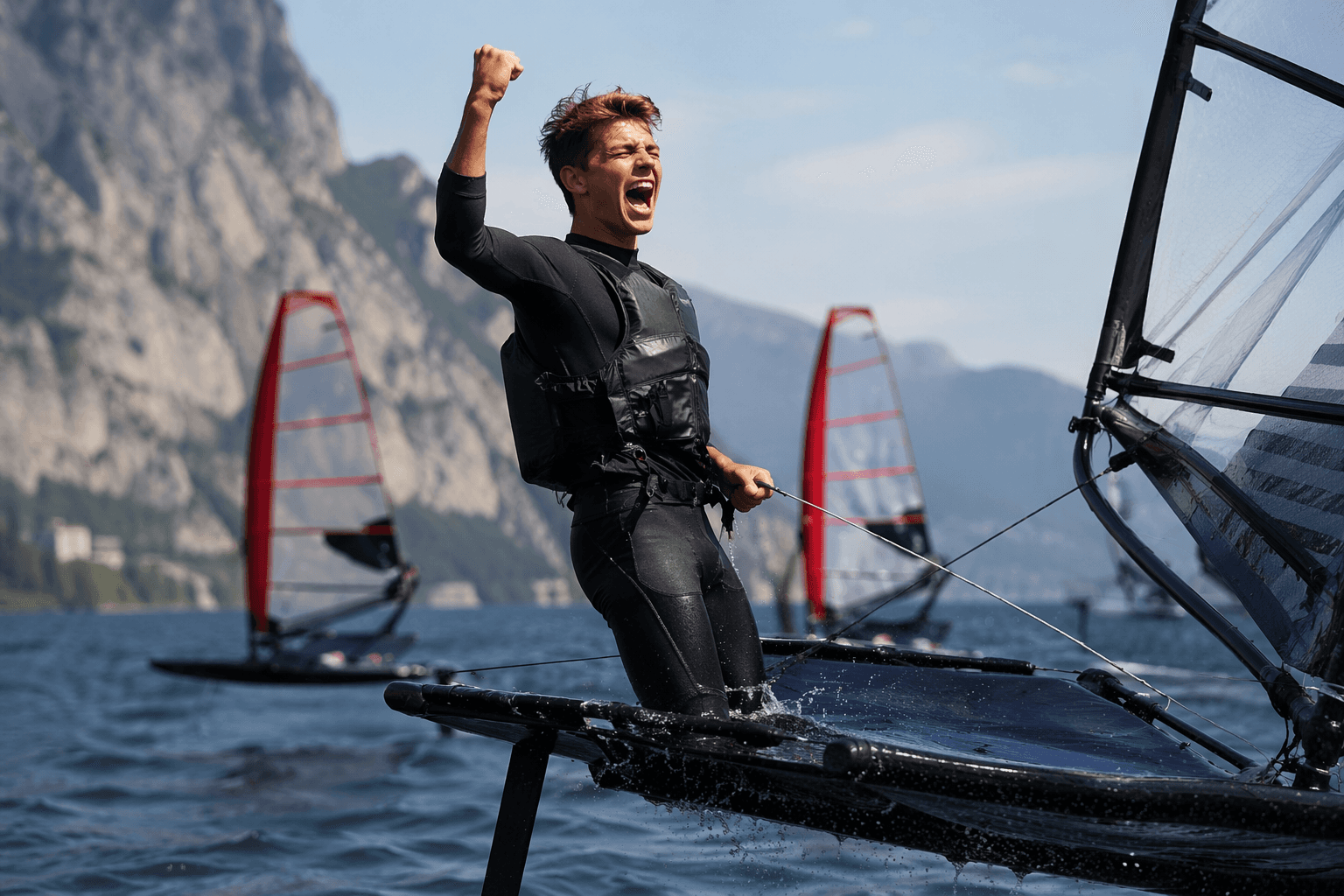
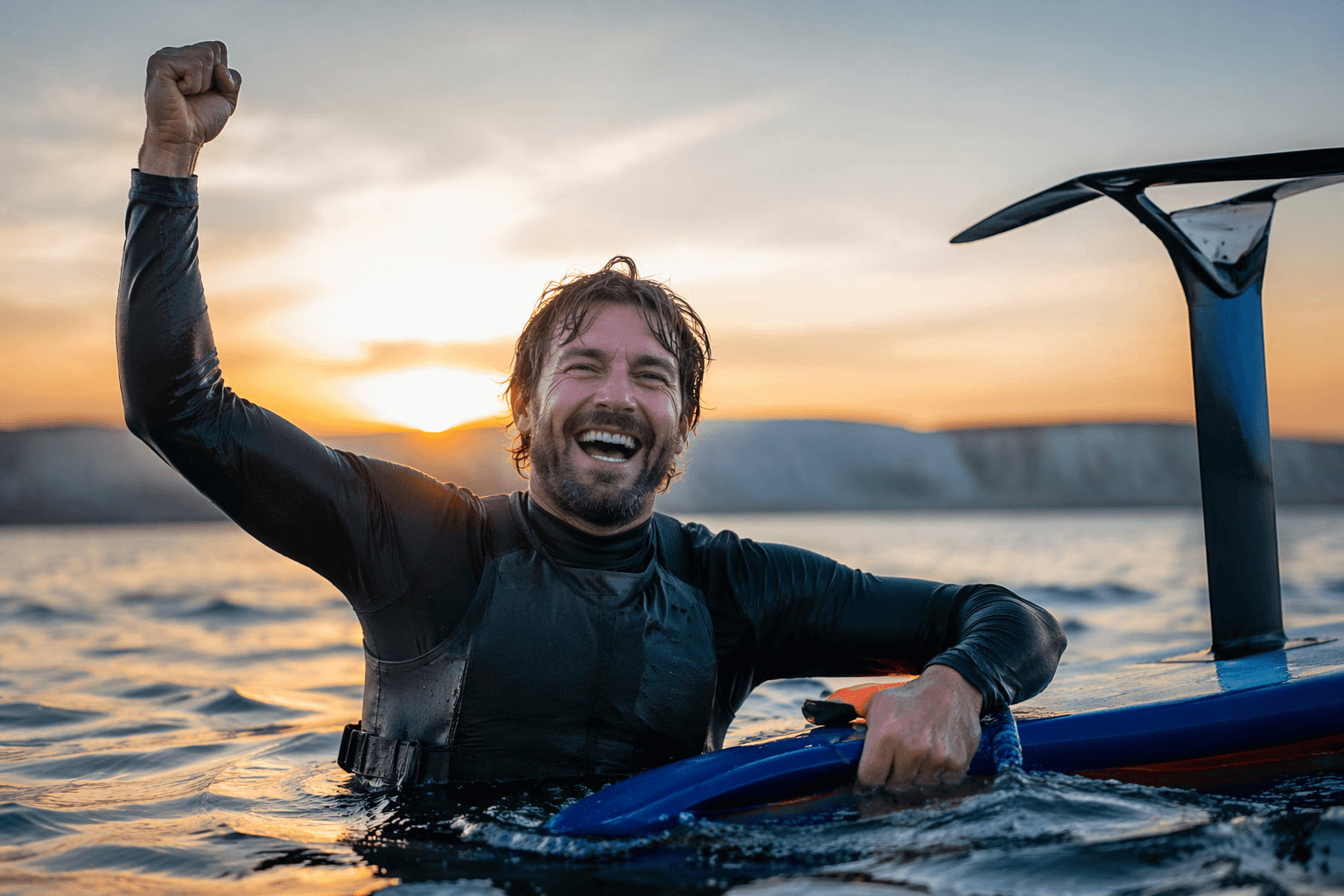
Fliteboard endurance race tests eFoils across Isle of Wight crossing
A 24km crossing from the Needles to Sandbanks became Fliteboard’s first endurance test, and Rob Wylie won in 43:10 after seaweed, tide and battery drift.

Fliteboard turned a branded showcase into a real endurance test when six riders tackled a 24km crossing from the Needles on the Isle of Wight to Sandbanks, Poole. What began as a first-of-its-kind eFoil race quickly exposed the demands that short-course speed hides: battery management, tidal movement, fatigue and the small setup choices that decide whether a rider finishes strong or fades late.
Rob Wylie, Toby Irons, Tom Court, Chemmy Alcott, Gemma Soloman and Wayne Janse Van Rensberg lined up for the June 10 race in the UK, with the route carrying them past one of the Isle of Wight’s most iconic sights and into the Dorset coast finish. BNPS said Wylie, 53, completed the 15-mile course in 43 minutes and 10 seconds after beating stiff competition. That time is the headline, but the race itself was built around a harder question: which rider could keep pace without burning through the battery before the final push.

The early section looked manageable, with relatively calm water and a loose, upbeat mood. Then the tidal flow picked up and the race turned tactical. Around the 7km mark, Wylie lost the lead after catching seaweed, and Tom Court moved into the frame as the front of the race became a back-and-forth battle over speed, efficiency and clean riding. Chemmy Alcott also had one of the day’s strangest moments when a dolphin surfaced beside her for several minutes, a reminder that open-water racing brings its own kind of unpredictability.
That mix of pressure and problem-solving is exactly why the event matters. Fliteboard had already made an aggressive performance push in January 2026 with the RACE board developed with Mercury Racing, a high-performance setup it positions for elite riders and competition. Flite says that board can reach 34 mph, or 55 km/h and 30 knots, and president Nick Stickler said the collaboration marked an important step in advancing brand and technology leadership. The endurance race showed the next step: not just raw speed, but whether eFoils can survive a proper channel crossing.

Wylie’s win and the race’s format suggest this was more than a stunt. The Needles-to-Poole crossing tested range, reliability and rider judgment in a way sprint racing cannot, and it gave Fliteboard a working blueprint for endurance eFoil competition with real stakes, real tactics and a finish that depended on much more than top speed.
This article was produced by Prism’s automated news system from verified source data, official records, and press releases, then run through automated quality and moderation checks before publishing. The system is built and supervised by the people who set the standards it runs under. Read our full AI policy.
Did this article answer your question?